
Rhone Valley
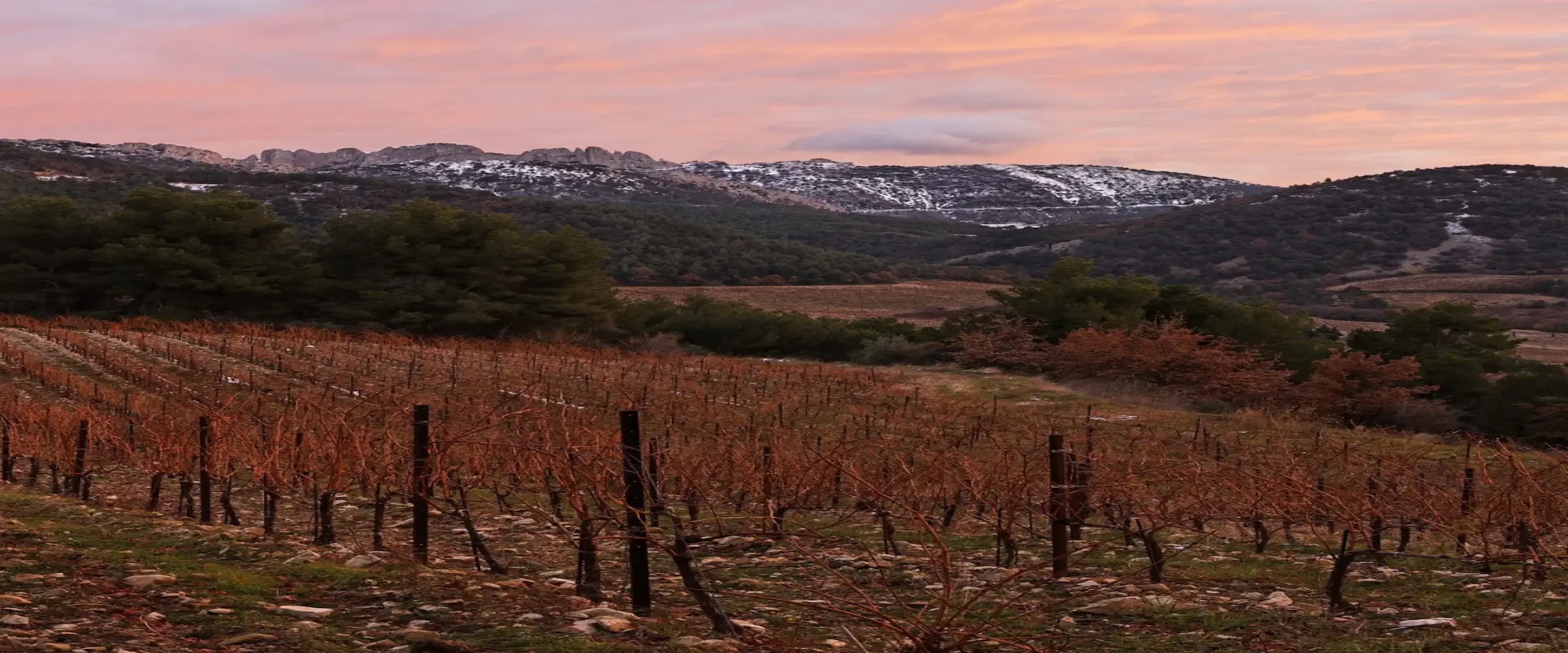
From the steep granite slopes of Côte-Rôtie to the galets roulés of Châteauneuf-du-Pape, the Rhône Valley produces some of France's most compelling and historically significant wines. The Romans planted Syrah on the hill of Hermitage two thousand years ago — and Thomas Jefferson later declared these wines among the finest in France. In the Southern Rhône, Grenache-based blends from Châteauneuf-du-Pape — where 14th-century papal exile created a wine culture rivaling Burgundy — offer immediate pleasure and decades of aging potential from vines rooted among iconic river stones that absorb Mediterranean sun by day and radiate heat through the night. The Mistral — the fierce wind funneling down the valley from the Alps — is both adversary and ally, punishing weak vines while keeping vineyards dry and producing fruit of extraordinary concentration. It shapes everything in the Rhône — the architecture, the cuisine, the character of the people, and ultimately the intensity in the glass. Experience this diverse region through private cellar visits, barrel tastings with legendary vignerons, lavender field tours, Roman amphitheater explorations, olive oil mill experiences, and meals where Provençal sun meets Lyonnaise tradition. Wine opens every door in the Rhône.
CULINARY ARTS
The Rhône Valley is France's most important culinary corridor — and it begins in Lyon, the city Paul Bocuse crowned as the world's gastronomic capital. Bocuse's legacy still defines the city — from the legendary Les Halles de Lyon Paul Bocuse, where chefs and home cooks shop side by side among the finest charcutiers, fromagers, and pâtissiers in France, to the traditional bouchons where quenelles, andouillette, and tablier de sapeur are served without apology or refinement. Journey south into the Drôme, where Nyons' black tanche olives hold AOC status and produce oil so delicate it rivals the finest Ligurian pressings — tour working mills where fruit is pressed within hours of harvest. In Montélimar, watch artisan nougatiers prepare the city's signature confection from local lavender honey and Provençal almonds, a recipe protected since the 17th century. Navigate the winter truffle markets of Carpentras, where the Vaucluse's prized Tuber melanosporum is traded in whispered negotiations and prices that rival fine wine. Sit down to pairings built around Tavel — the only appellation in France dedicated exclusively to rosé — alongside the herb-driven cuisine of the Southern Rhône. And throughout the valley, experience cooking classes that trace the transition from Lyon's rich, butter-built tradition to the olive oil and garlic simplicity of the south — the Rhône on a plate.
CULTURE & LEISURE
The Rhône Valley holds more Roman history than anywhere in France outside Paris. Sit in the Roman amphitheater of Orange — its massive stage wall still intact after two thousand years, the best-preserved in existence, where Louis XIV declared it "the finest wall in my kingdom." Cross the Pont du Gard, the three-tiered aqueduct built without mortar that has outlasted every empire since. In Avignon, tour the Palais des Papes — the largest Gothic palace in Europe, built when seven popes abandoned Rome for the Rhône in the 14th century, reshaping the region's wine culture and architecture for generations. From June through July, photograph the lavender fields of the Valensole plateau — endless rows of purple stretching to the horizon in a spectacle that draws artists for the same reason it drew monks centuries ago. Wander the Luberon's hilltop villages — Gordes, Bonnieux, Ménerbes — stone perched settlements where time moves at a pace the valley below has forgotten. Journey south to the Camargue, where wild white horses, pink flamingos, and black bulls roam the marshlands of the Rhône delta in one of Europe's most extraordinary natural landscapes. And cycle the vineyard roads between Gigondas and Vacqueyras — some of the most beautiful riding in Southern France.
ARTISAN TRADITIONS
The Rhône's artisan traditions draw from the valley connecting Lyon to the Mediterranean — a corridor where Alpine influence gives way to southern warmth. Watch master distillers extract lavender essential oil using copper alembics in the Drôme, where harvest timing demands the same precision as picking Syrah on the hill of Hermitage. In Uzès, visit pottery studios working local clay in a town that has produced ceramics since the Middle Ages. Tour Lyon's Croix-Rousse silk workshops, where canuts once operated Jacquard looms that revolutionized textile production worldwide — a craft born from the city's position on the ancient silk route from Asia. Visit beekeepers in the garrigue hillsides between Gigondas and the Dentelles de Montmirail, whose hives among wild thyme and rosemary produce honeys carrying the same herbal complexity found in the wines. In Montélimar, watch nougatiers work lavender honey and Provençal almonds into confections protected by centuries of tradition. And along the riverbanks between Tournon and Valence, work alongside basket weavers harvesting Rhône willow for grape-harvesting panniers using techniques unchanged since these slopes first supported vineyards.
FROM THE PRODUCERS TABLE
The relationships behind the region. Each profile is a first-hand account from years of direct work with the family and their teams.
Jean-Luis Chave
The family behind one of the world’s great Hermitages, and the everyday wines made by the same hand.