
Burgundy
The world's most celebrated Pinot Noir and Chardonnay come from these limestone slopes, where terroir is measured in meters, not miles — and where a single row of vines can mean the difference between a village wine and a Grand Cru worth thousands. Burgundy's obsession with place began nearly a thousand years ago, when Cistercian monks first mapped these vineyards with a precision that modern science has only confirmed. They understood what the soil already knew — that this narrow ribbon of hillside between Dijon and Santenay possessed something unrepeatable. Napoleon himself demanded Chambertin with every meal, even on campaign, and the Revolution's parceling of monastic vineyards created the intricate mosaic of ownership that defines Burgundy to this day. Our relationships span Grand Cru estates in Vosne-Romanée, historic négociant houses in Beaune, and family domaines where winemaking traditions reach back generations — families who measure legacy not in bottles sold but in vintages survived. This is Burgundy beyond the tourist path — private cellars, library vintages, cooking classes with Michelin-trained chefs, mustard mill tours in Dijon, visits to the very abbeys where monks first cultivated these vines, and conversations with vignerons who rarely welcome outsiders. Wine provides access to one of France's most culturally rich and fiercely guarded regions.
CULINARY ARTS
Burgundy's cuisine is inseparable from its terroir — the same limestone that produces transcendent Pinot Noir feeds the pastures, mustard fields, and cheese caves. In Dijon, visit one of the last independent mustard mills, where stone-ground seeds meet verjuice — the traditional acid base abandoned by industrial producers. Step into Michelin-trained kitchens in Beaune for hands-on classes where classical French technique comes alive alongside the wines it was designed to accompany. Descend into humid caves where Époisses develops its signature orange crust over weeks of careful affinage. Journey to Bresse to meet the farmers behind poulet de Bresse — the only chicken in France with its own AOC, identifiable by blue feet, white plumage, and red comb mirroring the French tricolore. Master boeuf bourguignon where it originated, understanding why this peasant dish elevated to high cuisine demands slow technique and a bottle you'd happily drink on its own. Taste Cassis de Dijon at producers who still macerate whole fruit for the liqueur behind a proper Kir, and discover pain d'épices — spiced honey bread tied to the ancient trade routes where Eastern spices first met Burgundian honey.
CULTURE & LEISURE
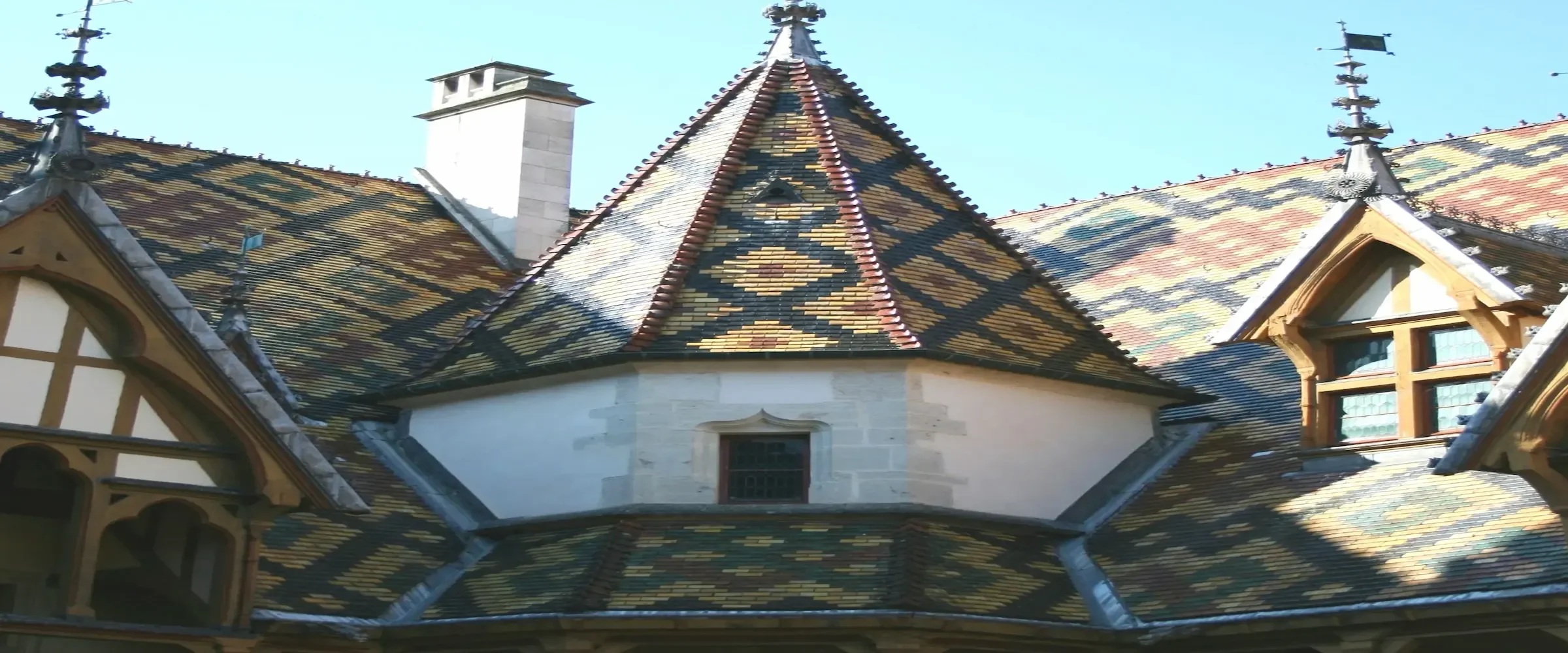
Burgundy's cultural landscape is as layered as its vineyards. Tour the Hospices de Beaune with private historians — a 15th-century charitable hospital whose polychrome tiled roof has become Burgundy's most iconic image, and whose annual wine auction remains the region's most prestigious event. Explore the abbeys of Cîteaux and Cluny, where Cistercian and Benedictine monks didn't just pray — they mapped the vineyards, classified the soils, and essentially invented the concept of terroir that defines Burgundy today. Visit the Château de la Rochepot, a 13th-century neo-Gothic fortress rising from the forested hillside with the same glazed Burgundian tiles that crown the Hospices. Cruise Burgundy's quiet canals by barge, gliding past village after village at a pace that lets the landscape unfold the way it was meant to be experienced. Cycle the UNESCO-designated Climats vineyard roads of the Côte d'Or, where hand-painted signs mark the borders between Grand Cru and Premier Cru parcels separated by nothing more than a stone wall and centuries of accumulated knowledge. And for the most dramatic perspective, rise above it all in a hot air balloon at dawn — watching the golden patchwork of vines stretch from Dijon to Santenay in unbroken silence.
ARTISAN TRADITIONS
The artisan trades of Burgundy are woven into the fabric of its wine culture. Visit working cooperages where tonneliers shape French oak from the forests of Tronçais and Allier — learning how grain tightness, seasoning time, and toast levels influence the Burgundies aging inside, and why a single barrel can cost more than many bottles it will hold. Watch master couvreurs demonstrate the art of Burgundy's iconic glazed tile roofing — the same polychrome technique that crowns the Hospices de Beaune and the Château de la Rochepot, a tradition dating to the Dukes of Burgundy. Step into blacksmith forges where artisans still hand-craft serpettes, sécateurs, and the specialized wine tools that vignerons across the Côte d'Or rely on — functional art shaped by the same fire and precision that defines the region. In the historic villages along the route des vins, stone masons work the local limestone that built Burgundy's cellars, churches, and vineyard walls — the same calcaire that gives the soil its character and the architecture its golden warmth. And in Cluny, explore textile workshops continuing traditions established when the abbey was the largest church in Christendom and its monks were among Europe's most influential patrons of craft and culture.
Producers Table
The relationships behind the region. Each profile is a first-hand account from years of direct work with the family.
Comte Armand
A story about a 2015 Volnay Fermiets and the best fried chicken on the planet at Round Hill in Jamaica