
Loire Valley
The Loire's 600 miles of river valleys produce everything from crystalline Sancerre to age-worthy Chenin Blanc, from sparkling Vouvray to elegant Cabernet Franc — a diversity unmatched by any wine region in France. But the Loire was France's center of power long before it was a wine region. This is the Valley of Kings — where the Plantagenets held court, where Charles VII governed from Chinon, where Leonardo da Vinci spent his final years under royal patronage, and where the greatest concentration of Renaissance châteaux in Europe rose from the riverbanks as expressions of ambition and artistic vision. The same mild climate and tufa limestone that drew royalty here gives the wines their signature elegance — a thread of minerality and restraint that runs from Muscadet near the Atlantic to the flint-laced Sauvignon Blancs of Sancerre near Burgundy's border. Our curated experiences span these extremes — Renaissance châteaux with private curators, biodynamic pioneers challenging convention, and family estates where tradition and innovation coexist in vineyards first planted by the monks of Tours over a thousand years ago. Wine provides the foundation for complete regional discovery.
CULINARY ARTS
The Loire's cuisine follows the river — freshwater, farmland, and centuries of royal kitchens that elevated simple ingredients into France's culinary foundations. Visit Chavignol's goat farms where Crottin de Chavignol is produced — the small, ash-rinded chèvre that develops from creamy to intensely nutty as it ages, and pairs with Sancerre in a combination so natural it feels ordained by geography. In Tours, learn the art of rillettes — the slow-cooked, hand-shredded pork spread that predates industrial charcuterie by centuries, still prepared in copper pots with nothing more than pork, fat, and patience. Master tarte Tatin in the region where the Tatin sisters' happy accident became one of France's most iconic desserts. Descend into Saumur's tufa caves where mushrooms — champignons de Paris that actually originated here — grow in the same limestone caverns once quarried to build the châteaux above. Along the river, watch local chefs prepare Loire sandre, brochet, and shad using classical techniques refined in royal kitchens. At the coast where the Loire meets the Atlantic, taste moules de bouchot — rope-grown mussels prized for their sweet brininess, served steaming with cream, shallots, and Muscadet. And in Vouvray, visit apiaries where bees forage among Chenin Blanc vineyards, producing honeys that carry the same floral complexity as the wines beside them.
CULTURE & LEISURE
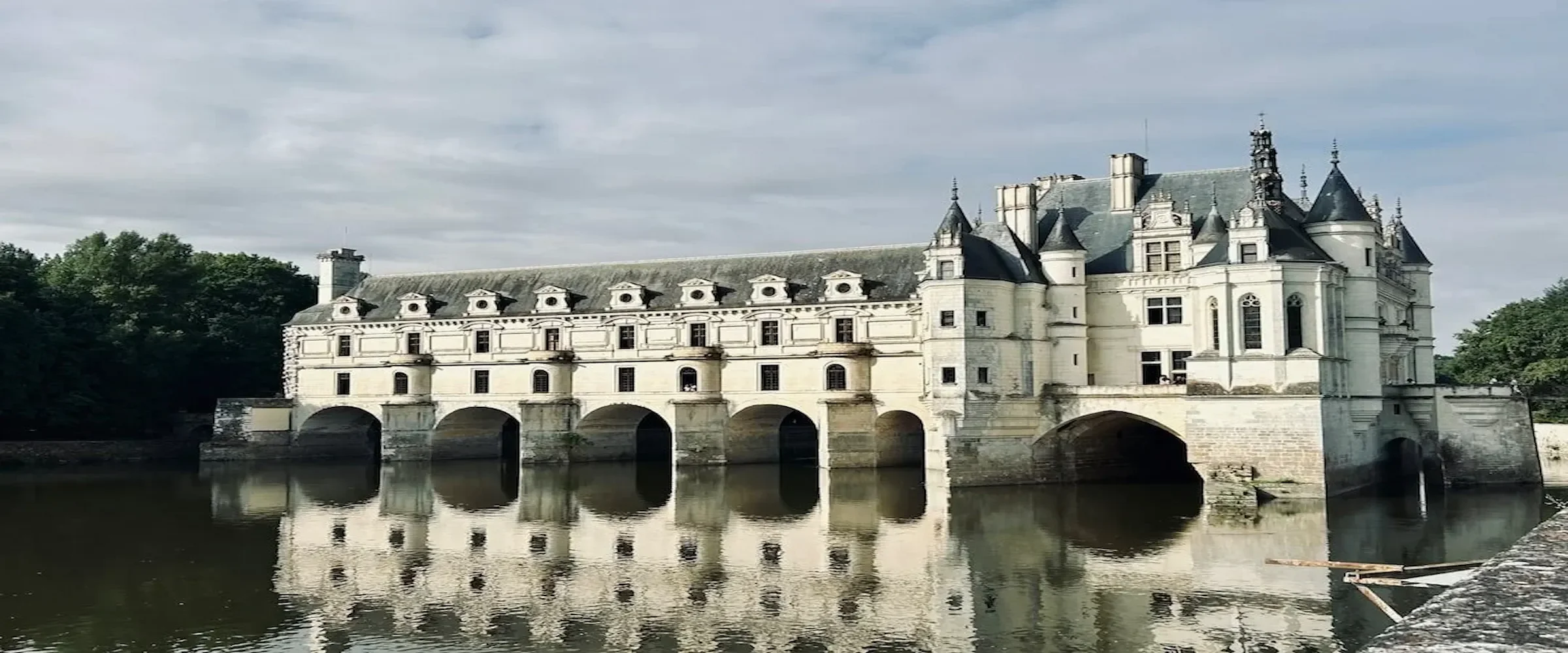
The Loire Valley's cultural wealth rivals any region in Europe. Tour Château de Chambord privately with curators — François I's extraordinary hunting lodge, whose double-helix staircase designed with input from Leonardo da Vinci remains one of architecture's most elegant puzzles. Cross the river to Clos Lucé, where Leonardo spent his final three years under royal patronage, walking through workshops where his inventions have been reconstructed from original notebooks. Experience Château de Chenonceau after hours — the ethereal gallery spanning the River Cher, built by the women who shaped it from Diane de Poitiers to Catherine de Medici, without the crowds that obscure its intimacy by day. Cycle the Loire à Vélo trails winding through vineyard villages, past troglodyte cave dwellings carved into tufa cliffs, and along riverbanks where the landscape hasn't changed in centuries. Explore the Renaissance gardens of Villandry — geometric perfection conceived in the 16th century and maintained today as living masterworks of horticultural design. As evening falls, watch the châteaux transform during son et lumière performances, where light and music map centuries of history onto the very walls that witnessed it. And rise above it all by hot air balloon at dawn — châteaux, river, and vineyards spread beneath you in a single unbroken panorama.
ARTISAN TRADITIONS
The Loire's artisan traditions reflect a region where craftsmanship has served both royalty and vignerons for centuries. Visit active château restoration workshops where master craftsmen repair and preserve Renaissance stonework, timber framing, and decorative plasterwork — skills passed through generations that keep these monuments alive rather than frozen in time. Learn traditional basket weaving techniques refined along the Loire's riverbanks, where willow and osier have been harvested and woven into everything from grape-harvesting hottes to furniture since the Middle Ages. Tour cooperages in Sancerre where tonneliers build barrels specifically for the region's white wines — a lighter, more restrained approach to oak than Burgundy or Bordeaux, reflecting the Loire's philosophy of elegance over power. Watch tapestry weavers demonstrate techniques that flourished under royal patronage, continuing a tradition that made the Loire the center of French textile art for centuries. Work alongside potters in studios using Loire clay pulled from the same riverbanks, shaping vessels in styles unchanged since medieval markets lined these towns. And in Thiers — France's historic capital of cutlery — visit knife-makers whose forges have produced blades since the Middle Ages, a craft sustained by the region's rivers, steel trade, and an obsession with sharpness that any sommelier would respect.
FROM THE PRODUCERS TABLE
The relationships behind the region. Each profile is a fist-hand account from years of working directly with the producer.
Fernand & Fils
Twenty minutes from Sancerre, the Thibault family replanted hillsides first farmed by their great-grandfather in the 1920’s.