
Galicia
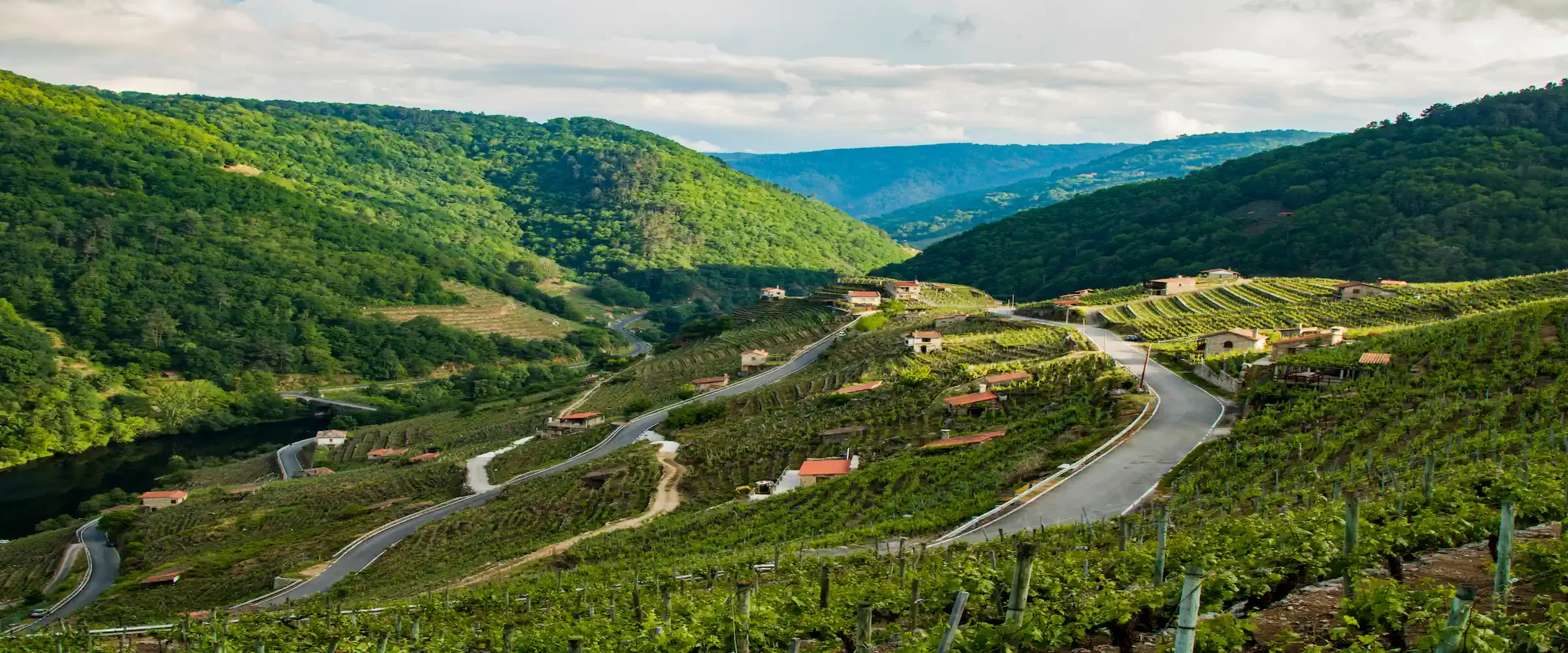
Spain's lush Atlantic northwest feels closer to the coast of Brittany than the sun-baked mesetas of central Spain — and its wines are equally unexpected. From the crisp, mineral Albariño of Rías Baixas grown within sight of the Atlantic to the ancient Mencía vines clinging to the vertiginous granite terraces of Ribeira Sacra above the Sil River canyon, Galicia produces some of Iberia's most distinctive and hauntingly beautiful whites and reds. Add Godello from Valdeorras and the Bierzo border region where Mencía reaches its most refined expression, and you have a corner of Spain that serious wine lovers are only now discovering. Our relationships provide access to family estates rarely open to visitors, private tastings in centuries-old pazos overlooking the Atlantic, boat journeys through the dramatic Sil River canyon to reach vineyards accessible no other way, the spiritual grandeur of Santiago de Compostela at the end of the Camino pilgrimage, Galicia's legendary seafood culture — arguably Spain's finest — and a region where Celtic heritage, oceanic landscapes, and indigenous grape varieties converge into something found nowhere else in the wine world. Wine provides the gateway to Spain's most undiscovered corner.
CULINARY ARTS
Spain's green and mist-swept Atlantic corner feels nothing like the rest of the country — and neither do its wines. Galicia's Albariño from Rías Baixas has become one of the world's great white wines, but the region runs far deeper than a single grape. In the dramatic river gorges of Ribeira Sacra, Mencía grows on terraced slopes so steep the harvest is done by hand on near-vertical granite walls. In Valdeorras, Godello is producing whites of extraordinary mineral complexity that the rest of the world is only beginning to discover. Our relationships span family bodegas along the Atlantic coast, heroic hillside producers in Ribeira Sacra whose vineyards can only be reached by boat, and quiet estates in Valdeorras working with old-vine Godello that never sees export. Between vineyard visits, experience the pilgrim city of Santiago de Compostela, the finest seafood in all of Europe pulled fresh from Galician rías, Celtic ruins predating the Romans, and a culinary culture built on pulpo, percebes, and shellfish so extraordinary that chefs across Spain consider Galicia the source. Wine opens doors to a Spain most travelers never knew existed.
CULTURE & LEISURE
Walking the final kilometers of the Camino de Santiago as pilgrims have for a thousand years and arriving at the cathedral just as the Botafumeiro — the massive silver incense burner — swings across the transept in a centuries-old ceremony, exploring Celtic castro ruins scattered across green hilltops that predate Roman Hispania and remind you this corner of Spain has more in common with Ireland and Brittany than with Andalucía, boat excursions through the Ribeira Sacra canyon where the Sil River cuts between vertical vineyard walls and Romanesque monasteries cling to the cliffs above, wandering Santiago de Compostela's granite old town at dusk when the rain-slicked streets reflect lamplight and the student bars fill with Albariño and conversation, the Cíes Islands — a protected Atlantic archipelago with white sand beaches and crystalline water that feels like the Caribbean lost in the wrong ocean, exploring the medieval walled town of Lugo where you can walk the complete Roman walls that have encircled the city unbroken since the third century.
ARTISAN TRADITIONS
Walking the final kilometers of the Camino de Santiago as pilgrims have for a thousand years and arriving at the cathedral just as the Botafumeiro — the massive silver incense burner — swings across the transept in a centuries-old ceremony, exploring Celtic castro ruins scattered across green hilltops that predate Roman Hispania and remind you this corner of Spain has more in common with Ireland and Brittany than with Andalucía, boat excursions through the Ribeira Sacra canyon where the Sil River cuts between vertical vineyard walls and Romanesque monasteries cling to the cliffs above, wandering Santiago de Compostela's granite old town at dusk when the rain-slicked streets reflect lamplight and the student bars fill with Albariño and conversation, the Cíes Islands — a protected Atlantic archipelago with white sand beaches and crystalline water that feels like the Caribbean lost in the wrong ocean, exploring the medieval walled town of Lugo where you can walk the complete Roman walls that have encircled the city unbroken since the third century.