
Porto & the Douro Valley
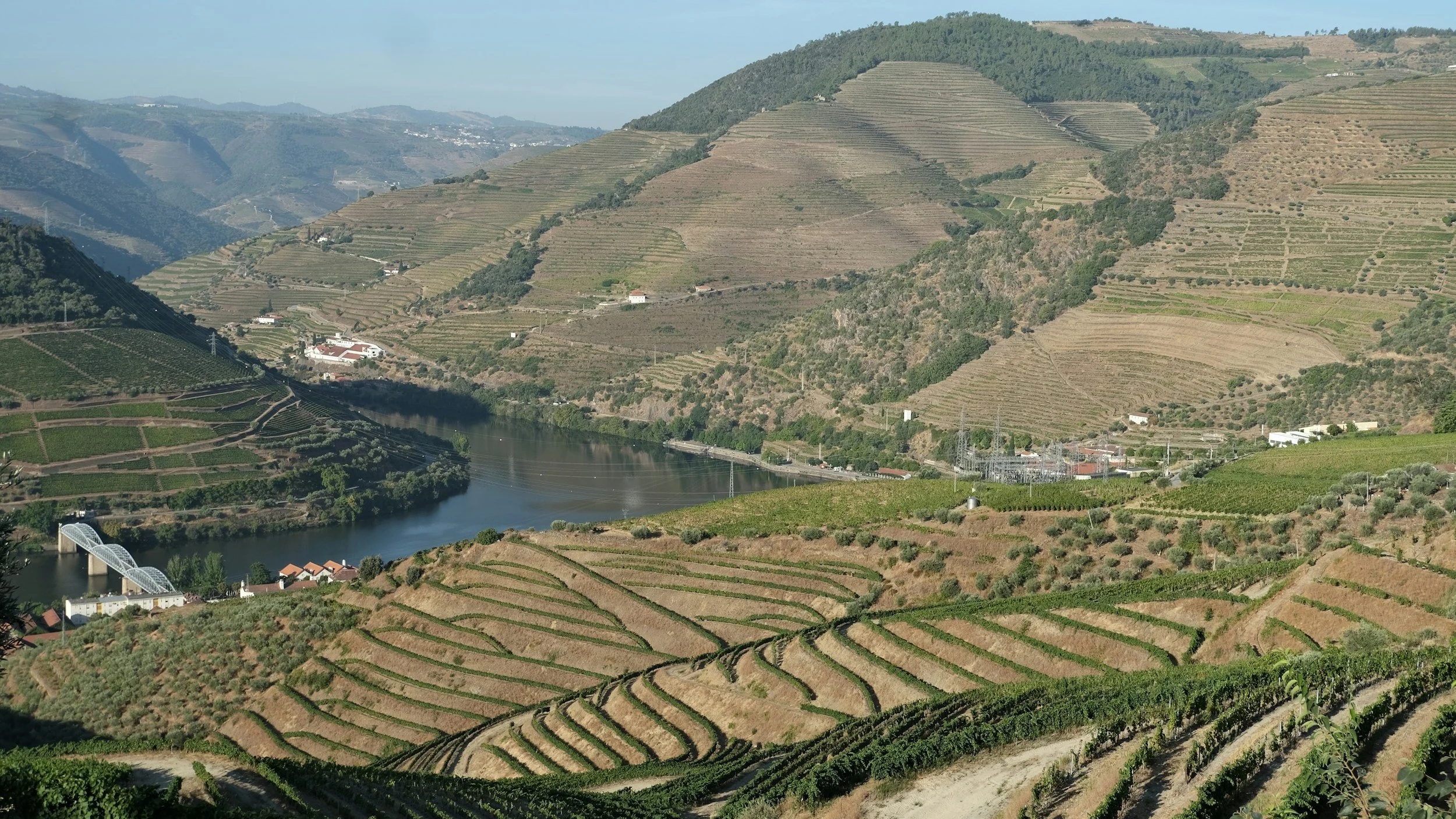
The Douro is where Port wine was born — but its story begins long before the first barrel was shipped downriver to Porto. The Romans terraced these schist slopes two thousand years ago, and when the Treaty of Methuen in 1703 opened English markets to Portuguese wines over French, the Douro became the center of one of history's most consequential trade relationships. In 1756, the Marquis of Pombal established the world's first demarcated wine region here — nearly a century before Bordeaux's 1855 Classification — drawing boundaries that still govern production today. The UNESCO-designated terraced vineyards represent one of the most dramatic human-altered landscapes on earth, where indigenous grape varieties unknown to most of the world produce wines of staggering complexity. While Port remains the Douro's noble legacy, the region's dry reds now rank among Portugal's finest — powerful wines from quintas that have balanced tradition and reinvention for generations. Downriver, Porto is the other half of this story — a city built on wine wealth, where the historic lodges of Vila Nova de Gaia still age tawny and vintage Ports in barrel, and where the Ribeira waterfront, azulejo-covered churches, and Beaux-Arts grandeur reveal a city as layered as its most celebrated wines. Wine opens every door from the valley to the coast.
CULINARY ARTS
The cuisine of Porto and the Douro reflects a country that built an empire on spice, salt, and codfish — and never lost its appetite for any of them. In Porto, learn to build a francesinha — the city's legendary sandwich of cured meats, fresh sausage, and steak layered beneath melted cheese and a spiced tomato-beer sauce, a dish Porto claims as fiercely as its football clubs. Master bacalhau in cooking classes that explore why the Portuguese transformed a Norwegian preserved fish into a national obsession — with supposedly 365 preparations, one for every day of the year, from bacalhau à Brás to bacalhau com natas. Bake pastéis de nata alongside local pastry chefs, learning the technique behind the custard tart perfected by monks who used egg whites to starch their vestments and needed something to do with the yolks. Experience Port and cheese pairings at historic lodges in Vila Nova de Gaia — aged tawny with Serra da Estrela, vintage Port with São Jorge — combinations refined over centuries of trade. Journey into the Douro for olive oil tastings at estates producing oils from ancient groves clinging to the same terraced slopes as the vines. And sit down to regional specialties that define the valley — slow-braised cabrito, cozido à portuguesa, and rice dishes built from the river and the land around it.
CULTURE & LEISURE
Porto and the Douro offer a cultural depth that surprises visitors expecting only wine. Cruise the Douro on a traditional rabelo boat — the flat-bottomed vessels that once carried Port barrels downriver through treacherous rapids, navigating a valley whose terraced walls rise like amphitheaters on both banks. In Porto, walk the Ribeira waterfront — the medieval riverside district where merchants built their fortunes — then cross the Ponte Luís I, Eiffel's student Théophile Seyrig's iron masterwork connecting the city to the Port lodges of Vila Nova de Gaia. Step inside São Bento train station, where over 20,000 hand-painted azulejo tiles chronicle Portugal's history from medieval battles to royal processions — a working station that doubles as one of Europe's most extraordinary public art installations. Visit Livraria Lello, the neo-Gothic bookshop whose crimson staircase inspired a young J.K. Rowling during her years teaching English in Porto. Explore the Serralves Museum and its Art Deco villa set within sculpted gardens. Tour the Palácio da Bolsa, whose Arab Room took eighteen years to complete and rivals the Alhambra for decorative ambition. And as evening falls, experience fado in Porto's intimate casas — not Lisbon's polished tourist fado, but the raw, melancholic tradition that belongs to these narrow streets and the river that shaped them.
ARTISAN TRADITIONS
Portugal's artisan traditions are among the oldest in Europe — and Porto and the Douro preserve them with quiet pride. Learn azulejo tile-making in Porto workshops, mastering the tin-glazed ceramic technique that arrived with the Moors and became Portugal's most distinctive art form — the blue and white tiles that cover churches, train stations, and private homes in compositions found nowhere else on earth. Visit cooperages in Vila Nova de Gaia where craftsmen build and repair the barrels essential to Port's identity — understanding why tawny Port demands decades in smaller casks while vintage Ports age in larger tonéis, and how wood selection shapes what ends up in the glass. Tour cork production facilities in the north, where Portugal's dominance of the global cork industry — supplying over half the world's production — begins with the careful hand-harvesting of bark from ancient cork oaks every nine years, a process so delicate it still cannot be mechanized. Watch textile weavers in the Douro's villages work looms producing the heavy linens and wool blankets that have warmed these valley homes for centuries. And visit ceramic studios where potters shape local clay into the distinctive black pottery of Bisalhães — a smoke-fired tradition recently recognized by UNESCO as intangible cultural heritage, producing pieces as dark and elemental as the schist slopes they come from.