
Provence
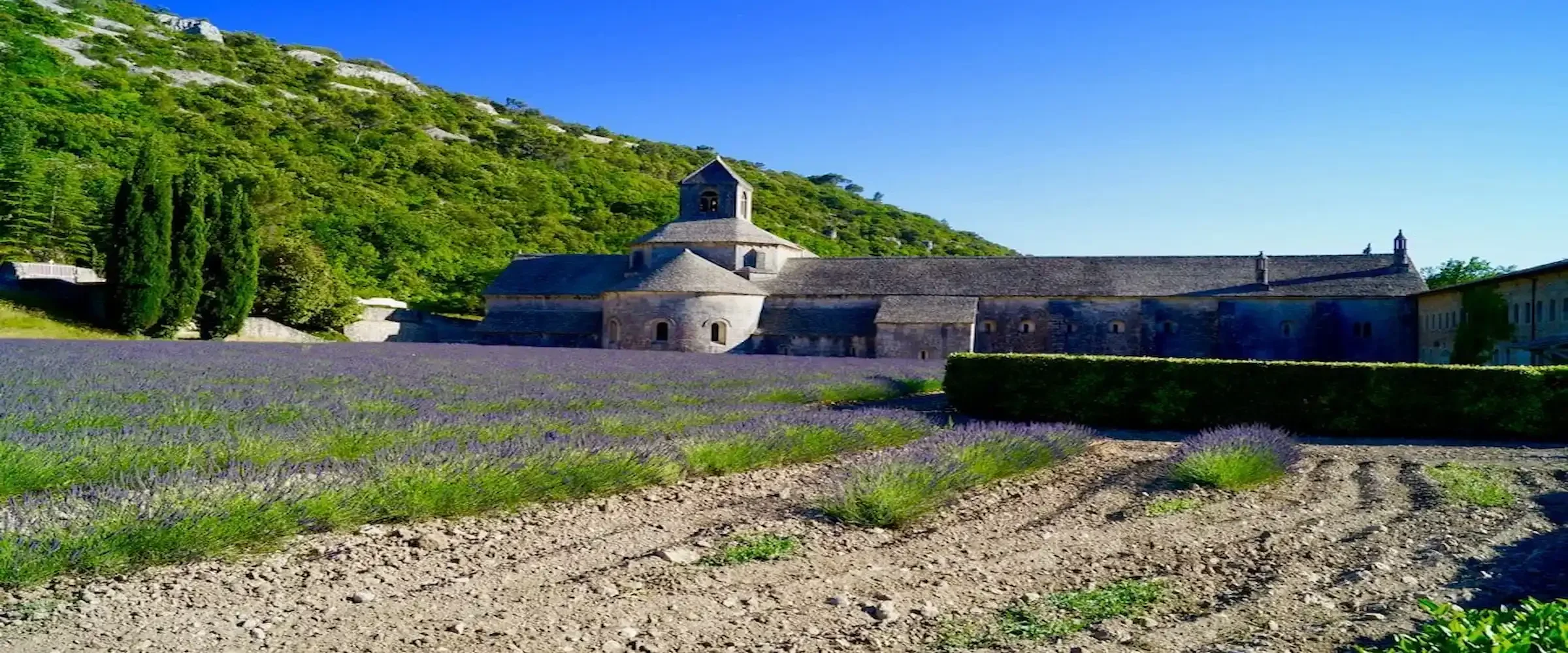
Rosé's spiritual home stretches from the glamour of Cannes and Saint-Tropez to the artistic legacy of Nice and the lavender fields of the interior — but Provence's winemaking story began twenty-six centuries ago when Greek traders from Phocaea planted the first vines near Marseille, making this the oldest wine region in France. While the world knows Provence for elegant pale rosés, our access reveals complexity beyond the stereotype — benchmark Bandol reds from ancient Mourvèdre vines terraced above the Mediterranean, historic Côtes de Provence estates producing age-worthy whites, and biodynamic pioneers reimagining Mediterranean viticulture. This is the landscape that drew Cézanne to Mont Sainte-Victoire, Matisse and Chagall to Nice, Picasso to Antibes — a concentration of artistic legacy shaped by the same luminous climate that ripens Grenache and Rolle to perfection. Experience private tastings at renowned domaines, discover producers whose allocations are reserved years in advance, explore the museums these artists left behind, visit perfumeries in Grasse where master noses compose fragrances the way winemakers compose blends, and sail the coastline where wine, art, Michelin cuisine, and Mediterranean beauty converge into something no other region can replicate.
CULINARY ARTS
Provence's cuisine is the Mediterranean at its most honest — sun, salt, olive oil, and ingredients that need little more than heat and timing. In Marseille's Vieux-Port, learn bouillabaisse from the chefs who guard its tradition fiercely — the saffron-laced fisherman's stew with strict protocols governing which rockfish qualify, how the rouille is prepared, and why the broth is always served separately. In Nice, master socca — the chickpea flour crêpe cooked in copper pans over wood fire — and pissaladière, the caramelized onion tart topped with anchovies and niçoise olives that predates Italian pizza by centuries. Visit olive oil estates in the Alpilles and Les Baux where centuries-old trees produce oils with the peppery intensity and low acidity that define Provençal cooking. Learn ratatouille as it was intended — not a rustic vegetable stew but a precise, layered preparation where each component is cooked separately to preserve its identity before assembly. In Saint-Tropez, bake the tarte tropézienne — the brioche cream cake created in 1955 by a Polish baker for the film crew of And God Created Woman, adopted by Brigitte Bardot and the town in equal measure. And wander through Provençal morning markets with local chefs, selecting ingredients for a vineyard picnic where the meal is assembled from whatever the day offers.
CULTURE & LEISURE
Provence's cultural landscape is defined by the artists who couldn't leave and the light that drew them here. Tour the Matisse Museum privately in Nice — housed in a 17th-century Genoese villa tracing his evolution from dark northern palettes to the luminous cut-outs inspired by Mediterranean light. Visit the Fondation Maeght in Saint-Paul-de-Vence, where Miró, Giacometti, and Chagall are displayed in a building that blurs the boundary between gallery and garden. Drive the Monaco Grand Prix circuit through Monte Carlo — the same hairpin turns, tunnel, and harbor chicane that Formula One navigates each May — or time your visit for the race itself. Sail from Cannes to the Îles de Lérins, where the fortified monastery of Saint-Honorat has produced wine since the 5th century and the iron-masked prisoner was held on neighboring Sainte-Marguerite. Climb to Èze, the medieval village perched between sky and sea where Nietzsche walked, with views stretching from Italy to Saint-Tropez. Wander the Villa Ephrussi de Rothschild gardens — nine themed gardens overlooking the Mediterranean, built by a Baroness who instructed her gardeners to dress as sailors. And charter a private yacht along the Côte d'Azur, watching the coastline unfold from the water the way it was always meant to be seen.
ARTISAN TRADITIONS
Provence's artisan traditions are rooted in the same raw materials that define the landscape — flowers, clay, olive trees, and lavender. In Grasse, the world's perfume capital since the 16th century, work alongside master noses in workshops where fragrance composition follows the same principles as winemaking — base notes, heart notes, and top notes blended with the understanding that balance matters more than any single ingredient. Visit pottery studios in Vallauris, where Picasso rediscovered ceramics in 1946 and transformed a fading village craft into a modern art movement — studios still work in traditions he both honored and upended. Learn Provençal fabric design, the vibrant printed indiennes that arrived through Marseille's spice trade in the 17th century and became inseparable from the region's visual identity. In the lavender fields of Haute-Provence, harvest and distill lavender into sachets and essential oils using copper alembics unchanged for generations. Tour Marseille savonneries where savon de Marseille is still produced under strict regulations — 72% olive oil, cooked in cauldrons for ten days, stamped by hand in a process dating to Louis XIV's decree. And watch olive wood carvers shape the gnarled wood of spent trees into kitchen tools and objects whose grain patterns are as unique as the terroir that grew them.