
The Producers Table
This is a series built around the growers, families, and estates behind the bottles. Each edition features a producer Ian Mendelsohn knows personally, has visited, or has worked alongside across a twenty-five year career in wine and spirits. These are not names on a label or bottles on a shelf. They are friends and colleagues earned through harvests, meals, and decades of shared work. What follows is not a tasting room experience. It is access built on trust.
Domaine Jean-Louis Chave
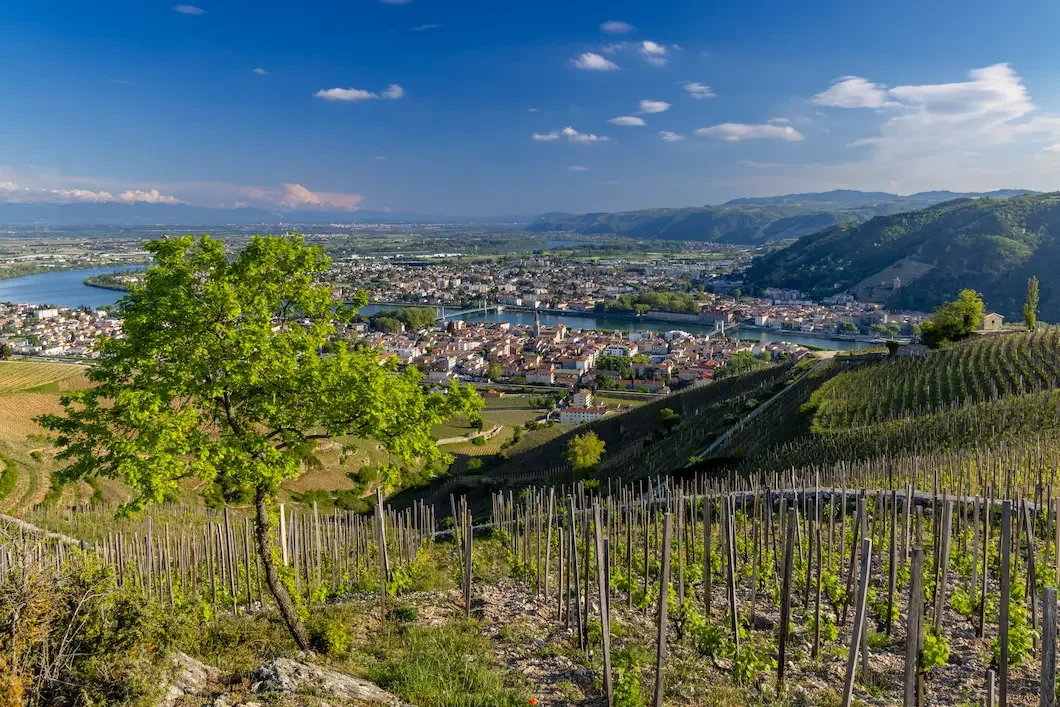
Domaine Jean-Louis Chave traces its roots to 1481 and has farmed the hill of Hermitage since 1865. Jean-Louis, the sixteenth generation, and his wife Erin farm fourteen parcels on the hill and see themselves as master blenders. However, Hermitage aren’t the only wines they make.
Hermitage, Northern Rhone, France
Domaine Jean-Luis Chave
In the world of fine and rare wine, a few names carry a room. When I was in the auction world, nearly all of them came from Bordeaux or Burgundy. One of the rarest came from a single hill in the Rhône Valley, and from a family that traces its origins to 1481.
The Chaves started on the west bank, in Lemps, and the cellar still sits across the river from Hermitage in Mauves, under a horse chestnut in the courtyard. The first parcels on the hill came in 1865. Jean-Louis, the sixteenth generation, farms a little over nine hectares of Syrah there and makes roughly 2,000 to 2,500 cases of red a year, about what La Tâche makes. The Cuvée Cathelin, in the years it is made, comes to about 2,500 bottles, fewer than half of Romanée-Conti.
Their Hermitage is a blend, and that is the whole argument. With the white, the family farms about thirteen hectares on the hill in fourteen parcels, and each one is pressed, fermented and aged on its own. Bessards brings granite and the frame. Le Méal brings warmth. L'Hermite, Péléat and Beaume fill in what sits between. The precision is in the assembly.
In 2003, around a sale we held that year, I sat a small table of private clients at a small French restaurant near Union Square I went to often. We opened six vintages of the Hermitage, 1985, 1989, 1990, 1991, 1994 and 1995, and three of the Cuvée Cathelin, 1990, 1991 and 1995. Gérard Chave made the 1985 through the 1991. By 1994 his son was beside him. Nine bottles that almost never reach an auction, ten years of one family's work, on one table.
I met Jean-Louis twice, both times in New York. Each time he talked about Hermitage and blending, and each time he turned the conversation to Mon Coeur. He wanted to know how people were reacting to it. Mon Coeur came out of Sélection, the label he built with his wife, Erin, to take the family's standards beyond the hill. It was a young wine then, first made in 1998: Grenache, Syrah and Mourvèdre from old vines in the southern villages, Vinsobres among them. They made it to be opened on a Tuesday night, without waiting fifteen years. The man who makes one of the rarest wines in France was most curious about his least expensive one.
Later Jean-Louis and Erin brought Sélection back to the hill with a Hermitage of its own, Farconnet. Erin is a driving force behind the Sélection side, and the two of them hold it to the same standard as the domaine. The name belongs to the family the Chaves bought their Bessards parcel from, in the time of Jean-Louis's great-grandfather. The difference between the two bottles is address and time. The domaine wine is built around Bessards at the heart of the hill. Farconnet comes mostly from Diognières at the foot of it, alluvial ground packed with small pebbles that gives the wine its spice, with Péléat above for finesse and Greffieux, beside Le Méal, for structure from river stones the glaciers left behind.
Time is the other difference. The domaine Hermitage spends 18 to 20 months in barrel, 10 to 20 percent of it new, and is built for decades. Farconnet ferments in tonneaux and steel, then spends about two years in barrel, mostly older wood but 20% new, so the fruit shows years sooner. What does not change is the hand. Parcel by parcel, the same people decide what goes in the bottle and what does not, with the same patience that put nine bottles on a table near Union Square.
When the weather turns I move to the Rhône. I buy one bottle of the domaine Hermitage each year. Mon Coeur is a staple in my house every fall and winter.
If the Rhone Valley is on your itinerary CONTACT US
FROM THE CELLAR
The 1985 Hermitage, Domaine Jean-Louis Chave Gérard's wine from a warm, generous year. Smoked meat, cassis, black olive and pepper over a velvet texture, with a firmer frame than the vintages that followed. In that era barrel selections differed between importers, and bottles of the same vintage could vary. At a sale, that is the detail that matters most and gets noticed least.
The 1989 Hermitage, Domaine Jean-Louis Chave A hot, dry vintage that refuses to act like one. Red fruit and flint, and a wine that ages at a crawl. Next to the 1990 it is the quieter of the two, and the one that keeps something back.
The 1990 Hermitage, Domaine Jean-Louis Chave The power vintage. Dark plum, cassis, black tea and bergamot, and a tarry finish. This is the tannin that made Gérard set aside the Cathelin, and tasting the two side by side is the clearest lesson in what blending does on this hill.
The 1991 Hermitage, Domaine Jean-Louis Chave The sleeper. A poor year in the south, so the market walked past the whole Rhône, while the north made some of its finest wine of the decade. Red currant, dried cherry and spice, fine tannins, and acidity that keeps it moving. The first vintage under temperature-controlled fermentation. Many who have tasted both prefer it to the 1990.
The 1994 Hermitage, Domaine Jean-Louis Chave The last of the wet years, and the proof of the blend. Earth, soy, red currant and rosemary, lighter and earlier to open than the vintages around it, and still fine and fresh. A difficult year in other hands. Here it is elegant.
The 1995 Hermitage, Domaine Jean-Louis Chave Jean-Louis says it tasted skinny for years and was overlooked because of it. Time filled it in. Plum skin, dried cherry and blood orange, more flesh than anyone expected, and acidity that makes your mouth water.
The 1990 Ermitage Cuvée Cathelin, Domaine Jean-Louis Chave The first Cathelin, about 2,500 bottles. Bessards-led, all new oak, built to carry the tannin of the year. Fire and density at the core and a refined texture around it. Against the classic 1990 it trades some of the stone for power, and that trade is the argument about which bottle you prefer.
The 1991 Ermitage Cuvée Cathelin, Domaine Jean-Louis Chave Again about 2,500 bottles. Young, it was opaque and dense, cassis, smoke, vanilla and flowers. With age it has gone the other way, toward rose petal, crushed stone and a faint gaminess, almost Burgundian in its balance. The rarest bottle on the table, and the one that rewarded patience most.
The 1995 Ermitage Cuvée Cathelin, Domaine Jean-Louis Chave Red and black currant, Asian spice, scorched earth and blood. Smoky, meaty, mineral, with a texture lighter than its depth suggests. Father and son, in the year the skinny vintage turned out to be anything but.
From the Sélection
2024 Côtes du Rhône Mon Coeur, Jean-Louis Chave Sélection
Grenache and Mourvèdre from old vines around Vinsobres and Cairanne, fermented in steel and given a year in used barrels. 2024 was a cool, wet year in the Rhône, and it shows as freshness rather than weight. Dark berry fruit, a granitic edge, and ripe tannin that stays out of the way. Open it with wild mushrooms, pheasant or a braise. It was made to be opened tonight, and that was always the point.
2024 Saint-Joseph Offerus, Jean-Louis Chave Sélection
Syrah from granite around Mauves, Tournon and Saint-Jean-de-Muzols, with young vines from the family's own replanted slopes, raised in neutral barrels. Violets, cassis and black cherry over charcoal and graphite, and a cool lift of mint the vintage brings forward. Supple tannin, and a wine that moves easily across the palate. This is the granite of the family's home bank, across the river from the hill.
2022 Hermitage Farconnet, Jean-Louis Chave Sélection
Diognières, Greffieux and Péléat, fruit bought from neighbors on the hill, mostly destemmed and aged two years in barrel, about a fifth of it new. 2022 was a hot, dry summer, and Farconnet carries that sun as depth, not heaviness. Dark fruit and spice from the Diognières pebbles, structure from Greffieux, finesse from Péléat. Open now with an hour in a decanter, or hold it well into the next decade.