
The Producers Table
This is a series built around the growers, families, and estates behind the bottles. Each edition features a producer Ian Mendelsohn knows personally, has visited, or has worked alongside across a twenty-five year career in wine and spirits. These are not names on a label or bottles on a shelf. They are friends and colleagues earned through harvests, meals, and decades of shared work. What follows is not a tasting room experience. It is access built on trust.
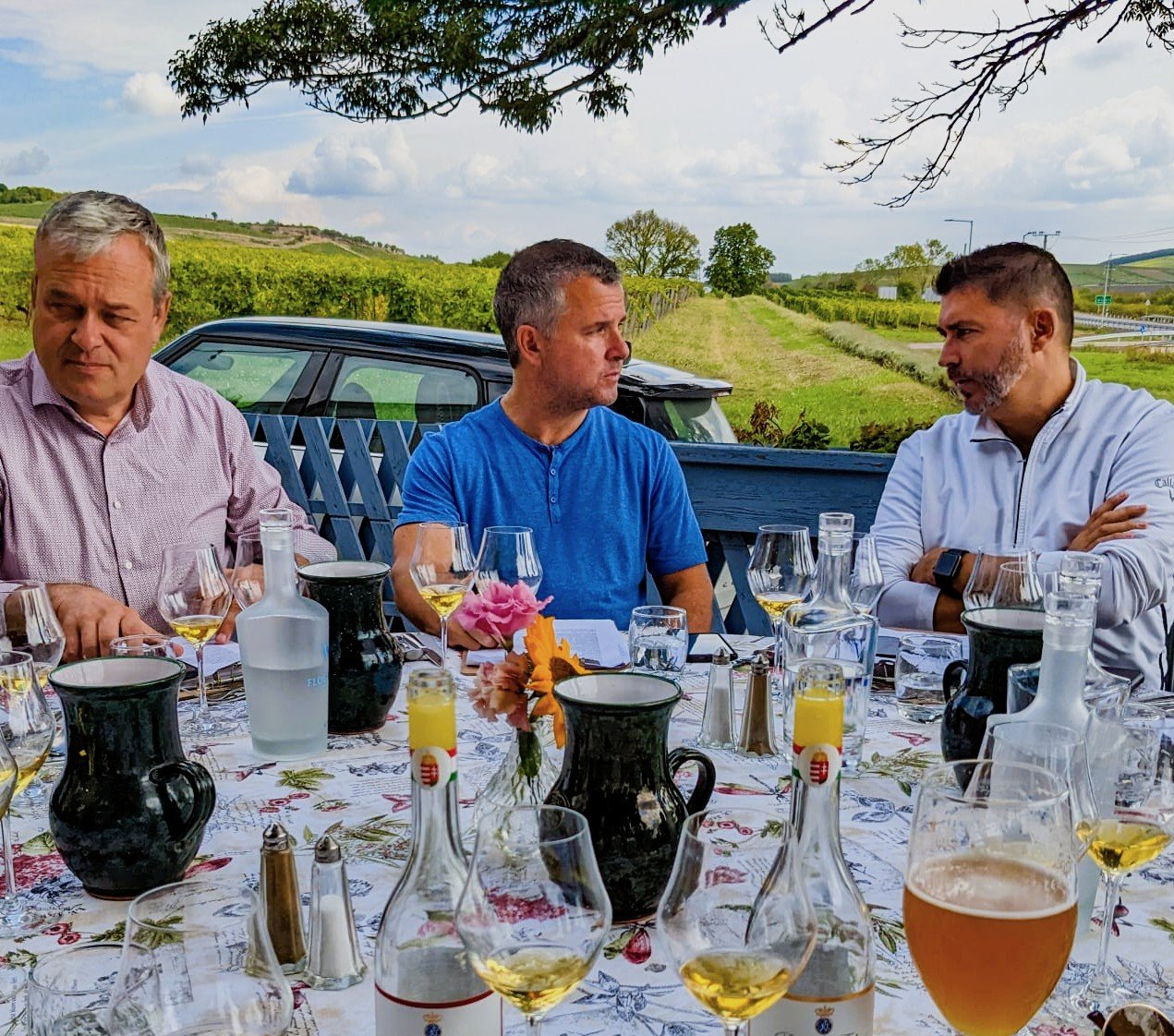
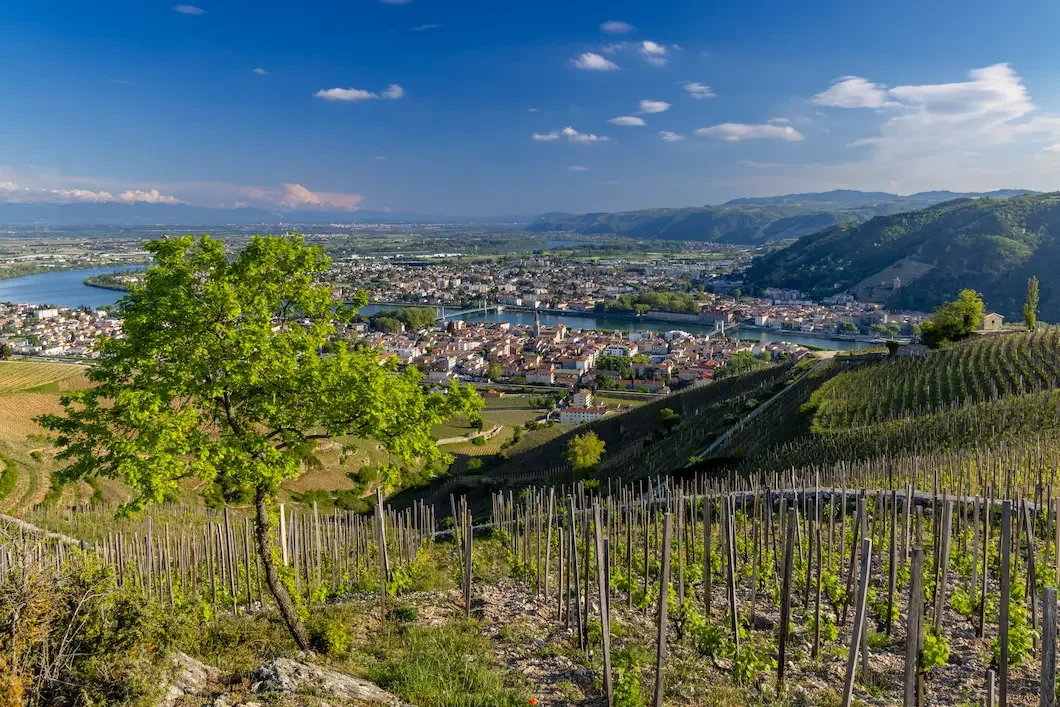
Domaine Jean-Louis Chave
Domaine Jean-Louis Chave traces its roots to 1481 and has farmed the hill of Hermitage since 1865. Jean-Louis, the sixteenth generation, and his wife Erin farm fourteen parcels on the hill and see themselves as master blenders. However, Hermitage aren’t the only wines they make.
Hermitage, Northern Rhone, France
Domaine Jean-Luis Chave
In the world of fine and rare wine, a few names carry a room. When I was in the auction world, nearly all of them came from Bordeaux or Burgundy. One of the rarest came from a single hill in the Rhône Valley, and from a family that traces its origins to 1481.
The Chaves started on the west bank, in Lemps, and the cellar still sits across the river from Hermitage in Mauves, under a horse chestnut in the courtyard. The first parcels on the hill came in 1865. Jean-Louis, the sixteenth generation, farms a little over nine hectares of Syrah there and makes roughly 2,000 to 2,500 cases of red a year, about what La Tâche makes. The Cuvée Cathelin, in the years it is made, comes to about 2,500 bottles, fewer than half of Romanée-Conti.
Their Hermitage is a blend, and that is the whole argument. With the white, the family farms about thirteen hectares on the hill in fourteen parcels, and each one is pressed, fermented and aged on its own. Bessards brings granite and the frame. Le Méal brings warmth. L'Hermite, Péléat and Beaume fill in what sits between. The precision is in the assembly.
In 2003, around a sale we held that year, I sat a small table of private clients at a small French restaurant near Union Square I went to often. We opened six vintages of the Hermitage, 1985, 1989, 1990, 1991, 1994 and 1995, and three of the Cuvée Cathelin, 1990, 1991 and 1995. Gérard Chave made the 1985 through the 1991. By 1994 his son was beside him. Nine bottles that almost never reach an auction, ten years of one family's work, on one table.
I met Jean-Louis twice, both times in New York. Each time he talked about Hermitage and blending, and each time he turned the conversation to Mon Coeur. He wanted to know how people were reacting to it. Mon Coeur came out of Sélection, the label he built with his wife, Erin, to take the family's standards beyond the hill. It was a young wine then, first made in 1998: Grenache, Syrah and Mourvèdre from old vines in the southern villages, Vinsobres among them. They made it to be opened on a Tuesday night, without waiting fifteen years. The man who makes one of the rarest wines in France was most curious about his least expensive one.
Later Jean-Louis and Erin brought Sélection back to the hill with a Hermitage of its own, Farconnet. Erin is a driving force behind the Sélection side, and the two of them hold it to the same standard as the domaine. The name belongs to the family the Chaves bought their Bessards parcel from, in the time of Jean-Louis's great-grandfather. The difference between the two bottles is address and time. The domaine wine is built around Bessards at the heart of the hill. Farconnet comes mostly from Diognières at the foot of it, alluvial ground packed with small pebbles that gives the wine its spice, with Péléat above for finesse and Greffieux, beside Le Méal, for structure from river stones the glaciers left behind.
Time is the other difference. The domaine Hermitage spends 18 to 20 months in barrel, 10 to 20 percent of it new, and is built for decades. Farconnet ferments in tonneaux and steel, then spends about two years in barrel, mostly older wood but 20% new, so the fruit shows years sooner. What does not change is the hand. Parcel by parcel, the same people decide what goes in the bottle and what does not, with the same patience that put nine bottles on a table near Union Square.
When the weather turns I move to the Rhône. I buy one bottle of the domaine Hermitage each year. Mon Coeur is a staple in my house every fall and winter.
If the Rhone Valley is on your itinerary CONTACT US
FROM THE CELLAR
The 1985 Hermitage, Domaine Jean-Louis Chave Gérard's wine from a warm, generous year. Smoked meat, cassis, black olive and pepper over a velvet texture, with a firmer frame than the vintages that followed. In that era barrel selections differed between importers, and bottles of the same vintage could vary. At a sale, that is the detail that matters most and gets noticed least.
The 1989 Hermitage, Domaine Jean-Louis Chave A hot, dry vintage that refuses to act like one. Red fruit and flint, and a wine that ages at a crawl. Next to the 1990 it is the quieter of the two, and the one that keeps something back.
The 1990 Hermitage, Domaine Jean-Louis Chave The power vintage. Dark plum, cassis, black tea and bergamot, and a tarry finish. This is the tannin that made Gérard set aside the Cathelin, and tasting the two side by side is the clearest lesson in what blending does on this hill.
The 1991 Hermitage, Domaine Jean-Louis Chave The sleeper. A poor year in the south, so the market walked past the whole Rhône, while the north made some of its finest wine of the decade. Red currant, dried cherry and spice, fine tannins, and acidity that keeps it moving. The first vintage under temperature-controlled fermentation. Many who have tasted both prefer it to the 1990.
The 1994 Hermitage, Domaine Jean-Louis Chave The last of the wet years, and the proof of the blend. Earth, soy, red currant and rosemary, lighter and earlier to open than the vintages around it, and still fine and fresh. A difficult year in other hands. Here it is elegant.
The 1995 Hermitage, Domaine Jean-Louis Chave Jean-Louis says it tasted skinny for years and was overlooked because of it. Time filled it in. Plum skin, dried cherry and blood orange, more flesh than anyone expected, and acidity that makes your mouth water.
The 1990 Ermitage Cuvée Cathelin, Domaine Jean-Louis Chave The first Cathelin, about 2,500 bottles. Bessards-led, all new oak, built to carry the tannin of the year. Fire and density at the core and a refined texture around it. Against the classic 1990 it trades some of the stone for power, and that trade is the argument about which bottle you prefer.
The 1991 Ermitage Cuvée Cathelin, Domaine Jean-Louis Chave Again about 2,500 bottles. Young, it was opaque and dense, cassis, smoke, vanilla and flowers. With age it has gone the other way, toward rose petal, crushed stone and a faint gaminess, almost Burgundian in its balance. The rarest bottle on the table, and the one that rewarded patience most.
The 1995 Ermitage Cuvée Cathelin, Domaine Jean-Louis Chave Red and black currant, Asian spice, scorched earth and blood. Smoky, meaty, mineral, with a texture lighter than its depth suggests. Father and son, in the year the skinny vintage turned out to be anything but.
From the Sélection
2024 Côtes du Rhône Mon Coeur, Jean-Louis Chave Sélection
Grenache and Mourvèdre from old vines around Vinsobres and Cairanne, fermented in steel and given a year in used barrels. 2024 was a cool, wet year in the Rhône, and it shows as freshness rather than weight. Dark berry fruit, a granitic edge, and ripe tannin that stays out of the way. Open it with wild mushrooms, pheasant or a braise. It was made to be opened tonight, and that was always the point.
2024 Saint-Joseph Offerus, Jean-Louis Chave Sélection
Syrah from granite around Mauves, Tournon and Saint-Jean-de-Muzols, with young vines from the family's own replanted slopes, raised in neutral barrels. Violets, cassis and black cherry over charcoal and graphite, and a cool lift of mint the vintage brings forward. Supple tannin, and a wine that moves easily across the palate. This is the granite of the family's home bank, across the river from the hill.
2022 Hermitage Farconnet, Jean-Louis Chave Sélection
Diognières, Greffieux and Péléat, fruit bought from neighbors on the hill, mostly destemmed and aged two years in barrel, about a fifth of it new. 2022 was a hot, dry summer, and Farconnet carries that sun as depth, not heaviness. Dark fruit and spice from the Diognières pebbles, structure from Greffieux, finesse from Péléat. Open now with an hour in a decanter, or hold it well into the next decade.
Paolo Scavino
Paolo Scavino has owned Bric dël Fiasc in Castiglione Falletto since 1921 and works with over 20 crus. Enrico's daughters, Enrica and Elisa, run the estate now. Every Barolo is made the same way, so each cru speaks for its very specific terroir.
Barolo, Castiglione Falletto, Piedmont, Italy
I met Enrico Scavino at Christie's in New York in 2004 when he came to New York with his eldest daughter, Enrica, to introduce the 2000 Bric dël Fiasc. They were in town to pour it at the Wine Spectator grand tasting as they had scored it 98 points, and I had the privilege to sit down with them for a lunch and a tasting I still remember to this day.
Enrico had every reason to spend that lunch talking about the wine and that incredible the score. However, he spent it on his family, on the land his father had farmed, and on the history of Castiglione Falletto and the villages around it. He was generous with his time and his passion was infectious. That lunch was my introduction to the estate, and his love of Barolo and Piedmont has never left me.
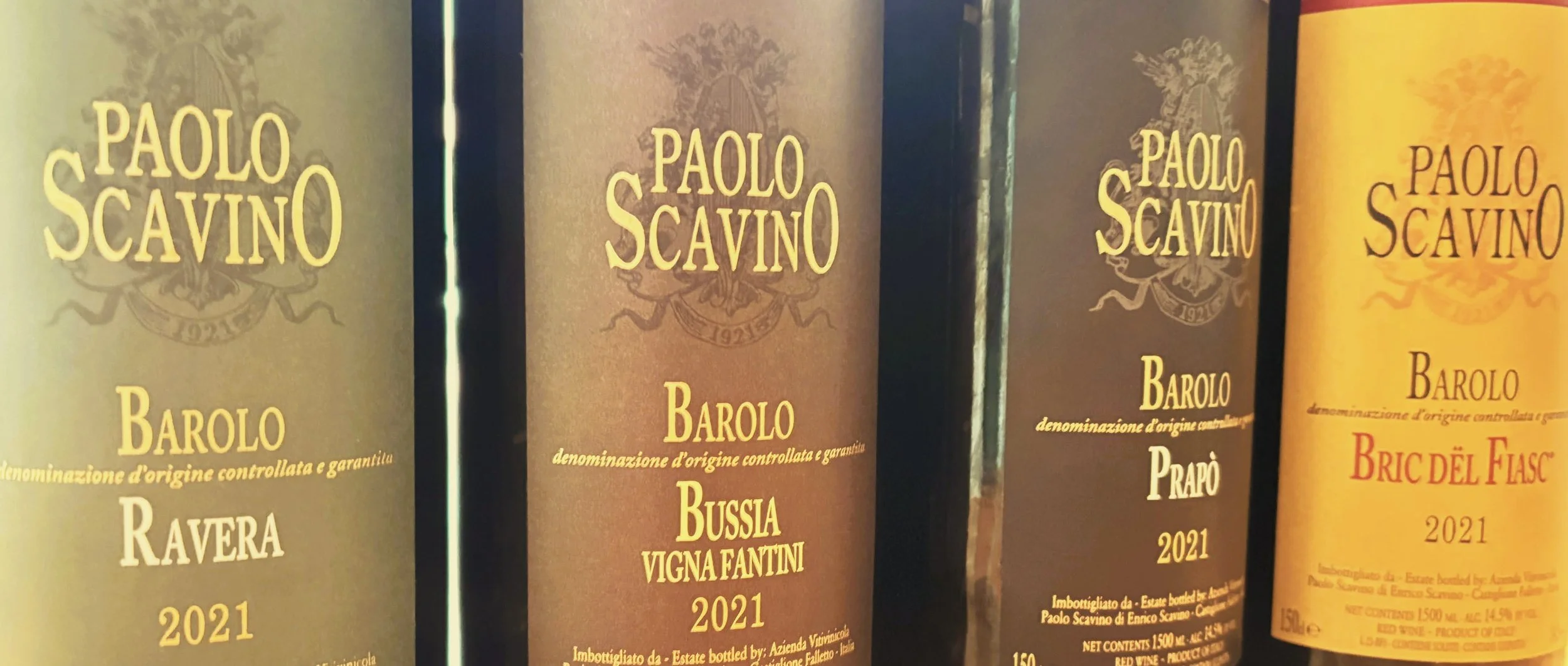
A few years later, while I was in Las Vegas Enrica came through town and it was wonderful to talk about that lunch and enjoy some of her wines and others. In what felt like a full circle, Mattia Benevello, who runs Scavino's export, sat down with me over four 2021 Barolos in magnum.
We talked about the wine and the family, because at Scavino you cannot separate the two. Enrico was passionate about every one of the 20 crus he worked, and he made it his mission to make wine in a way that let each one show what it was. That is why every Scavino Barolo is made exactly the same way: the same fermentation, the same eight to ten days on the skins, the same large casks. Hold the cellar still, and the only thing left to taste is the ground.
Enrico also designed his own fermenter for the cru Barolos, and Mattia explained it with a teabag. An iron net holds the skins under the wine while the wine moves through them. The skins never break, so the extraction stays gentle and still goes deep.
Ravera came first. It is the family's highest vineyard, up in Novello, and thirty years ago it struggled to ripen. Warmer summers have put flesh behind its cool, herbal style, and Mattia's line on it stuck with me. Not every change is a bad change.
The second wine came with a story about loss. For 33 years the family rented a parcel of Cannubi, one of the most famous names in Barolo and the only vineyard they ever leased. In 2018 the owner died without direct heirs and the lease ended. “Carobric”, their blend of Cannubi, Rocche dell'Annunziata and Bric dël Fiasc, ended with it. That same year they bought into Bussia, in Monforte, at the highest point of the cru and the only part of it on sand. Bussia usually means power. The 2021 Vigna Fantini, its first vintage, was about lift.
Prapò is the family's corner of Serralunga d'Alba, under a hectare on a steep slope that runs off the Cerretta hill. Serralunga makes Barolo's most powerful wines. Here the exposure ripens the fruit fully, so the power arrives with flesh on it.
Bric dël Fiasc came last. It sits beside the cellar at the center of the zone, and Mattia drew a circle around it on the map, three or four kilometers wide. Cannubi, Cerequio, Brunate, Rocche dell'Annunziata, Villero, Monprivato and Rocche di Castiglione all fell inside it. The family has owned the vineyard since the estate began in 1921. In 1978 Enrico and his father bottled it alone for the first time, when most Barolo was still a blend of villages. It was the wine Enrico and Enrica carried to New York in 2004.
Enrico died in 2024. Tasting those 2021s, I kept thinking about how proud he would be. Enrica and Elisa have worked beside him for over twenty years, and they are doing what he did. They hold the cellar to his method, they keep pushing to make better wine, and they are building something to hand to the next generation.
A private visit to Paolo Scavino is not a tasting room stop. Visits are by appointment only and built around the land, the vineyards and the table. You taste the crus side by side, all made the same way, so every difference in the glass comes from the ground. You stand at the fermenter Enrico designed and see the net that keeps the skins under the wine. Then you walk out to Bric dël Fiasc, next to the cellar, the vineyard the family has owned since 1921.
If the Piedmont is on your itinerary CONTACT US
FROM THE CELLAR
2021 Barolo Ravera, Paolo Scavino (Novello). About three hectares at 430 meters, facing east, and the last vineyard the family picks every year. Sant'Agata marl with a strong streak of limestone. Balsamic, menthol, sage and white pepper over red fruit, with cool mineral tannin and high acid. The freshness holds even in hot years, which is why demand for Ravera has climbed for fifteen years.
2021 Barolo Bussia Vigna Fantini, Paolo Scavino, (Monforte d'Alba). About 450 meters, the highest of Bussia's twelve sub zones, with vines planted between 2006 and 2010. Elisa treats the block as experimental because of the genetic mix in the vines, Nebbiolo Rosé among them. Menthol, blood orange, spearmint, dried cherry and lilac over refined, almost austere tannin.
2021 Barolo Prapò, Paolo Scavino, Nebbiolo (Serralunga d'Alba). 370 meters, facing south and southeast, replanted in 2010 with a massal selection chosen for loose clusters and low yields. Iron-rich sand over gray marl gives the wine its rusty mineral edge. Plum, licorice, dark chocolate, graphite and iron, with full Serralunga tannin. Only a handful of producers bottle Prapò.
2021 Barolo Bric dël Fiasc, Paolo Scavino, Nebbiolo (Castiglione Falletto). The family farms about a third of the small Fiasco cru, on vines planted in 1979, 1984 and 2009, where limestone and sandstone cross and iron-rich water rises from deep underground. Dark cherry, iron, dried herbs, white pepper, orange peel and geranium, with broad tannin and real perfume on top.
MV Vino Rosso, Paolo Scavino, Nebbiolo, Barbera, Dolcetto and Merlot (Piedmont). To keep the Barolos strict, the family holds back the fruit of its younger vines, and this is where that fruit goes. The blend breaks the appellation rules, so it carries the simplest label in Italy, table wine. Stainless steel only, no oak, made in tiny quantities. Red cherry, violet and spice, juicy and supple. A wine for any night of the week from the house that bottled Bric dël Fiasc in 1978.
Langhe Nebbiolo, Paolo Scavino, Nebbiolo (La Morra). Two single vineyards in La Morra, Bricco Manescotto, planted in 1960 and 1968, and Annunziata, planted in 1997. It is the one wine in the cellar made differently from the Barolos, on purpose. A cool, gentle fermentation, five days on the skins, then eight months in neutral oak. Crushed flowers, red cherry, blood orange and dried herbs over a fine, lifted tannin. It is the bottle winemakers and their teams in Barolo open on an ordinary night.
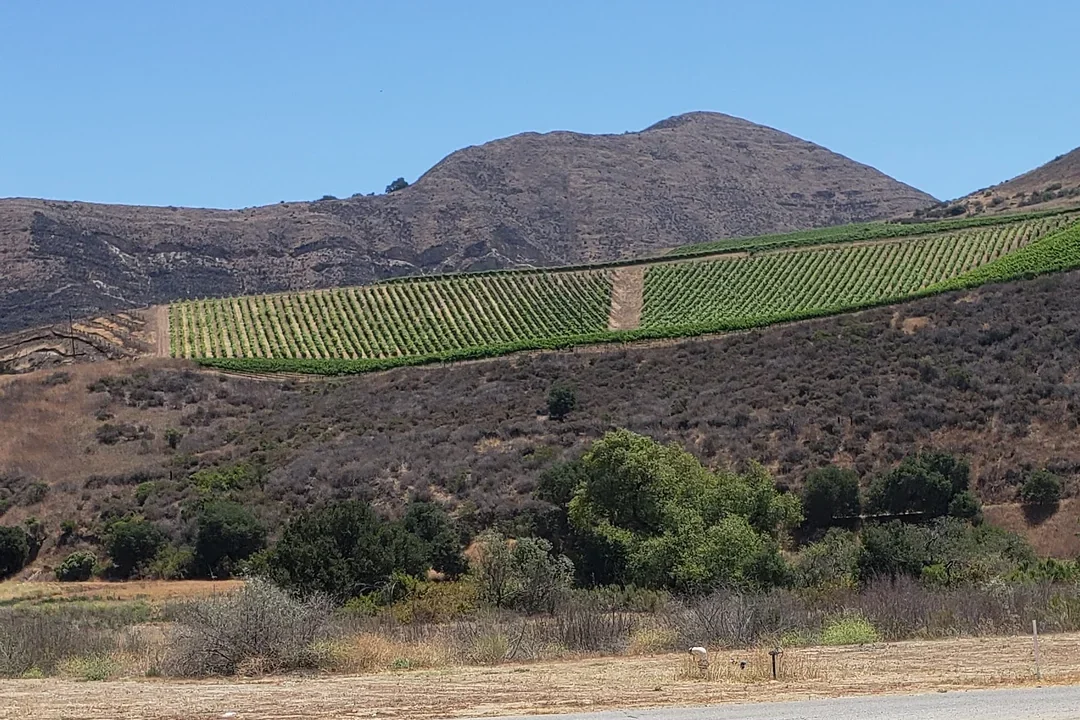
Au Bon Climat
Au Bon Climat, founded by Jim Clendenen in 1982 and made on Bien Nacido Vineyard since 1990. His longtime team and his children, Isabelle and Knox, keep his Burgundian methods. Cool Santa Maria Valley fruit, picked for balance and freshness, but aging beautifully
Au Bon Climat
Santa Maria Valley, Santa Barbara County, California
Jim Clendenen was one of the first winemakers I ever met. It was 1998, a few months into my job as cellar master at Windows on the World, and he came up to the 107th floor to run a staff training. He tasted the wine team first, then the entire front of house. I was fresh out of culinary school, tasting next to some of the most experienced palates in the country. Everyone around the table had something to say about every glass. It was intimidating, and I was shy about offering an opinion in that company. Jim asked for mine anyway.
Somewhere in the lineup he turned to me and asked what I thought of the wine. I told him I liked it, but I did not know enough to say much more. He would not let it go. “You might not have the technical knowledge,” he said, “or have tasted all the Pinot Noirs you ever will. That takes time. But your opinion is yours alone.” He told us he made wine for everyone, the newcomer and the expert, and wanted my opinion. By then Jim had spent sixteen years preaching the beauty of Santa Barbara Pinot Noir at a time when most professionals only cared about Burgundy. He had a room full of those professionals ready to tell him what they thought, and he wanted to hear from the guy a few months into the business I have been in a lot of rooms since that day, and the producers worth knowing all do what Jim did. They ask questions to everyone. Most never learn to.
Jim left UC Santa Barbara in 1974 with a pre-law degree and a plan for law school. Six months in Europe in 1977, through Bordeaux, Champagne and Burgundy, ended the plan. In 1982 he and Adam Tolmach started Au Bon Climat in a former dairy barn outside Los Alamos. There was no money to hire anyone, so the two of them did all of it. Tolmach left to start Ojai Winery, and in 1990 Jim moved the operation onto Bien Nacido Vineyard in the Santa Maria Valley, into a plain building he shared with Bob Lindquist of Qupé for the next three decades.
Inside that building Jim ran a Burgundy cellar. Open-top fermenters, whole clusters, malolactic in small barrels, long contact on the lees, no filtration. He picked for balance and said so to anyone in range. If you have seen Sideways, the Pinot Noir Miles cannot stop talking about is the style Jim had been making in Santa Barbara County for more than twenty years before the film came out.
Every day in that building there was lunch. Jim cooked. When he traveled, Enrique Rodriguez, his first employee, cooked. Cellar crew, growers, importers and visiting winemakers sat at one long table, and the bottles kept coming. Henri Jayer ate there. So did Jancis Robinson. Gavin Chanin, who spent a decade as Jim's assistant, said Jim mentored half of Santa Barbara County.
I sat at that table twice while Jim was alive. He died on May 15, 2021, and the next time I sat there was that July, a week before his celebration of life, with Susan beside me. Bob Lindquist was there, and so were Enrique and the whole wine team. We opened a bottle of sparkling wine and toasted Jim at his own table. Then, the way it went at every lunch, the bottles kept appearing. New vintages, old vintages, his and other people's, a Burgundy or two.
Jim Adelman, who has made the wines since 1991, and Enrique Rodriguez now own a share of the winery, with more than sixty years at Au Bon Climat between them. Jim's daughter Isabelle works on the business side, and his son Knox joined the cellar in 2022. Each has a Pinot Noir named for them. The wines taste the way Jim made them taste.
I have been drinking his wines for twenty-eight years. His Santa Barbara Pinot Noir is a staple in my house and has been part of every wine program I have run.
A visit to Au Bon Climat through Vineyard Confidential goes to the winery on Bien Nacido, not the tasting room in town. You walk the hillside blocks that have fed these wines since 1990 with the people who farm and ferment them. You taste from barrel with the team that stood beside Jim for thirty years, and then you sit down at the table where he fed the wine world. By the end of lunch someone will ask what you think, and they will mean it.
If the Santa Barbara County is on your itinerary CONTACT US
FROM THE CELLAR
2023 Chardonnay, Au Bon Climat (Santa Barbara)
Whole-cluster pressed, aged in neutral French oak on its lees. Citron, apple blossom and grapefruit, with bright acid and no butter.
2024 Pinot Noir, Au Bon Climat (Santa Barbara). Bien Nacido, North Canyon, Rancho Real, Kick On and Los Alamos, each picked in several passes, eight months in François Frères barrels, 13.5 percent alcohol. This is the wine Jim built to prove balance does not require a special occasion. Red currant and blood orange, bay leaf and white pepper, and wonderful freshness.
2024 Pinot Noir, La Bauge Au-dessus, Au Bon Climat (Santa Maria Valley). The winery translates the name as a wild party upstairs. It began on the hillsides of Bien Nacido, and once his own Le Bon Climat vineyard proved itself he started blending the best lots of both every year. Five-ton open-top fermenters punched down daily, two years in barrel, egg white fining, bottled unfiltered. Cherry and cranberry up front, rose petal, earth and spice underneath.
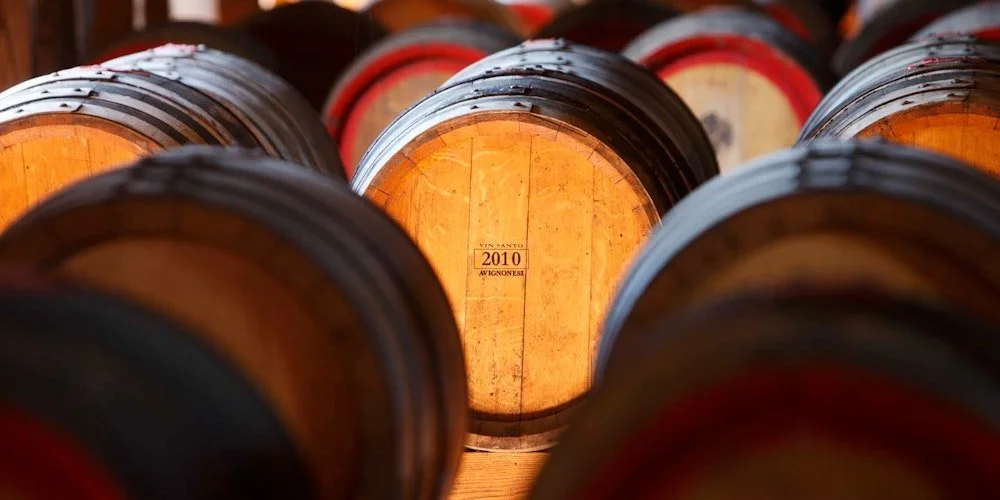
Avignonesi
Twenty years of enjoying Vino Nobile and a day at Avignonesi, the largest certified biodynamic estate in Italy. Avignonesi was founded in Montepulciano in 1974. Virginie Saverys bought it in 2009 and converted 175 hectares to organic and then biodynamic farming, the largest such estate in Italy. Her daughter Eline's Ventisei comes off the same ground.
Avignonesi
Vino Nobile di Montepulciano, Tuscany, Italy
The Estate
Avignonesi was founded in 1974 by the Avignonesi family who have been residents of the town since the sixteenth century. In the period that followed the winemaking was the kind that ambitious Tuscan estates did then, which was prove they could compete with international grapes and new oak. Some of their wines defined the period. However, Virginie Saverys, a Belgian attorney and trained winemaker, purchased the estate in 2009 and chose a different pat. She immediately started the transition of the 175-hectare estate to organics and achieved certification in 2016. It was certified biodynamic in 2019 and is the largest estate of the kind in Italy.
The part that matters in the glass however, is what she did to their flagship wine Vino Nobile. The appellation lets you put thirty percent of something else in the bottle, and most producers use some of it. She took it to 100 percent Sangiovese. Tuscany sells itself to Americans in three names. Chianti, Brunello, and the Super Tuscans. Vino Nobile di Montepulciano was in the founding class of Italian DOCGs in 1980, the same year as Brunello, on a hill twenty miles east of it, but for years Vino Nobile was not regarded as highly. Vierginie was determined to change that, and I believe she has.
Vin Santo
The Vinsantaia at Avignonesi has no temperature control, and that is the entire point of it. It is a small building that is mostly height, and it is full of caratelli, fifty liter barrels sealed with wax and left alone. The room is allowed to freeze in January and cook in August because the swing is what drives the fermentation. I have been in a great many cellars. I have never been in another room that smells like that one, and Susan and I were there in the summer of 2018. I can still call it up.
We were too late in the year to see the fruit hanging. That happens earlier, whole bunches strung up in the appassitoio for three to six months until they give up half their volume, and people who have seen it describe rows of drying grapes like drapes across a room. We got the empty loft and the story. Then we got the wine, which is the part I was not prepared for.
They poured the regular Vin Santo first, which is a serious wine on its own terms. Then the export manager went and got the Occhio di Pernice, and he did not bring one bottle. He brought 1990, 1998, 2001 and 2005, in the 375s, and poured a vertical of a wine that almost nobody gets to taste twice in a lifetime, let alone four times in an afternoon. The 2005 was the current release and next to the other three it was an infant, and it was still one of the best things I have ever had in a glass. I have had Sauternes and Port going back a hundred and fifty years. I had never had a Vin Santo like that, and I had certainly never had four of them side by side.
Occhio di Pernice means eye of the partridge, which is a description of the color. It is made from Sangiovese rather than the white grapes that go into most Vin Santo, and everything about it is deliberately inefficient. The dried fruit is pressed at roughly half the weight it started at. The juice goes into the caratelli with a madre, a mother yeast the family has kept going for generations, and then it ferments for anywhere from one to four years depending on what the weather decides to do. It sits for more than a decade after that, sealed, while over half of it evaporates through the wood. What comes out is a wine of about twelve and a half percent alcohol and a couple thousand half bottles a year.
The next generation
This has always been a family affair. Virginie's son Basile was the COO and now running the estate. Eline, her daughter, opened two wine bars in London before opening another in Antwerp. She also launched the first new label of the estate called Ventisei. Ventisei is Italian for twenty six, the age she was when the first wine bar opened, from that fruit on the estate, blended to her own taste but made with the same exacting standards. The estates and people I keep going back to and support all have one or more wines like this. They have a bottle that makes the reputation, priced at what a reputation costs. What separates the ones I actually buy from the rest is the other half of the sentence. Same crew, same ground, same farming, going into a bottle you open on a Tuesday without thinking about it.
I started drinking Ventisei not long after it appeared, and then I started programming it. I put the Rosso by the glass in Atlanta, which is the hardest test a wine at that price ever faces. It has to be good on the fourth night the bottle is open, it has to work against a kitchen sending out five different things at once, and a guest has to want a second glass. It did all three, every service, for as long as I poured it.
What a private visit is
A private visit to Avignonesi through Vineyard Confidential is the day we had, not the tasting room version of it. You walk plots at different elevations with someone who can tell you why the same Sangiovese tastes like two different grapes three hundred meters apart. You have a wonderful lunch on the terrace overlooking the Tuscan countryside and vineyards only a few feet from you.
The final part of the day is experiencing the sights and smells of the Vinsantaia, and then taste some of that magical elixir which will sear the memories in your brain forever.
If the Sicily is on your itinerary CONTACT US
FROM THE CELLAR
The 2021 Toscana Rosso, Ventisei IGT
This is Eline's wine and an argument for restraint in a region that spent the 1990s proving it could make big wine. Sangiovese led with small parts of Merlot and Cabernet, fermented in stainless with indigenous yeast and a share of the fruit left whole, then raised in tank. Nothing touches wood. Wild strawberry, sour cherry, rosehip, low alcohol, fine tannin, a bay leaf note at the end. Serve it cool. It tastes like where it came from because nothing was added to make it taste like anywhere else.
The 2022 Vino Nobile di Montepulciano, Avignonesi DOCG
is 100 percent Sangiovese, which is the whole argument in one number. Red and black cherry over dried herb and iron, tannin that is firm without being hard, and the kind of acidity you only get off vineyards high enough to cool down at night. This is what the hill does when someone farms it properly and then gets out of the way.
1990 Vin Santo, Occhio di Pernice
This was the last glass we tried, and my reaction was almost visceral. It pours incredibly slowly and the aromas were a mix of crème brulee, molasses that lasted forever. We left the estate 30 minutes after the pour and the glass still smelled incredible. This wine belongs in any conversation about the finest dessert wine ever made.
1998 Vin Santo, Occhio di Pernice
Deep ruby to black, toffee on the nose, scents of violets and black fig and date, Incredible flavor and concentration but with the acidity to back it up.. This is just decadence defined. molten treacle toffee on the nose, enormous sugar carried by good acidity. Franco Ziliani, 16.5 of 20: dark ruby, rich and intense, warm and long, with surprising fresh fruit notes.
2001 Vin Santo, Occhio di Pernice
One of the best dessert wines I have ever had. It’s been described as a “singular work of art” and I couldn’t agree more. It’s caramel, maple syrup, espresso bean, licorice, candied fruit and dried fig, smoky and savory on the nose, and built like a tank.
2005 Vin Santo, Occhio di Pernice
Dried fig, date, molasses and caramel, hints of cardamom and cumin with astounding acidity that will keep it fresh for years.
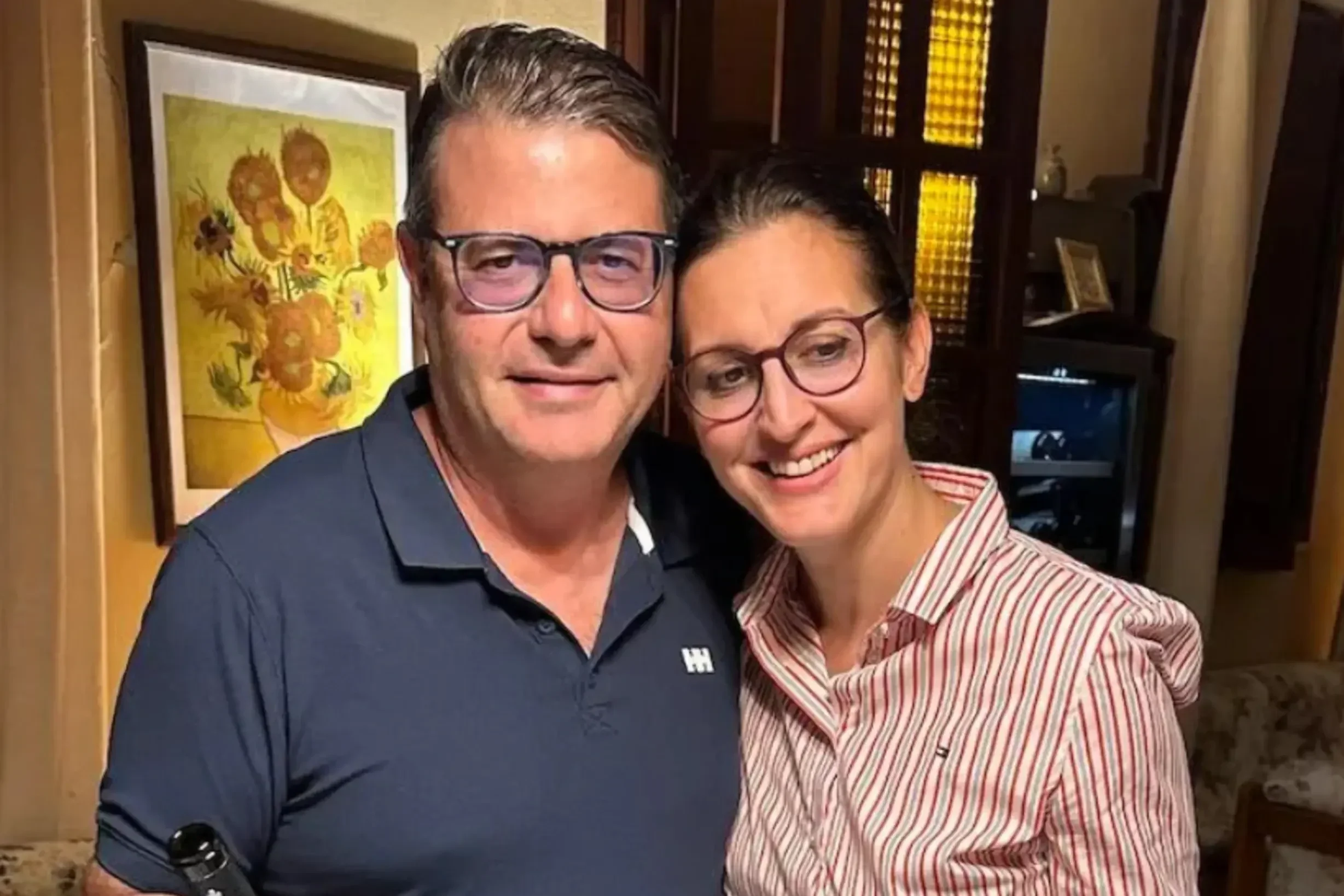
Feudo Montoni
Feudo Montoni has farmed Sicily's high interior since 1469, three generations of the Sireci family joined by Sicilian American chef Melissa Muller of New York's Eolo. Altitude and iron-rich sand turn Catarratto into something singular. Access through Vineyard Confidential.
Feudo Montoni
Cammarata, Sicily, Italy
In the early 2010s there was a restaurant in Chelsea called Eolo: Sicilia a Tavola. The chef and owner was Melissa Muller, a New Yorker whose grandmother came from a Sicilian village of six hundred people, and who spent every childhood summer there. Eolo was purely Sicilian, down to a wine list that carried nothing else and earned a Wine Spectator Award of Excellence four years running. The dish I cannot forget is her casarecce with fava beans and fresh ricotta, twisted noodles holding tender favas, olive oil, garlic, and wild herbs, the ricotta cutting the earthy, faintly bitter edge of the beans. With that plate Melissa put a white wine in front of me I had never heard of. Catarratto, from an estate called Feudo Montoni in the island's high interior. I have been drinking it ever since.
Eolo is gone now, and the reason it closed is the best part of the story. While researching her cookbook, Sicily: The Cookbook: Recipes Rooted in Traditions, Melissa traveled the island and visited Feudo Montoni, where she met the winemaker, Fabio Sireci. She went back and forth between two lives for a while, then chose one. She married Fabio, left New York, and moved to the center of Sicily. Today she co-manages the estate's global sales and commercial work, and the two of them are in the United States often for the trade. I have been trying to cook that fava dish ever since, and with her book I get close. What I cannot reproduce is the way her kitchen served it. The chef who first put this wine in front of me now helps run the estate that makes it.
Feudo Montoni dates to 1469. Rosario Sireci bought the property in the late 1800s after discovering the wealth of ancient vines growing there, and passed it to his son Elio, who passed it to Fabio, the third generation. Fabio trained as an engineer and could have taken a career on the mainland. He came back to the farm instead and learned winemaking at his father's side. His and Melissa's two sons are the fourth generation.
The estate sits in the high interior between Palermo and Agrigento, with vineyards climbing toward 2,300 feet, fanned by winds off the Madonie and Sicani mountains. For centuries the vineyards have been surrounded by durum wheat fields that act as a natural barrier, an island within an island. The farming is certified organic and older than the certification. Nothing is fertilized. Fava beans and peas are sown between the rows to fix nitrogen in the soil, the same beans at the center of the dish that started this story. Sicily's reputation is heat, ripeness, and weight. Montoni's altitude and isolation produce the opposite: freshness, acidity, and restraint.
The Masso vineyard takes its name from the rocky, sandy, iron-rich stone it grows in. It sits at 700 meters, facing east, planted to Catarratto vines now more than fifty years old, grafted by hand onto wild rootstock in the old Sicilian manner. Catarratto is the most planted white grape on the island, concentrated in the west and mostly anonymous. Grown here, in the center, at elevation, on that iron and sand, it becomes something else entirely. This is the argument for the cru concept Fabio works by: one vineyard, one grape, bottled on its own because the ground earns it.
A private visit to Feudo Montoni is not a tasting room stop. Visits are by appointment only and built around the family's table, in the middle of an estate the Sirecis have farmed for three generations.
From The Cellar
2024 Catarratto del Masso, Feudo Montoni
This wine is a great case for why altitude and soil matter more than a grape's reputation. Citrus and mountain herbs over a saline, mineral finish, with acidity that keeps every glass asking for the next one. It is light to medium in body and completely unforced. Most Catarratto disappears into blends and bulk. This one comes off a single iron-rich vineyard at 700 meters, and you taste the address, not the variety.
If the Sicily is on your itinerary CONTACT US
The Slopes Sancerre Forgot: Coteaux de Giennois
Make the beautiful drive south from Paris and about twenty minutes before Sancerre you pass through a small appellation called Coteaux du Giennois. Most people drive right through on their way to the famous name but they miss meeting a family that has farmed the land since the early 1920's. Marc & Yves make wine from the same Sauvignon Blanc grape and flint soils that have made Sancerre the go to summer wine.
Fernand & Fils
Coteaux de Giennois, Loire Valley, France
Sancerre has never been more popular. It is the default white wine order in every American city, the bottle that needs no explanation, the one appellation that sells itself. That popularity has a cost. Five years ago Sancerre was an everyday wine. Today most village bottlings land on American shelves between 35 and 45 dollars, and single-vineyard wines push well past that. The wine did not change. The price did.
Drive twenty minutes north along the Loire and the story changes. The appellation is Coteaux du Giennois. Almost nobody outside France knows the name. The slopes here carry the same flint and limestone that built Sancerre and Pouilly-Fumé, and the grape is the same Sauvignon Blanc. After phylloxera these hillsides were abandoned. The region was judged too cool to ripen Sauvignon reliably, and the local families turned to cattle and grain. The vines disappeared. The land waited.
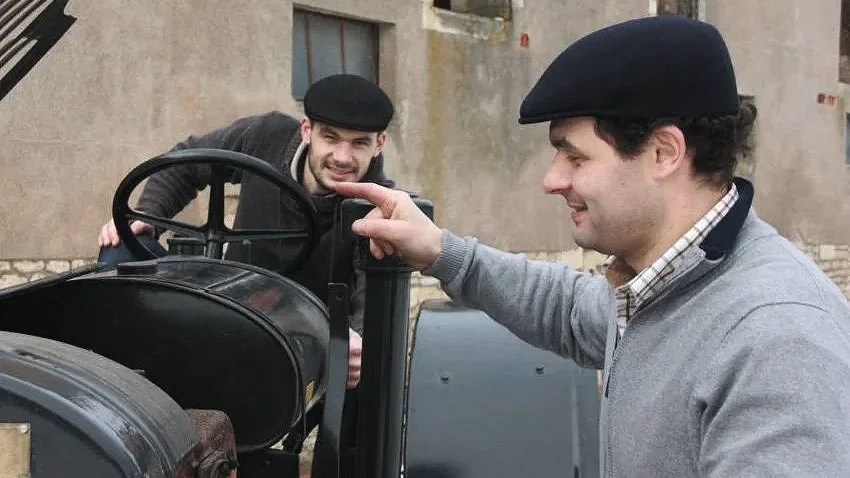
One of those families was the Thibaults. Fernand Thibault was born in 1899 and farmed this ground his entire life. In 1920 he bought the first tractor in the region, a machine his neighbors had never seen in a field. That instinct, respect the land and embrace the tool that works it better, never left the family.
In 1991 his grandsons Jean-Fernand and François made a bet. Sancerre and Pouilly were booming a few miles south, and the abandoned flint slopes above the Loire shared the same geology. They cleared hillsides that had sat empty since phylloxera and replanted Sauvignon Blanc. Their sons finished the job. Marc trained in New Zealand before coming home to lead the winemaking. Yves worked in South America before returning to join him. Together with their cousin Christophe they converted the vineyards to certified organic farming, a century after their great-grandfather bought that first tractor.
The estate still runs on Fernand's logic. Tradition where tradition earns its place, modernity where it serves the wine. They plow between the rows with a hydrostatic tractor that lets the driver work at a crawl without stalling, precise enough to cultivate tight to the vine. They move wine with a slow-speed pump that treats it gently instead of forcing it. Each parcel ferments separately in stainless steel. Nothing about the operation is nostalgic and nothing about it is industrial.
The blanc under the Fernand & Fils label, named for the man with the tractor, comes off silex parcels near the Pouilly-Fumé border. Flint smoke on the nose, stone fruit and citrus underneath, real cut on the finish. It is not built for the cellar. The best Sancerre carries more weight and rewards patience. This wine is leaner, brighter, and ready the day you buy it. In an Atlanta August, with a week of hundred-degree afternoons ahead, that is not a limitation. That is the assignment.
The wine world spends enormous energy chasing famous names at rising prices. The better play is knowing which unfamous names share the famous geology. A family that has farmed the same ground since before the appellation existed. Vines replanted on slopes their neighbors gave up on. The same grape, the same river, the same flint. One of the best values in the Loire, hiding twenty minutes from one of its most expensive addresses.
From The Cellar
2024 Coteaux de Giennois Blanc
A fruity aroma featuring abundant notes of peach, apricot, and melon. The well-textured palate continues with more stone fruit flavors, complemented by hints of quince and a strong mineral presence from the terroir. This wine offers excellent value, showcasing vibrant Sauvignon Blanc qualities and wonderful for a lunch with friends and family, and a treat with some fresh goat cheese.
If the Loire Valley is on your itinerary CONTACT US
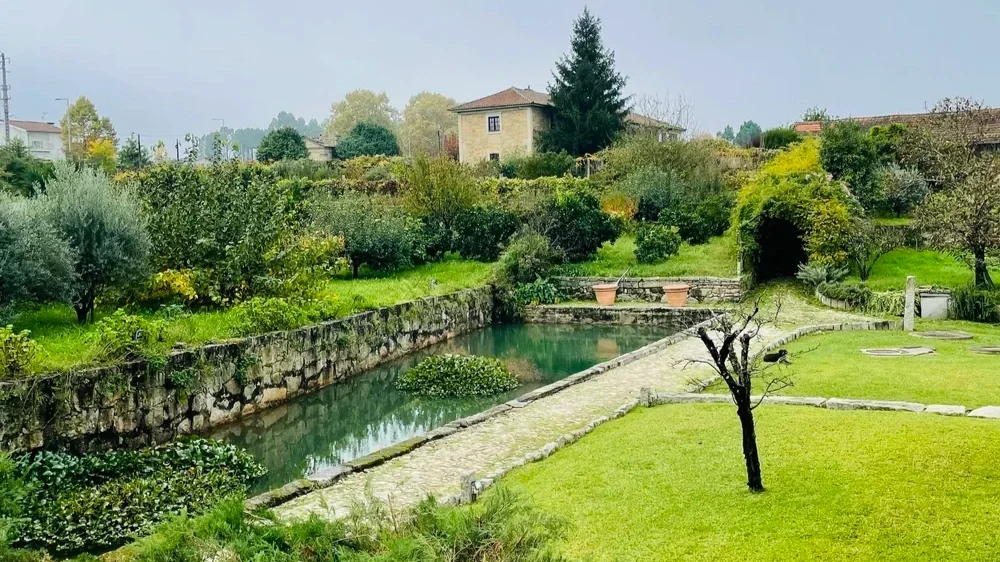
Quinta de Santiago
Quinta de Sandiago in Vinho Verde Portugal
Vinho Verde, Portugal
Quinta de Santiago
Vinho Verde is one of the greenest place and wettest region in the world of wine, and it earns the color honestly nestled between northern Portugal and Spanish Galicia. Everything grows. Corn, cabbage, kiwi, camellias, and vines, all of it stacked into small family plots that have been divided among children for centuries. Eucalyptus and pine hold the hilltops. Stone villages hold the valleys. The light after a rain has a washed silver quality you do not see anywhere else in Iberia. The wine that comes from this landscape is exactly what you would expect. Light, fresh, electric with acidity, made to be drunk young with whatever came out of the cold Atlantic that morning.
I went to a meeting with an incredible Portuguese importer, JD Selections, several years ago and had the pleasure to meet Joana Santiago. She did what most great winemakers do. She told incredible stories, not just about the wine, but about her family, her grandmother, and the region where she grew up. You can instantly tell she takes pride in a family heritage that stretches back to 1899. I put the wine on the list at three of my restaurants after that meeting, and it became the best seller at two of them.
I am always skeptical of Vinho Verde, as most of them are blended anonymously, sweetened to a formula, and injected with carbon dioxide at bottling to fake freshness the wine never earned. Quinta de Santiago is the exception, and the reason is how they farm. The 7.5-hectare estate has been in the family since 1899. For a century it worked like every farm in the Minho. Wine, olive oil, cereals, milk, fruit, most of it for the family table, the grapes sold off to the regional cooperatives. That changed in 2009 when Mariazinha Santiago was 86 and challenged her children and grandchildren to stop selling the fruit and start making the wine themselves. She wanted them to prove that the native varieties of northern Portugal belonged in serious company.
The family farming is now organic. Fermentations run on native yeasts. Joana also organized and leads a group of regional growers focused on water use and preserving local resources. For their entry wine they use the heritage blend of Loureiro, Trajadura, and Arinto, treating it with the same seriousness as the estate bottlings. This is why it drinks like nothing else at its level, and why the family has become one of the producers redefining the region.
A visit to Quinta de Santiago arranged through Vineyard Confidential is time with Joana herself, on the terraces above the Minho with Galicia visible across the water, at the estate her great grandmother ran and her grandmother reinvented at 86. The quinta is not a tasting room operation. It is a working family farm where the person pouring your wine is the person whose name is on the gate.
2025 Quinta de Santiago Vinho Verde is the family's answer to the question of what the traditional blend can do when someone actually farms for it. Loureiro brings the laurel and white flower lift, Trajadura the soft stone fruit middle, Arinto the citrus spine that holds the finish together. Organic farming and low yields give the fruit a concentration these varieties almost never see, so the freshness is real, grown on the vine rather than injected at the bottling line. At 10.5 percent alcohol it is a wine you drink by the bottle without thinking twice. Oysters, grilled sardines, anything that came out of cold water.
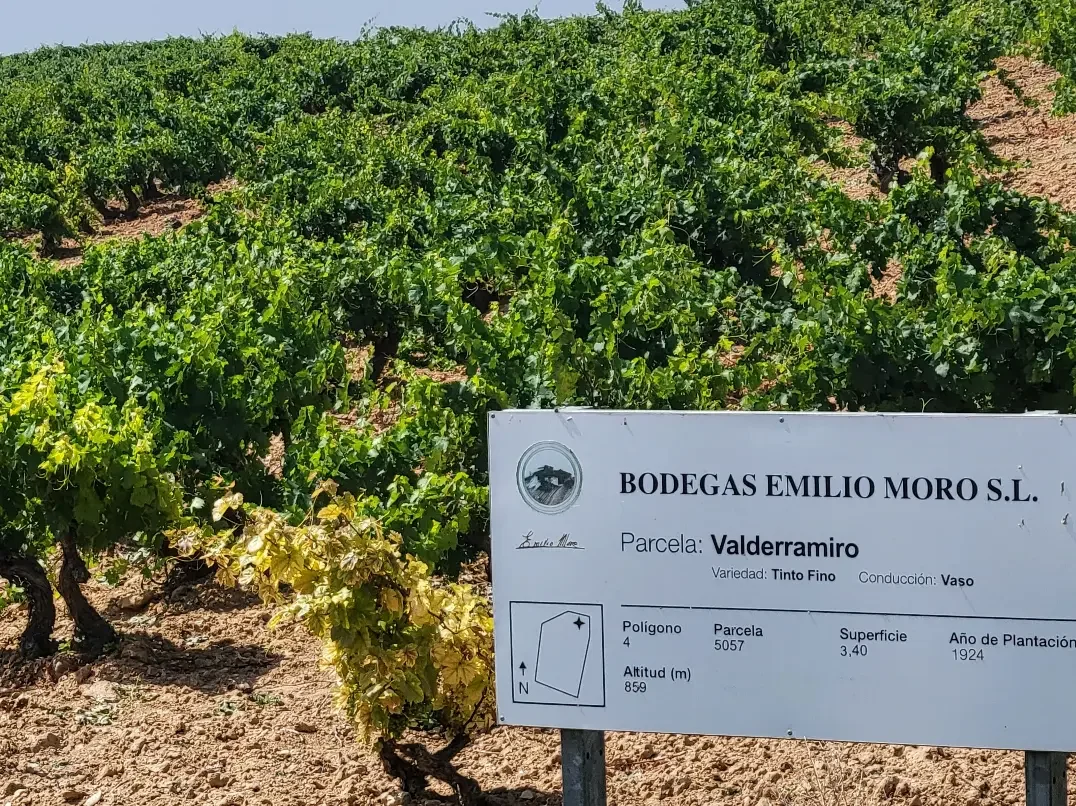
Bodegas Emilio Moro
Bodegas Emilio Moro is a a fourth generation estate in Ribera del Duero. The Valderramiro vineyard was planted in 1924 and is still the source of the fruit used throuought the estate.. Private access through Vineyard Confidential.
Ribera del Duero, Spain
Bodegas Emilio Moro
If Spain is part of your itinerary contact us
"It has never had anything but its mother's milk."
Alberto Medina Moro said it the way you would state the weather, standing over a fire made of vine cuttings. The lamb chops were the size of two fingers. The fat had gone translucent and was dripping into the sarmientos and coming back up as smoke, and the smoke smelled like the vineyard we had walked that morning, because it was the vineyard we had walked that morning. Every winter the vines get pruned, and the cuttings go under the lamb. Nothing about this is presented to visitors as tradition. It is just how the fire gets lit. That was hour one of a lunch that ran five.
The morning of our visit started in the Valderramiro vineyard, planted in 1924, and that is where anyone should start here. The vineyard is low bush vines with no wire and no trellis, and the trunks on the oldest of them are as thick as a person’s waist and go off at angles that look arthritic. I have walked Bechthold in Lodi, planted in 1886, and Nacional at Quinta do Noval in the Douro, two and a half hectares of ungrafted vines that have produced a handful of the greatest bottles ever made. Standing in Valderramiro I thought about both. Not because the wines resemble each other. Because all three are small pieces of ground that outlived every economic argument for clearing them, kept by families who could not bring themselves to do the sensible thing. You cannot photograph any of them well. They come out of the earth looking like debris. Then you taste what comes off them and the argument ends.
This ground sits above 750 meters. The days are punishing and the nights drop hard, and that swing is the entire reason Tinto Fino works here and nowhere much else. Tinto Fino is Tempranillo, but not the Tempranillo most people have had. The berries are smaller, the skins thicker, the clusters looser. More skin against less juice means more of everything, which is why Ribera del Duero spent two decades being turned into wines that punched you in the mouth.
The Moros went the other direction, and they had the material to do it. Valderramiro in 1924. Resalso in 1932, the year the second Emilio Moro was born. Sanchomartín in 1964. When they later replanted across what is now more than 200 hectares, they did not order clonal material from a nursery. They took wood off their own old vines. The entire estate is a genetic copy of the parcels you can still stand in.
That is what those thick, ugly, magnificent trunks actually are. Not a heritage exhibit. The source code.
We then sat on a beautiful veranda above overlooking the vineyard and Alberto, the fourth generation, opened bottles of Godello from the family's Bierzo project talking about his family, the land and its people. His uncles José and Javier are the third. His great-grandfather was born in 1891 in that village and his grandfather in 1932 in that village, and he tells it with the specific flatness of someone who has never once considered that it might be a marketing asset.
Then the working winery, and then that fire. The lunch is the part I would sell you if I were selling anything. This was a table that saw generations before us, and Alberto and his family embraced us like family. The wine kept coming and the conversation left wine within the first hour and never really came back. By hour three there was no visible line between the people who own the place and the people who run it. By hour five I understood why the wines taste the way they do.
Spain has always had producers who named wines for the land instead of the label, and in Ribera del Duero the Moros were early to make that the organizing principle of the house. They name wines after pieces of ground and leave each one in barrel for as long as it needs. In 2003 the Spanish government wrote that logic into law with Vino de Pago, a category built entirely around single estates and the ground beneath them. The Moros had been working that way for years by then, and they were doing it because of what they had watched their grandfather refuse to pull out of the earth.
A private visit to Emilio Moro through Vineyard Confidential is that day, not the tasting-room version of it. You walk Valderramiro and put your hands on trunks that predate the Civil War. You go into the old cellar underground before you see anything modern. You sit on the veranda with a member of the family while he tells you about his great-grandfather. And then you eat lechazo cooked over the prunings of the vines you walked, for as long as the afternoon holds, at a table where the cellar crew sits down with you.
From the Cellar
Finca Resalso, Emilio Moro
Named for the vineyard planted in 1932, the year the second Emilio Moro was born, this wine broke the rules of Ribera del Duero when it arrived in 1994 as the first young red in the region to see oak. Four months in French barrel, just enough to round it and never enough to disguise it. Red cherry and blackberry with the concentration Tinto Fino gives whether or not you ask for it, and it is the bottle Ribera opens next to lamb off an open fire.
Tempranillo, Emilio Moro
The wine that carries the founder's name, first bottled with the 1989 vintage, the winery's first under the DO. Twelve months in oak brings dark cherry and plum, dried herb, and a graphite edge underneath, with the wood sitting behind the fruit rather than over it. Every vine that goes into it was grafted with wood cut from the family's oldest blocks, Valderramiro planted in 1924 and Resalso in 1932, farmed above 750 meters.
Godello, Emilio Moro “Polvorete”
From El Bierzo, granite at the top of the slopes and slate below, with vineyards climbing past 750 meters. Fermented in stainless steel with no oak, it is fresh and easy to drink but full of nuance, white flowers and citrus pith over a saline line that runs the length of the palate. The winery calls it their most rebellious wine, and it is built for a summer table with friends.
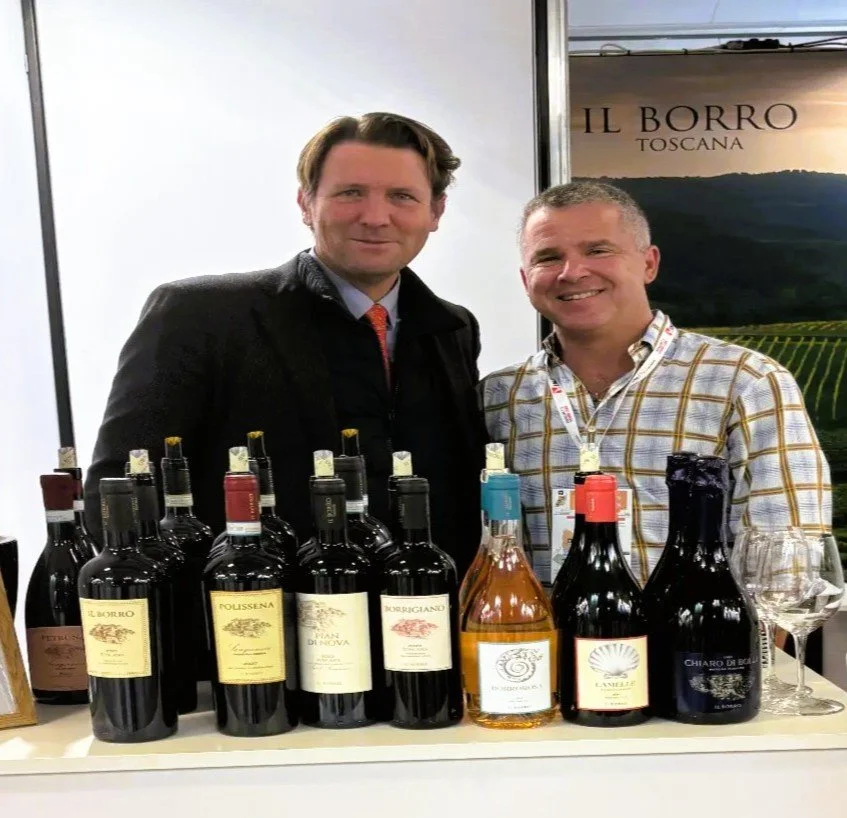
Il Borro
I met Salvatore Ferragamo in 2005, the most junior person in a room full of hotel executives and restaurant owners. Twenty years and a lot of tastings later, that relationship is the reason a private visit to Il Borro looks nothing like a standard Tuscan itinerary.
Tuscany, Italy
Il Borro Toscana
If Tuscany is part of your itinerary contact us.
I met Salvatore Ferragamo in 2005, in the private dining room at the Southern Wine and Spirits headquarters in Las Vegas. It was the American launch of the Il Borro wines, and I had just taken the director job at the Mirage. I was the most junior person in that room. Hotel executives on one side, restaurant owners on the other, and me, trying to look like I belonged. Salvatore did not treat me that way. He spent time with me anyway, walked me through the wines himself, answered questions a junior buyer had no business getting real answers to. I liked the wines immediately. I liked him more.
That relationship never went cold. Whenever Salvatore came through Atlanta, we found time to taste together, picking up a conversation that never really needed restarting. I have poured and sold Il Borro continuously for twenty years since that night in Las Vegas, through every job I have held since.
We reconnected again this February at Wine Paris, twenty years after Las Vegas and a long string of Atlanta tastings in between. Salvatore asked about Vineyard Confidential, listened to the model, and asked why nobody had built this in the US already. We talked about the state of American wine, what actually moves a wine director to put a bottle on a list, and how Il Borro might expand its footprint here. Somewhere in that conversation he also solved a problem for me that had nothing to do with wine. My wife had a series of events coming up in Milan, and Salvatore connected me directly to his team at the Portrait Milano. Susan and I had stayed there the year before, and I still think about the courtyard. Open air, a summer afternoon holding on past six, a rotating list of seasonal spritz that made the heat feel like a feature instead of a problem.
Il Borro sits in the Valdarno, a fortified estate dating back to the 12th century. Ferruccio Ferragamo bought it in 1993, worn down by decades of abandonment, and rebuilt it with local labor and a commitment to eco-sustainable methods rather than importing a design name to stamp the project. Vineyards, olive groves, and gardens now cover the property, and the restoration extended into a spa built into the old stone structures, gardens that feed the estate's own kitchens as much as they please the eye, and cooking classes run where the ingredients came from the ground you are standing on that morning. None of it feels added on. It reads as one family's insistence on doing a single piece of land correctly rather than quickly.
The wines carry that same instinct. Il Borro works with international varieties alongside Sangiovese, a Tuscan estate willing to plant Syrah and Merlot next to the grape that defines the region, then let the blend argue for itself rather than lean on appellation rules to do the arguing.
A private visit to Il Borro through Vineyard Confidential is time inside a restored estate that still functions as a working village, not a museum piece roped off for tourists. You walk the property with people who know Salvatore personally, spend an afternoon in the gardens or the spa, cook a meal with ingredients grown steps from where you are standing, and taste current releases alongside library selections. That kind of access does not come from a booking form. It comes from twenty years of a relationship that started with a young wine director nobody in the room had reason to notice, and that never let a few thousand miles get in the way of sitting down together again.
From the Cellar
Il Borro is the estate's flagship, a blend built around Syrah, Merlot, and Cabernet Sauvignon with Sangiovese in support rather than in charge. Dark fruit and a structured tannin frame that ages on its own schedule, a wine built for a cellar and a decade, not a Tuesday.
Lamelle is the Chardonnay I have poured by the glass for twenty years running. Weight without heaviness, a citrus core that stays honest through the oak, the kind of white that converts guests who walk in saying they only drink red.
Polissena leads with Sangiovese and lets Merlot round the edges, a wine that stays closer to the Tuscan identity of the property while still carrying the polish that runs through everything Il Borro makes.
If Tuscany is part of your itinerary contact us.
Comte Armand
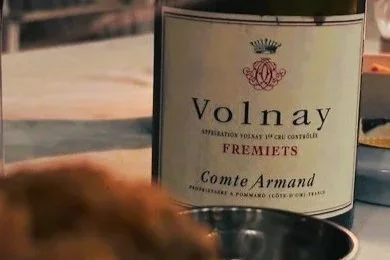
2015 Volnay Fremiers by Comte Armand with fried chicken at Round Hill in Jamaica. A private visit to Comte Armand's built on twenty-eight years of direct relationship with this historic Burgundy domaine, available through Vineyard Confidential.
Beaune, Cote d’Or, Burgundy, France
Comte Armand
My wife Susan and I were celebrating a delayed wedding anniversary last week at Round Hill Hotel and Villas in Jamaica. One night we had the best fried chicken either of us has ever eaten paired with a 2015 Volnay Fremiets from Comte Armand I brought with us. The chicken was burnished and crisp. The wine was delicate, with red fruit and mineral tension that cut through the salt and richness. We drank what we wanted because we were hungry. Because we were sitting together.
I first tasted the wines of Comte Armand at a tasting in the early 2000’s when someone poured the 1985 and 1989 Clos des Epeneaux. I had not had a lot of Comte Armand previous to that, but I knew both vintages were strong and had read enough about Comte Armand to know that these were two very special bottles. The wines were incredible and I have bought, sold and drunk as much as possible over the years.
Comte Armand is not easy to find. The domaine is small and their production is even smaller. The reputation has grown quietly, the way reputations grow when people who know Burgundy keep finding something exceptional and keep their mouths shut about it. The wines are allocated, they arrive sporadically and when they do, they disappear. What makes this producer worth the pursuit is not just the wine and their incredible fruit; it is the hands that have held the domaine and the team responsible for the production in the vineyards and winery.
Pascal Marchande built Comte Armand into something extraordinary and he passed the baton to Benjamin Leroux in 1999 who was all of 24. He left in 2014 to build Maison Benjamin Leroux. Paul Zinetti followed and made the Volnay we drank in Jamaica. Jane Eyre was appointed earlier this year and with her passion for fragrance and delicacy over artifact and ripeness, I’m excited for the future of this Domaine.
The recent Michelin Guide to Burgundy named Pascal Marchande and Benjamin Leroux among the region's top producers. This was not news to anyone who has been paying attention, but a confirmation of what Burgundy nuts already knew. However, it does say something remarkable about Comte Armand as a crucible. This is a domaine that has trained and released the people who went on to define the modern era in Burgundy.
The relationship is not about the wine. The wine is evidence of what happens when you give gifted people land and time and the permission to work without compromise. Marchande understood this. Leroux understood this. Zinetti understood it when he made that 2015. Eyre, working with the likes of Ernie Loosen, Christopher Newman and Dominique Lafon understands it.
I sat with Susan on that island and that special place overlooking the sea. The chicken. The wine. The incredibly beautiful night. Nobody said a word about whether the pairing made sense; it just did.
From The Cellar
2015 Volnay Fremiets, Comte Armand
Medium ruby. Red cherry and dark plum. Mineral tension on the entry that opens into a sustained mid-palate. The finish is clean, the structure is present but not aggressive. This is a wine that does not announce itself. It works because it listens to what is in front of it.
Azienda Agricola Demarie
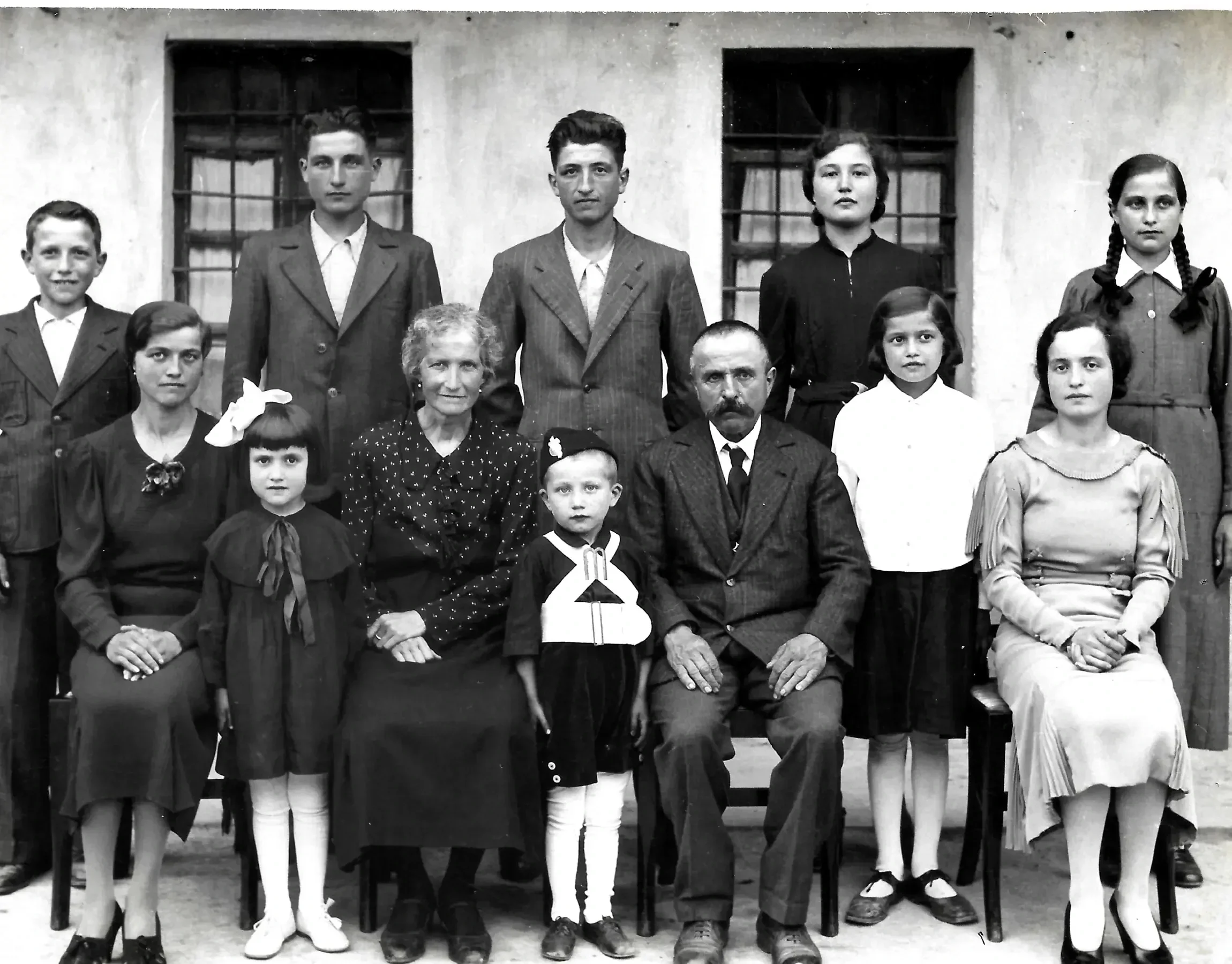
A private visit to Azienda Agricola Demarie in Roero, Piedmont, arranged through years of personal relationship with Paolo Demarie who spent years buying back land in the Roero and Langhe the Second World War scattered, available exclusively through Vineyard Confidential.
Roero, Piedmont, Italy
Azienda Agricola Demarie
Paolo had a glass of his own Arneis in his hand when he pulled out the photograph last summer. Susan and I were sitting with him years into a relationship with the family that started over wine and stopped being just business a long time ago. The photograph was black and white, eleven people arranged in front of the family house in Roero, taken before anyone in the frame knew what was coming. He pointed to a boy in the front row; his father.
He told the story slowly, the way people do when they've told it before but never gotten used to telling it. Who left. Who nobody knew would come back. Susan and I both watched something move across his face that I can only describe as pride sitting directly on top of grief, the two of them not canceling each other out, just occupying the same space at once. Ten years of knowing Paolo, and I had never seen that particular expression before.
It didn't stay contained to the table. He walked us through the winery afterward, past the tanks and the barrel room, out to where the property opens up behind the facility. There's a soccer goal back there. His son was in it, playing keeper, some ordinary summer afternoon game that had nothing to do with us or the tour. Paolo didn't say anything about it. He didn't have to. Susan and I understood, standing there, that everything he'd just described, the land lost, the land bought back one parcel at a time over decades, wasn't for him. He'd already told us as much without using the words. It was for the kid in the goal, and for whoever comes after him.
Producer and Estate History
The Demarie name in Roero goes back to Bartolomeo, Paolo's grandfather, who worked this land in the early decades of the twentieth century on a bet that wine, not just grapes sold off to others, was where the future sat. His son Giovanni formalized the estate as a company in 1957 and kept building on the foundation his father laid. Paolo and his brother Aldo are the third generation, running the vineyards and cellar today with Monica alongside them.
The war years broke the estate apart. When Paolo's father and uncle came home, the closest vineyard to the property, the oldest one the family had, was what remained intact. They replanted it immediately. It is still there, still producing, a physical marker of what survived. Everything else scattered over the following decades, sold off in pieces the way land does when a family is rebuilding rather than expanding.
Paolo spent the better part of his adult life buying it back, across Roero where the winery sits, and further south into the Langhe, where Barbaresco and Barolo are made. The family now farms 30 hectares across both zones, a footprint that took decades of patient, deliberate repurchasing to rebuild. Italian law does not allow him to make Barbaresco or Barolo in his Roero cellar. Barbaresco has to be vinified in Barbaresco. Barolo has to be vinified in Barolo. The reunification is real on paper, in ownership, but the winemaking itself still has to respect zones the law drew long before Paolo was reassembling what his family lost.
In 2013 the family built a new winery into that same commitment to the land, solar powered, cooled by wall and roof thickness instead of air conditioning, filtering its own water through a constructed wetland in front of the building. The estate's vineyards had already been farmed organically for over a decade before formal certification arrived in 2019. None of it reads as marketing when you've watched Paolo walk the vineyard rows explaining soil composition the way other people talk about their kids, because with Paolo, it turns out, that's exactly what he's doing.
What a Private Visit Is
A visit to Demarie means walking those replanted rows with Paolo, hearing the war story standing in the actual vineyard where it happened rather than reading it on a label, and tasting through Roero, Barbaresco, and Barolo side by side in a family's own cellar rather than a tasting room built for tour buses. This is not the appointment a hotel concierge can arrange. It is a glass of Arneis in hand while Paolo tells you what his family survived, and the rare experience of watching a family's postwar reconstruction sit finished in the glass.
From the Cellar
2023 Roero Arneis DOCG, Demarie, Arneis. This is the wine that was in my hand when Paolo showed me the photograph, and it's the wine I understood the Roero through before I understood anything else about it. Sandy, fossil-rich soil gives it a saline edge under the stone fruit that most Arneis never shows. I bought it in kegs for a restaurant program years ago and poured it all summer against Georgia heat that punishes soft whites. It never buckled. Built for shellfish, built for humidity, built to disappear a case at a time on a hot night.
2021 Barbera d'Alba Superiore, Demarie, Barbera. The wine that shows what this family does with the grape most Piedmontese actually drink at home. Barbera doesn't get the reverence Nebbiolo does, and Demarie doesn't try to force it into that role. What comes through instead is dark fruit, real acid, and a savory edge that makes it as comfortable at a Tuesday dinner as it is at a formal tasting. This is the wine that tells you Paolo hasn't lost the thread between the estate's history and the table it was always meant to serve.
2021 Roero Riserva DOCG, Demarie, Nebbiolo. The wine that makes the case for Roero as more than Barbaresco's quiet neighbor. Same grape, same family hands, the same attention in the cellar that goes into the Barbaresco a few miles south, but Roero has never carried Barbaresco's name recognition, and the wines show it. What that means for the people who actually taste both: a Nebbiolo built to drink years before its Barbaresco counterpart is ready, from a producer who isn't cutting any corners to get there. The sandy soil here gives it a lift and perfume the heavier Langhe clay doesn't produce. It drinks like a wine that knows exactly what it is and has stopped needing to prove it against its more famous neighbors.
2021 Barbaresco DOCG, Demarie, Nebbiolo. The wine at the end of the reunification story. Sourced from two carefully maintained parcels around the town of Neive, made in its own zone because the law requires it, from land Paolo spent decades buying back one piece at a time. Structured, precise, the clearest expression of what patience and stubbornness look like when they're poured into a glass. Delicate rose petals and red cherries with hints of warm spice and layers of red fruits.
If Piedmont is part of your itinerary, contact us.
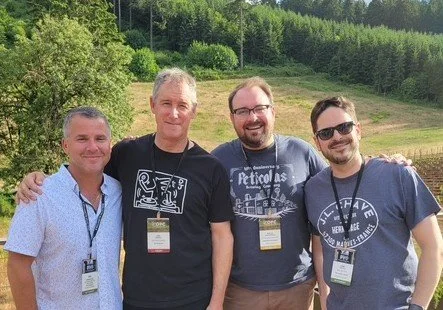
Nicolas Jay Winery
A private visit to Nicolas-Jay in Oregon's Yamhill-Carlton, arranged through twenty years of personal relationship with Jean-Nicolas Méo of Domaine Méo-Camuzet, Private access through Vineyard Confidential.
Yamhill-Carlton, Willamette Valley, Oregon
Nicolas-Jay Winery
I met Jean-Nicolas Méo for the first time at a pre-sale tasting at Christie's. Anthony Hanson MW, my boss, made the introduction. I knew from working with the wine his extraordinary training with his family including his uncle, the legendary Henri Jayer, whose wine has the purity and expression that few have ever repeated.
Two years later I was alone with him, setting up a private tasting as the senior specialist. No Anthony in the room. Just me, the bottles, and Jean-Nicolas watching me work opening and make sure the bottles were correct. There were four bottles of his 1996 Vosne-Romanée Aux Brûlées, and one was slightly off from the other three, not dramatically, but enough that I knew it was there. I sat with that for a moment and then I told him.
The second before I said it was pure panic. The second after, when he nodded and reached for a bucket, was relief of a kind I have rarely felt in a professional setting. He decanted all four bottles into it, waited, then poured the wine back evenly and we retasted. They were the same. Jean-Nicolas did not explain himself or offer a theory. He simply solved the problem and we continued. I have spent my entire career in rooms with serious winemakers. I have never seen anyone else think to do that. It is the instinct of someone who trusts the wine completely and has no interest in being right about the vessel.
That moment is the foundation of everything that follows.
When I later learned that Jean-Nicolas had partnered with Jay Boberg to make wine in Oregon, I did not need a critic to tell me to pay attention. I began championing Nicolas-Jay in my beverage programs before most people in America knew the label. The reasoning was not complicated. You either understood what Jean-Nicolas brought to a vineyard and a wine or you did not.
Jay Boberg is not a peripheral figure in American music. He co-founded IRS Records, later became President of MCA Universal, and signed REM, The Go-Go's, Blink-182, Mary J. Blige, Sublime, The Roots, and B.B. King among others. His path to Jean-Nicolas was characteristic of how he operates. As a frequent visitor to Chez Panisse in Berkeley, Jay became friends with Kermit Lynch, whose wine shop around the corner introduced American audiences to the great domaines of Burgundy. Those visits led Jay to Burgundy, and those visits to Burgundy led him to Jean-Nicolas. By the time they decided to make wine together in Oregon, the friendship was already decades old and the shared understanding of what serious Pinot Noir required was not a conversation they needed to have.
A few years ago Jay invited me to Oregon Pinot Camp. I stayed at his home in the Willamette Valley alongside Jon Leopold, Wine Director of The Alinea Group in Chicago. We spent our days at wineries all over the valley as well as our evenings at the house. Jean-Nicolas was not there. But his presence was in every glass Jay opened.
One evening Jay told us how the partnership began. The Chez Panisse visits, Kermit Lynch, the first trips to Burgundy, the friendship that grew from those visits into something that eventually found its way to a hillside in Yamhill-Carlton. He told the story the way people tell stories about things that changed the direction of their lives, unhurried and specific. Outside the valley was dark and the wine was exceptional and nobody was in any hurry to be anywhere else.
Jean-Nicolas and Jay spent 2012 and 2013 visiting over two hundred vineyard sites before settling on Bishop Creek in the Yamhill-Carlton AVA, an ungrafted vineyard planted in the late 1980s that produced something neither of them had encountered anywhere else in the valley. They built the winery into the hillside for gravity flow. The first vintage released in 2014. What Jean-Nicolas brought to Oregon was not a style. It was a standard. The same precision that shapes every decision at Méo-Camuzet now governs Nicolas-Jay from sorting to elevage. The wines are not Burgundy. They are not trying to be. They are Oregon Pinot Noir made by someone who knows precisely what restraint and site expression require, and who has spent thirty years proving it.
From the Cellar
The Nicolas-Jay L'Ensemble is drawn from ten vineyard sites across the Willamette Valley and hand-selected by Jean-Nicolas from barrel each vintage. It is a blend in the true Burgundian sense, a synthesis of the best of what the valley produced that year rather than a compromise between sites. Red fruit, fine-grained tannins, a mineral spine that keeps everything honest. It is the wine to start with if you want to understand what this project is.
The Nicolas-Jay Bishop Creek is the estate wine from that original ungrafted Yamhill-Carlton site. Tighter and more structured than the L'Ensemble, with a savory depth that comes from older vines and a specific piece of ground that stopped two very experienced people in their tracks in 2013. It needs time and rewards it considerably.
The 1996 Méo-Camuzet Vosne-Romanée Aux Brûlées is the bottle from that Christie's tasting room. A Premier Cru from the northern end of Vosne-Romanée, sitting just above Richebourg on a slope that produces wines of generous texture and complex Vosne spice. The 1996 vintage was one of the most structured of the decade in Burgundy, and those four bottles, redistributed through a bucket by the man who made them, remain among the most instructive things I have ever tasted. Understanding that wine, and the decision Jean-Nicolas made in that room, is the key to understanding everything Nicolas-Jay is trying to do three thousand miles away in Oregon.
If Oregon is part of your itinerary, contact us.
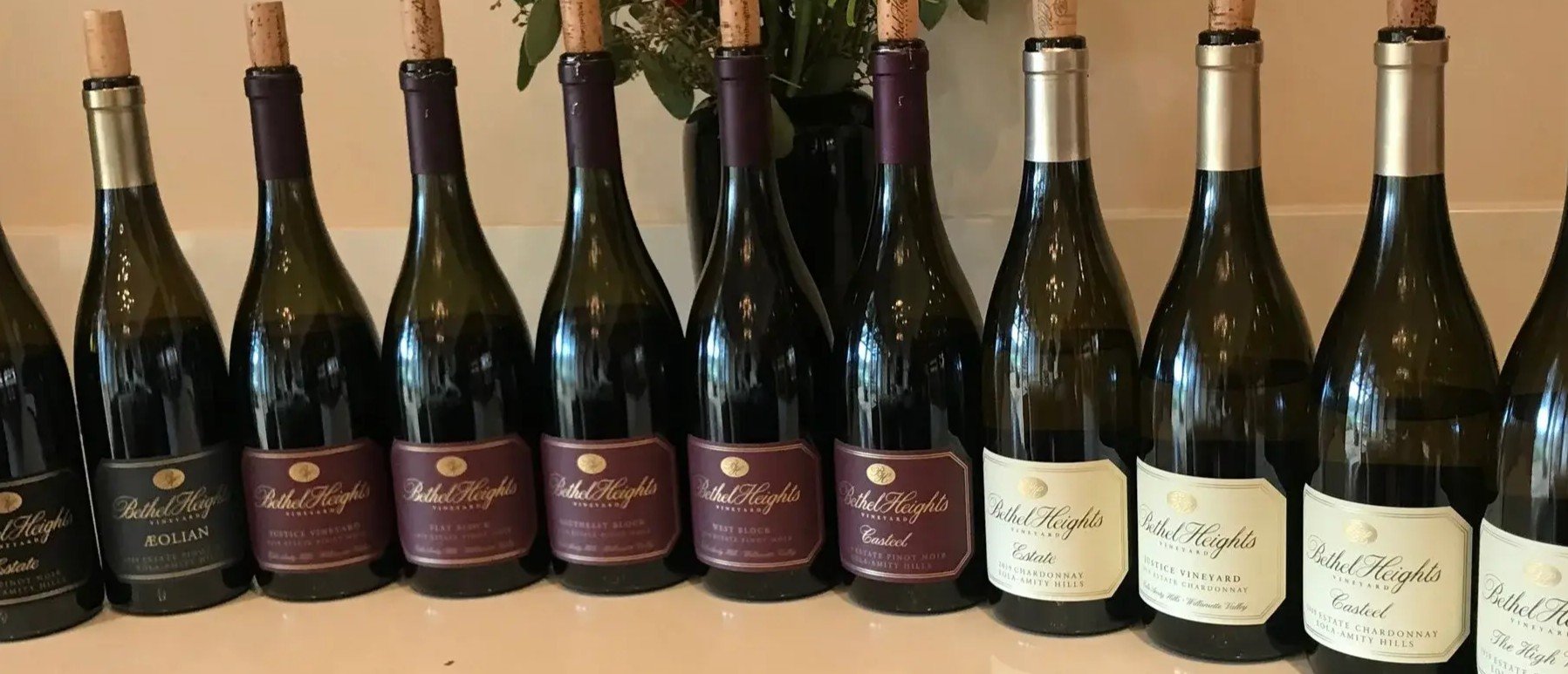
Bethel Heights Vineyard
Fifteen years of direct relationship with Ben Casteel at Bethel Heights Vineyard, one of the founding estates of Oregon's Eola-Amity Hills, where own-rooted vines planted in 1977 still define the ridge. Private access through Vineyard Confidential.
Willamette Valley, Enola-Amity Hills, Oregon
Bethel Heights Vineyard
Stand at the top of the west block at Bethel Heights on a summer afternoon and you feel the Van Duzer Corridor before you see what it does. The Pacific air comes through the gap in the Coast Range every day at the same hour, dropping temperatures across the Eola-Amity Hills ridge at the moment most other Oregon vineyards are holding heat. It is the reason this particular piece of ground produces wines with a structural precision that the warmer valley floor simply cannot replicate. The Casteel family understood this in 1977, when the property was still an abandoned walnut grove and the land was officially deemed not suitable for farming.
I have known Ben Casteel for fifteen years. I have been to Bethel Heights, walked those vines with him, and eaten at that table. Ben grew up on this property, left to study English Literature with plans to become a professor, spent a harvest season in Burgundy in 1999 that changed the direction entirely, then came back to Oregon and spent five years working under Lynn Penner-Ash at Rex Hill before returning home when his father Terry's Parkinson's disease required a transition. He has been the winemaker here since 2006. What he inherited was already exceptional. What he has done since is refine it with the precision of someone who knows every block of this vineyard from childhood and understands what it requires rather than what he prefers.
The founding context matters here. Twin brothers Ted and Terry Casteel and their wives Pat Dudley and Marilyn Webb left careers in academia in 1977 to clear that walnut orchard and plant 50 acres of Pinot Noir on a south-facing slope at elevations between 480 and 620 feet. Ted co-founded the LIVE certification program that became the sustainability standard for the entire Oregon industry. The first vines are still in the ground, own-rooted and un-grafted, among the last remaining blocks of that kind in the Willamette Valley. Those roots have been exploring the same ancient volcanic soil for nearly half a century.
The wines from those original blocks carry that depth plainly. The 2021 Pinot Noir Casteel received 99 points from Wine Advocate. The 2021 Chardonnay Casteel received 97 from Decanter. Neither score is a surprise to anyone who has tasted through the Bethel Heights lineup with Ben explaining where each block sits on that ridge and why.
A private visit to Bethel Heights through Vineyard Confidential puts you on that land with the second generation of a founding family, in a place that shaped the identity of the Eola-Amity Hills AVA before it had a name. Ben is there. The old vines are there. That experience is not assembled from a database. It is the product of fifteen years of conversation at that table.
From the Cellar
The 2024 Bethel Heights Pinot Blanc earns attention precisely because it is not what this region is known for. Ben brings the same rigor to this variety that he applies to the estate Pinot Noir, and it shows. Pear and white flower cut by real acidity, with none of the residual sugar that makes most examples forgettable. It is a wine that makes sense once you understand the Van Duzer wind and what it does to hang time on that ridge.
The 2024 Bethel Heights Pinot Noir Rose is made by direct press from those original estate blocks, which keeps the fruit precise rather than borrowed from a red wine in progress. Strawberry and citrus pith over a faint mineral edge that comes directly from the volcanic soil beneath those own-rooted vines. This is not a seasonal wine. It is a serious one that happens to be pink.
The 2023 Bethel Heights Pinot Noir comes off the same ground the Casteel family planted as one of the first estates in the Eola-Amity Hills, and that history is present in every glass. Red cherry and dried herb over a firm savory backbone, built to open over an hour rather than surrender immediately. Ben refined his father's approach without dismantling it, adjusting cap management and adding measured whole-cluster fermentation, and the result is a wine with more textural complexity than the previous generation while remaining unmistakably Bethel Heights.
If Oregon is part of your itinerary, contact us.
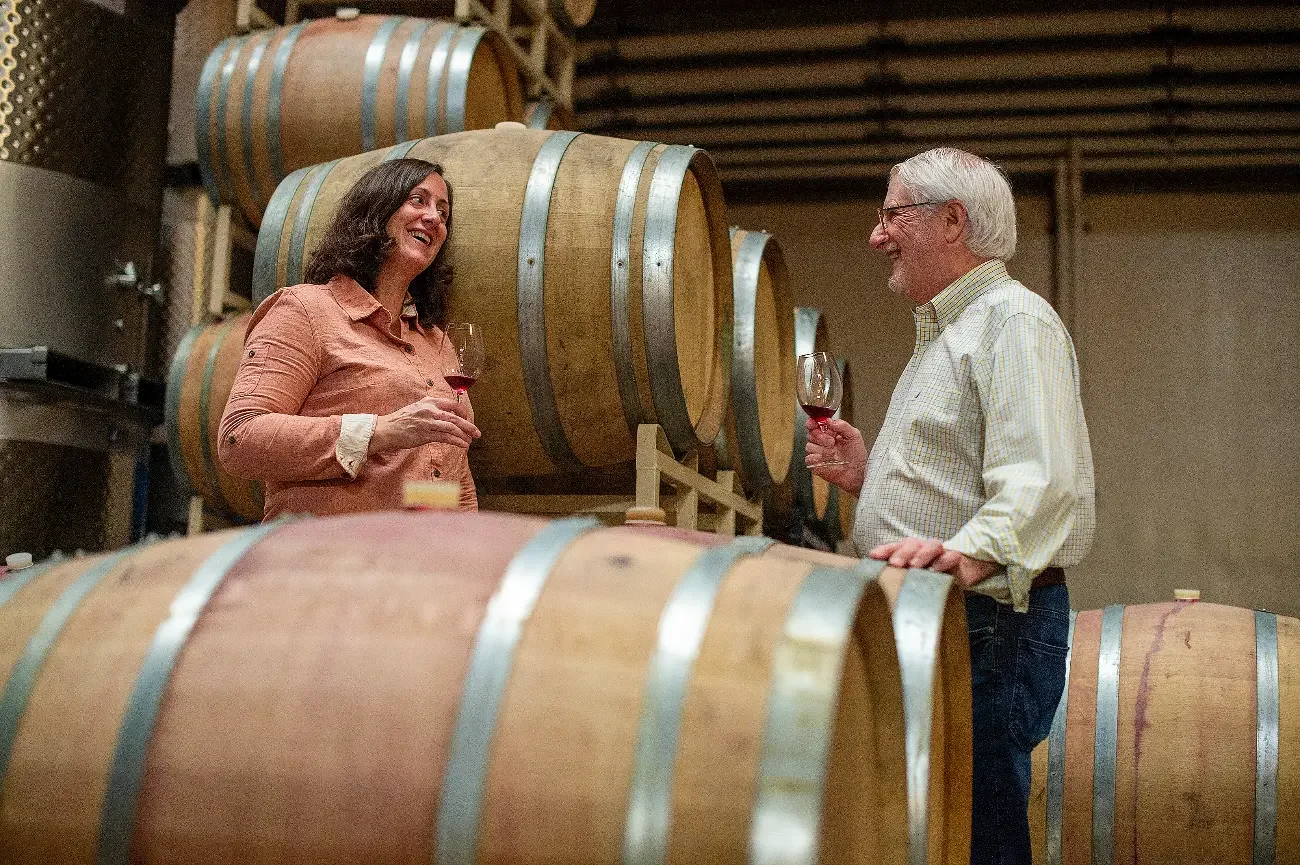
Adelsheim Vineyard
Twenty years of direct relationship with David Adelsheim, the man who authored the Willamette Valley AVA and built the architecture that Oregon wine operates inside. Private access through Vineyard Confidential.
Willamette Valley, Chehalem Mountains, Oregon
Adelsheim Vineyard
The first time I sat across a table from David Adelsheim, we were somewhere between the second and third bottle, and he was explaining why the Willamette Valley had no choice but to become what it became. Not modestly. Not boastfully. With the particular calm of someone who watched a thing happen because he had spent thirty years making sure it would.
I have known David for twenty years. I have been to the estate, walked the Chehalem Mountains with him, and shared enough meals that the conversation long ago moved past wine and into the more interesting territory beneath it. What I can tell you, from those conversations, is that what David built in Oregon has no real parallel in American wine history.
He and his wife Ginny bought 19 acres outside Newberg in 1971. There was no Willamette Valley AVA. There was no market for Oregon Pinot Noir. There was volcanic hillside, a handful of families making bets on the same ridge, and a man who had worked harvest at the Lycee Viticole in Beaune and come home convinced that this cool, rain-shadowed valley could do what Burgundy did. Between 1972 and 1977, while farming his own land, he authored the petition that became the Willamette Valley AVA in 1983, lobbied the Oregon Liquor Control Commission for the strictest wine labeling regulations in America, helped source the Burgundian clones that would define the valley's character for the next half century, assisted Maison Joseph Drouhin in establishing their Oregon foothold, founded Oregon Pinot Camp in 2000, and was instrumental in creating the Oregon Wine Board in 2005. The sub-appellation system that now defines the valley's most valuable addresses, including the Chehalem Mountains where Adelsheim planted first, exists because David argued for it in rooms where most people did not yet believe Oregon wine was serious.
The wines reflect all of it. The Chardonnay carries a mineral tension that comes from elevation and restraint, closer in character to a village Burgundy than anything grown further south. The Pinot Noir is built on five decades of understanding one piece of volcanic ground, and it shows.
A private visit to Adelsheim through Vineyard Confidential is not a tasting room experience with a poured flight and a purchase table at the end. It is time with the man who wrote the architecture that the rest of the valley operates inside. That conversation is not available on any standard itinerary.
From the Cellar
The 2021 Adelsheim Chardonnay is the clearest argument for why clone selection matters. David spent years sourcing the Burgundian material that gave Willamette Valley Chardonnay its current character, and this bottle is the direct result of that work. Citrus and orchard fruit pulled tight by genuine mineral tension, closer in structure to a village Chablis than anything grown in warmer American appellations. It is not a showy wine. It is a precise one, and precision is what you taste when the right variety meets the right ground.
The 2022 Adelsheim Pinot Noir carries fifty years of site knowledge in a single bottle. Bright red fruit, a savory earthy undertone, tannin structure that rewards patience but does not demand it. What you are tasting is not a winemaker's intervention. It is the accumulated understanding of one volcanic hillside in the Chehalem Mountains, refined across five decades by the person who first planted it.