
The Producers Table
This is a series built around the growers, families, and estates behind the bottles. Each edition features a producer Ian Mendelsohn knows personally, has visited, or has worked alongside across a twenty-five year career in wine and spirits. These are not names on a label or bottles on a shelf. They are friends and colleagues earned through harvests, meals, and decades of shared work. What follows is not a tasting room experience. It is access built on trust.
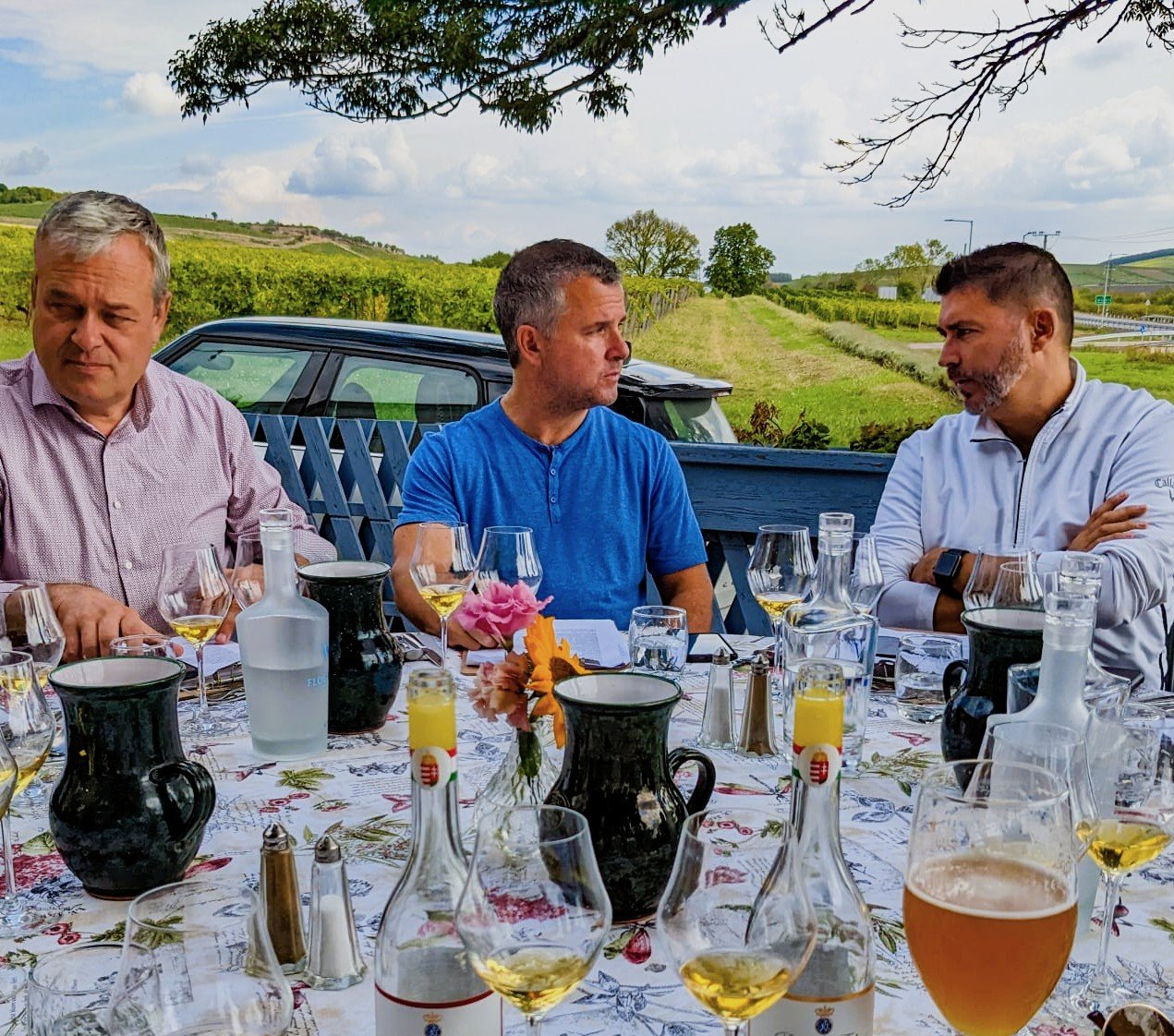
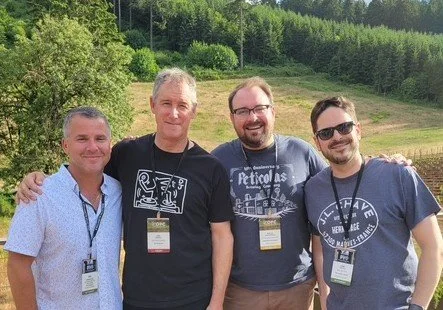
Nicolas Jay Winery
A private visit to Nicolas-Jay in Oregon's Yamhill-Carlton, arranged through twenty years of personal relationship with Jean-Nicolas Méo of Domaine Méo-Camuzet, Private access through Vineyard Confidential.
Yamhill-Carlton, Willamette Valley, Oregon
Nicolas-Jay Winery
I met Jean-Nicolas Méo for the first time at a pre-sale tasting at Christie's. Anthony Hanson MW, my boss, made the introduction. I knew from working with the wine his extraordinary training with his family including his uncle, the legendary Henri Jayer, whose wine has the purity and expression that few have ever repeated.
Two years later I was alone with him, setting up a private tasting as the senior specialist. No Anthony in the room. Just me, the bottles, and Jean-Nicolas watching me work opening and make sure the bottles were correct. There were four bottles of his 1996 Vosne-Romanée Aux Brûlées, and one was slightly off from the other three, not dramatically, but enough that I knew it was there. I sat with that for a moment and then I told him.
The second before I said it was pure panic. The second after, when he nodded and reached for a bucket, was relief of a kind I have rarely felt in a professional setting. He decanted all four bottles into it, waited, then poured the wine back evenly and we retasted. They were the same. Jean-Nicolas did not explain himself or offer a theory. He simply solved the problem and we continued. I have spent my entire career in rooms with serious winemakers. I have never seen anyone else think to do that. It is the instinct of someone who trusts the wine completely and has no interest in being right about the vessel.
That moment is the foundation of everything that follows.
When I later learned that Jean-Nicolas had partnered with Jay Boberg to make wine in Oregon, I did not need a critic to tell me to pay attention. I began championing Nicolas-Jay in my beverage programs before most people in America knew the label. The reasoning was not complicated. You either understood what Jean-Nicolas brought to a vineyard and a wine or you did not.
Jay Boberg is not a peripheral figure in American music. He co-founded IRS Records, later became President of MCA Universal, and signed REM, The Go-Go's, Blink-182, Mary J. Blige, Sublime, The Roots, and B.B. King among others. His path to Jean-Nicolas was characteristic of how he operates. As a frequent visitor to Chez Panisse in Berkeley, Jay became friends with Kermit Lynch, whose wine shop around the corner introduced American audiences to the great domaines of Burgundy. Those visits led Jay to Burgundy, and those visits to Burgundy led him to Jean-Nicolas. By the time they decided to make wine together in Oregon, the friendship was already decades old and the shared understanding of what serious Pinot Noir required was not a conversation they needed to have.
A few years ago Jay invited me to Oregon Pinot Camp. I stayed at his home in the Willamette Valley alongside Jon Leopold, Wine Director of The Alinea Group in Chicago. We spent our days at wineries all over the valley as well as our evenings at the house. Jean-Nicolas was not there. But his presence was in every glass Jay opened.
One evening Jay told us how the partnership began. The Chez Panisse visits, Kermit Lynch, the first trips to Burgundy, the friendship that grew from those visits into something that eventually found its way to a hillside in Yamhill-Carlton. He told the story the way people tell stories about things that changed the direction of their lives, unhurried and specific. Outside the valley was dark and the wine was exceptional and nobody was in any hurry to be anywhere else.
Jean-Nicolas and Jay spent 2012 and 2013 visiting over two hundred vineyard sites before settling on Bishop Creek in the Yamhill-Carlton AVA, an ungrafted vineyard planted in the late 1980s that produced something neither of them had encountered anywhere else in the valley. They built the winery into the hillside for gravity flow. The first vintage released in 2014. What Jean-Nicolas brought to Oregon was not a style. It was a standard. The same precision that shapes every decision at Méo-Camuzet now governs Nicolas-Jay from sorting to elevage. The wines are not Burgundy. They are not trying to be. They are Oregon Pinot Noir made by someone who knows precisely what restraint and site expression require, and who has spent thirty years proving it.
From the Cellar
The Nicolas-Jay L'Ensemble is drawn from ten vineyard sites across the Willamette Valley and hand-selected by Jean-Nicolas from barrel each vintage. It is a blend in the true Burgundian sense, a synthesis of the best of what the valley produced that year rather than a compromise between sites. Red fruit, fine-grained tannins, a mineral spine that keeps everything honest. It is the wine to start with if you want to understand what this project is.
The Nicolas-Jay Bishop Creek is the estate wine from that original ungrafted Yamhill-Carlton site. Tighter and more structured than the L'Ensemble, with a savory depth that comes from older vines and a specific piece of ground that stopped two very experienced people in their tracks in 2013. It needs time and rewards it considerably.
The 1996 Méo-Camuzet Vosne-Romanée Aux Brûlées is the bottle from that Christie's tasting room. A Premier Cru from the northern end of Vosne-Romanée, sitting just above Richebourg on a slope that produces wines of generous texture and complex Vosne spice. The 1996 vintage was one of the most structured of the decade in Burgundy, and those four bottles, redistributed through a bucket by the man who made them, remain among the most instructive things I have ever tasted. Understanding that wine, and the decision Jean-Nicolas made in that room, is the key to understanding everything Nicolas-Jay is trying to do three thousand miles away in Oregon.
If Oregon is part of your itinerary, contact us.
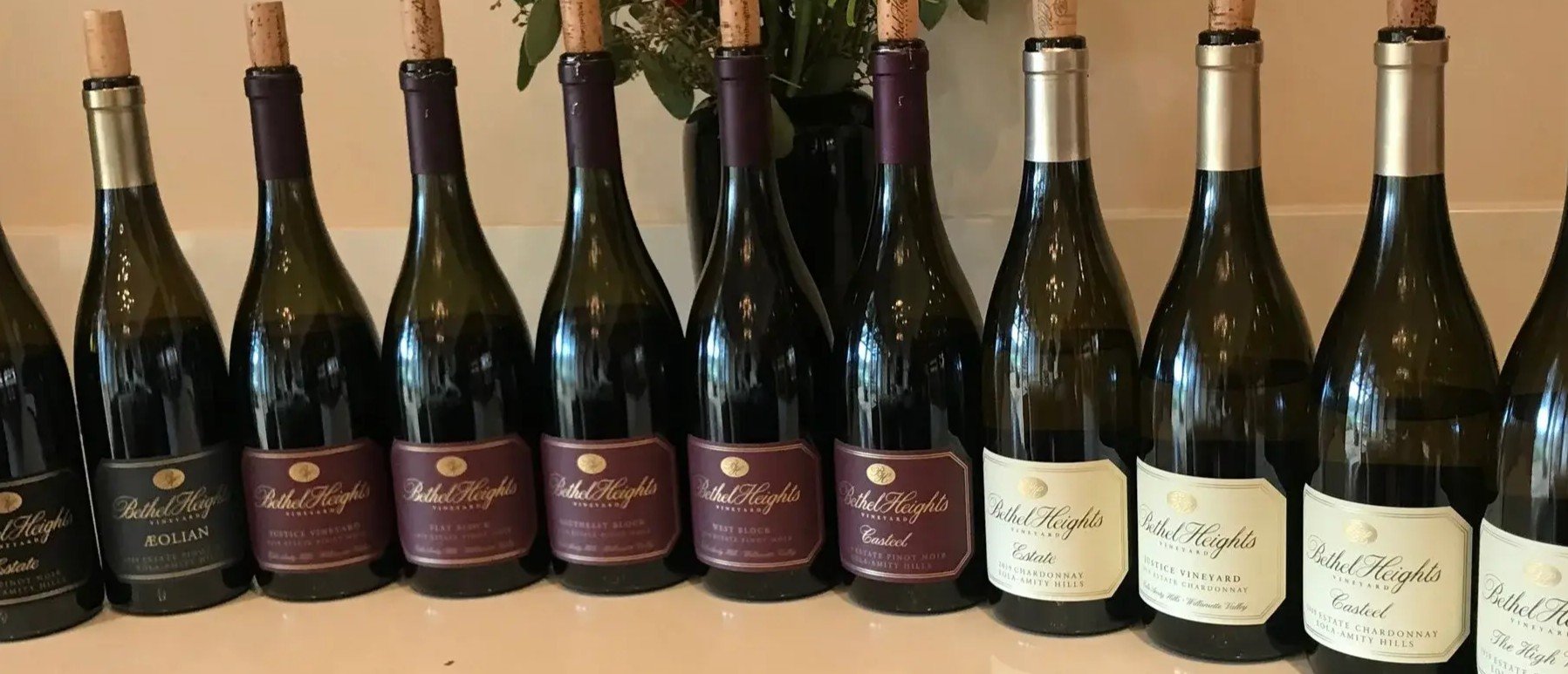
Bethel Heights Vineyard
Fifteen years of direct relationship with Ben Casteel at Bethel Heights Vineyard, one of the founding estates of Oregon's Eola-Amity Hills, where own-rooted vines planted in 1977 still define the ridge. Private access through Vineyard Confidential.
Willamette Valley, Enola-Amity Hills, Oregon
Bethel Heights Vineyard
Stand at the top of the west block at Bethel Heights on a summer afternoon and you feel the Van Duzer Corridor before you see what it does. The Pacific air comes through the gap in the Coast Range every day at the same hour, dropping temperatures across the Eola-Amity Hills ridge at the moment most other Oregon vineyards are holding heat. It is the reason this particular piece of ground produces wines with a structural precision that the warmer valley floor simply cannot replicate. The Casteel family understood this in 1977, when the property was still an abandoned walnut grove and the land was officially deemed not suitable for farming.
I have known Ben Casteel for fifteen years. I have been to Bethel Heights, walked those vines with him, and eaten at that table. Ben grew up on this property, left to study English Literature with plans to become a professor, spent a harvest season in Burgundy in 1999 that changed the direction entirely, then came back to Oregon and spent five years working under Lynn Penner-Ash at Rex Hill before returning home when his father Terry's Parkinson's disease required a transition. He has been the winemaker here since 2006. What he inherited was already exceptional. What he has done since is refine it with the precision of someone who knows every block of this vineyard from childhood and understands what it requires rather than what he prefers.
The founding context matters here. Twin brothers Ted and Terry Casteel and their wives Pat Dudley and Marilyn Webb left careers in academia in 1977 to clear that walnut orchard and plant 50 acres of Pinot Noir on a south-facing slope at elevations between 480 and 620 feet. Ted co-founded the LIVE certification program that became the sustainability standard for the entire Oregon industry. The first vines are still in the ground, own-rooted and un-grafted, among the last remaining blocks of that kind in the Willamette Valley. Those roots have been exploring the same ancient volcanic soil for nearly half a century.
The wines from those original blocks carry that depth plainly. The 2021 Pinot Noir Casteel received 99 points from Wine Advocate. The 2021 Chardonnay Casteel received 97 from Decanter. Neither score is a surprise to anyone who has tasted through the Bethel Heights lineup with Ben explaining where each block sits on that ridge and why.
A private visit to Bethel Heights through Vineyard Confidential puts you on that land with the second generation of a founding family, in a place that shaped the identity of the Eola-Amity Hills AVA before it had a name. Ben is there. The old vines are there. That experience is not assembled from a database. It is the product of fifteen years of conversation at that table.
From the Cellar
The 2024 Bethel Heights Pinot Blanc earns attention precisely because it is not what this region is known for. Ben brings the same rigor to this variety that he applies to the estate Pinot Noir, and it shows. Pear and white flower cut by real acidity, with none of the residual sugar that makes most examples forgettable. It is a wine that makes sense once you understand the Van Duzer wind and what it does to hang time on that ridge.
The 2024 Bethel Heights Pinot Noir Rose is made by direct press from those original estate blocks, which keeps the fruit precise rather than borrowed from a red wine in progress. Strawberry and citrus pith over a faint mineral edge that comes directly from the volcanic soil beneath those own-rooted vines. This is not a seasonal wine. It is a serious one that happens to be pink.
The 2023 Bethel Heights Pinot Noir comes off the same ground the Casteel family planted as one of the first estates in the Eola-Amity Hills, and that history is present in every glass. Red cherry and dried herb over a firm savory backbone, built to open over an hour rather than surrender immediately. Ben refined his father's approach without dismantling it, adjusting cap management and adding measured whole-cluster fermentation, and the result is a wine with more textural complexity than the previous generation while remaining unmistakably Bethel Heights.
If Oregon is part of your itinerary, contact us.
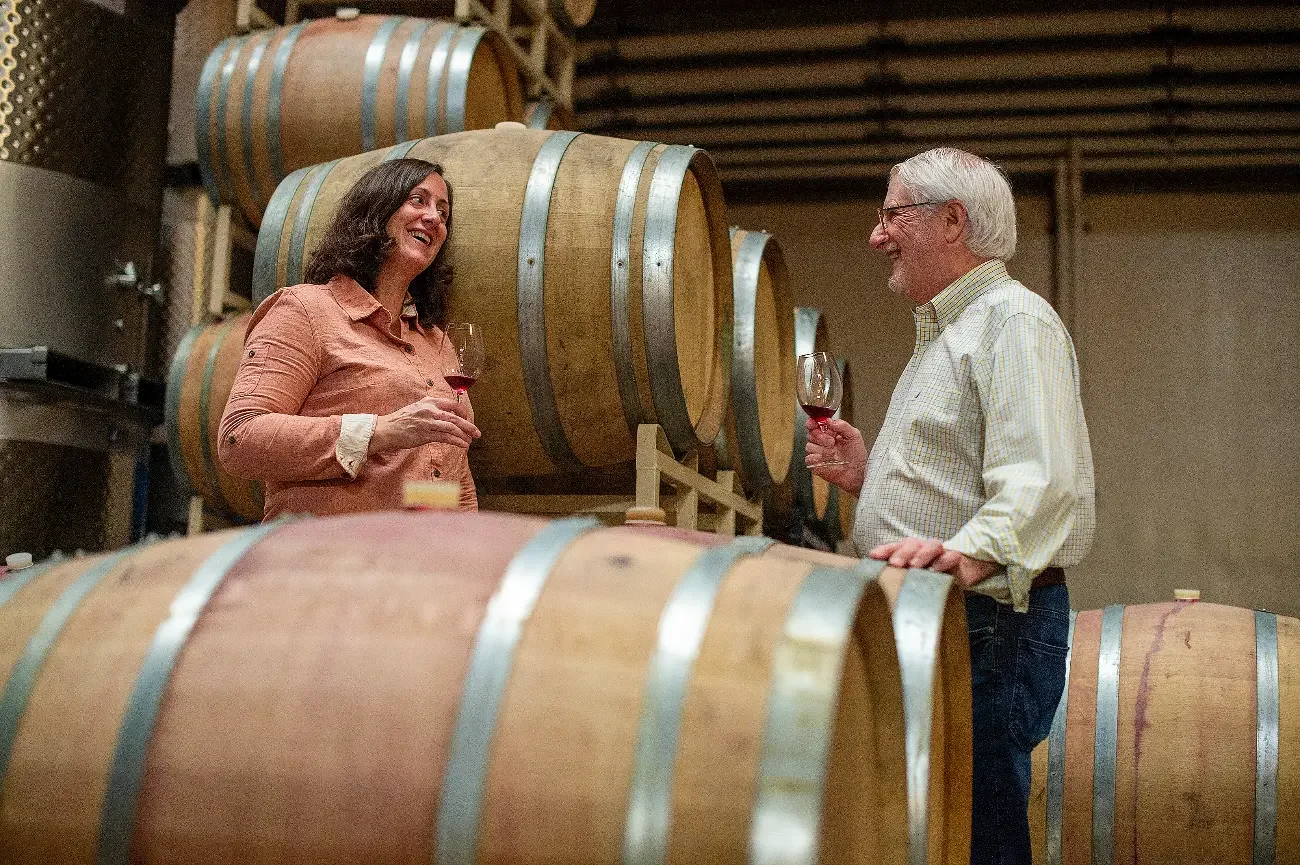
Adelsheim Vineyard
Twenty years of direct relationship with David Adelsheim, the man who authored the Willamette Valley AVA and built the architecture that Oregon wine operates inside. Private access through Vineyard Confidential.
Willamette Valley, Chehalem Mountains, Oregon
Adelsheim Vineyard
The first time I sat across a table from David Adelsheim, we were somewhere between the second and third bottle, and he was explaining why the Willamette Valley had no choice but to become what it became. Not modestly. Not boastfully. With the particular calm of someone who watched a thing happen because he had spent thirty years making sure it would.
I have known David for twenty years. I have been to the estate, walked the Chehalem Mountains with him, and shared enough meals that the conversation long ago moved past wine and into the more interesting territory beneath it. What I can tell you, from those conversations, is that what David built in Oregon has no real parallel in American wine history.
He and his wife Ginny bought 19 acres outside Newberg in 1971. There was no Willamette Valley AVA. There was no market for Oregon Pinot Noir. There was volcanic hillside, a handful of families making bets on the same ridge, and a man who had worked harvest at the Lycee Viticole in Beaune and come home convinced that this cool, rain-shadowed valley could do what Burgundy did. Between 1972 and 1977, while farming his own land, he authored the petition that became the Willamette Valley AVA in 1983, lobbied the Oregon Liquor Control Commission for the strictest wine labeling regulations in America, helped source the Burgundian clones that would define the valley's character for the next half century, assisted Maison Joseph Drouhin in establishing their Oregon foothold, founded Oregon Pinot Camp in 2000, and was instrumental in creating the Oregon Wine Board in 2005. The sub-appellation system that now defines the valley's most valuable addresses, including the Chehalem Mountains where Adelsheim planted first, exists because David argued for it in rooms where most people did not yet believe Oregon wine was serious.
The wines reflect all of it. The Chardonnay carries a mineral tension that comes from elevation and restraint, closer in character to a village Burgundy than anything grown further south. The Pinot Noir is built on five decades of understanding one piece of volcanic ground, and it shows.
A private visit to Adelsheim through Vineyard Confidential is not a tasting room experience with a poured flight and a purchase table at the end. It is time with the man who wrote the architecture that the rest of the valley operates inside. That conversation is not available on any standard itinerary.
From the Cellar
The 2021 Adelsheim Chardonnay is the clearest argument for why clone selection matters. David spent years sourcing the Burgundian material that gave Willamette Valley Chardonnay its current character, and this bottle is the direct result of that work. Citrus and orchard fruit pulled tight by genuine mineral tension, closer in structure to a village Chablis than anything grown in warmer American appellations. It is not a showy wine. It is a precise one, and precision is what you taste when the right variety meets the right ground.
The 2022 Adelsheim Pinot Noir carries fifty years of site knowledge in a single bottle. Bright red fruit, a savory earthy undertone, tannin structure that rewards patience but does not demand it. What you are tasting is not a winemaker's intervention. It is the accumulated understanding of one volcanic hillside in the Chehalem Mountains, refined across five decades by the person who first planted it.