
The Producers Table
This is a series built around the growers, families, and estates behind the bottles. Each edition features a producer Ian Mendelsohn knows personally, has visited, or has worked alongside across a twenty-five year career in wine and spirits. These are not names on a label or bottles on a shelf. They are friends and colleagues earned through harvests, meals, and decades of shared work. What follows is not a tasting room experience. It is access built on trust.
Paolo Scavino
Paolo Scavino has owned Bric dël Fiasc in Castiglione Falletto since 1921 and works with over 20 crus. Enrico's daughters, Enrica and Elisa, run the estate now. Every Barolo is made the same way, so each cru speaks for its very specific terroir.
Barolo, Castiglione Falletto, Piedmont, Italy
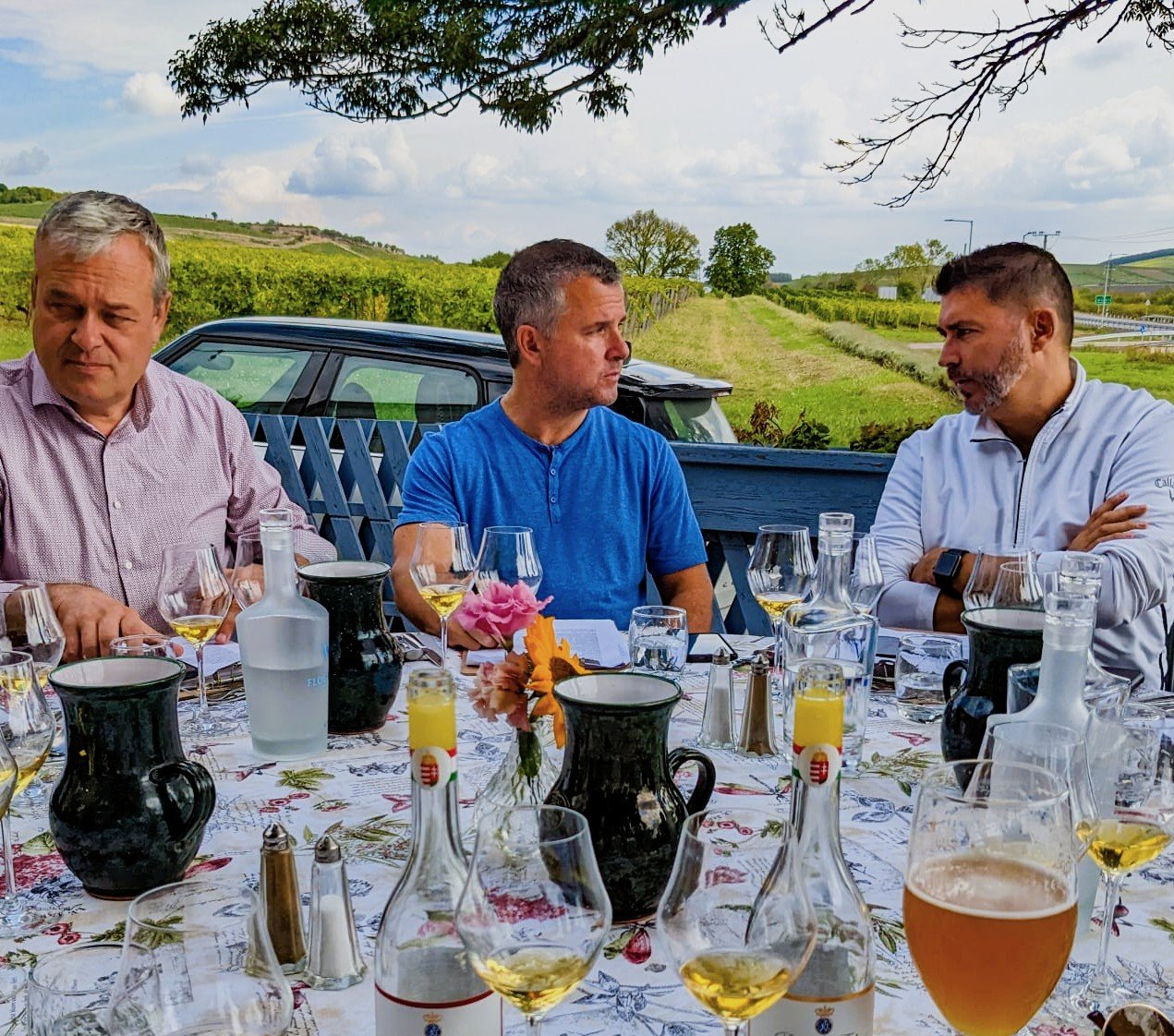
I met Enrico Scavino at Christie's in New York in 2004 when he came to New York with his eldest daughter, Enrica, to introduce the 2000 Bric dël Fiasc. They were in town to pour it at the Wine Spectator grand tasting as they had scored it 98 points, and I had the privilege to sit down with them for a lunch and a tasting I still remember to this day.
Enrico had every reason to spend that lunch talking about the wine and that incredible the score. However, he spent it on his family, on the land his father had farmed, and on the history of Castiglione Falletto and the villages around it. He was generous with his time and his passion was infectious. That lunch was my introduction to the estate, and his love of Barolo and Piedmont has never left me.
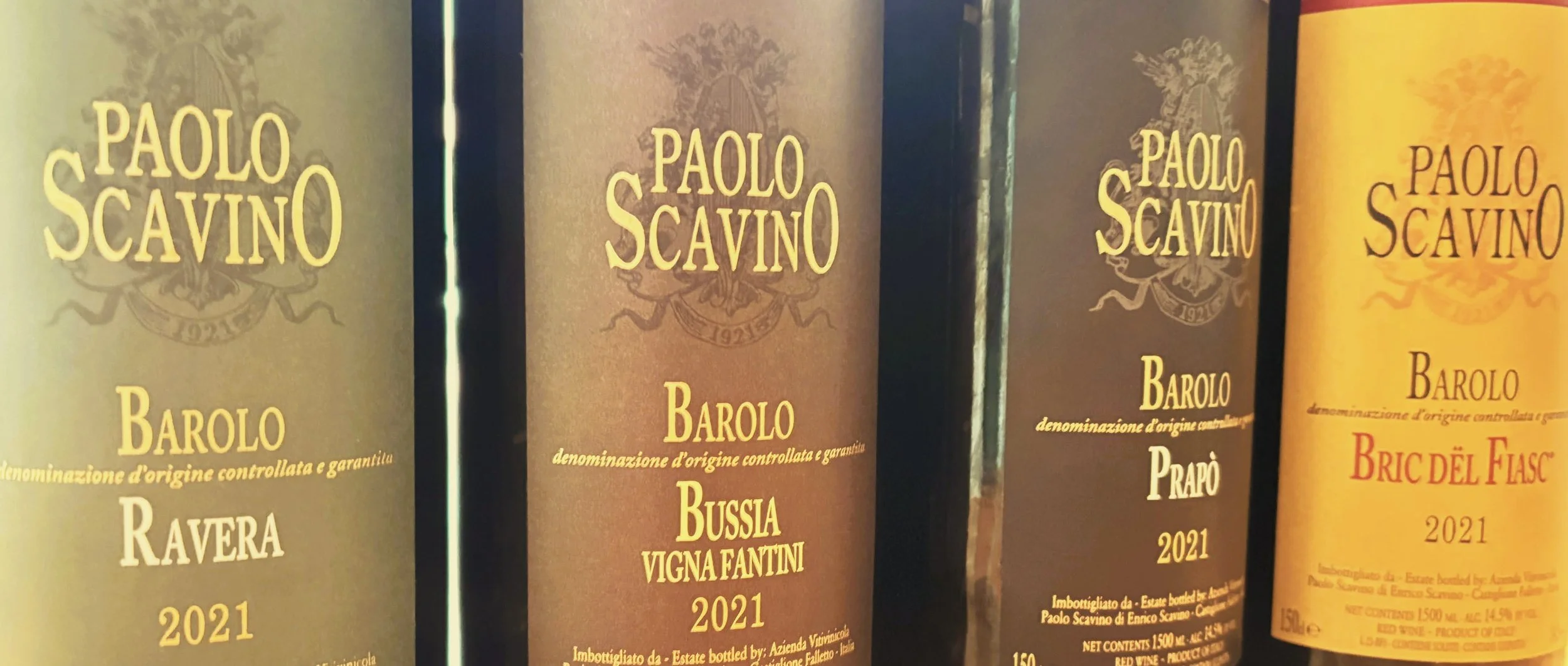
A few years later, while I was in Las Vegas Enrica came through town and it was wonderful to talk about that lunch and enjoy some of her wines and others. In what felt like a full circle, Mattia Benevello, who runs Scavino's export, sat down with me over four 2021 Barolos in magnum.
We talked about the wine and the family, because at Scavino you cannot separate the two. Enrico was passionate about every one of the 20 crus he worked, and he made it his mission to make wine in a way that let each one show what it was. That is why every Scavino Barolo is made exactly the same way: the same fermentation, the same eight to ten days on the skins, the same large casks. Hold the cellar still, and the only thing left to taste is the ground.
Enrico also designed his own fermenter for the cru Barolos, and Mattia explained it with a teabag. An iron net holds the skins under the wine while the wine moves through them. The skins never break, so the extraction stays gentle and still goes deep.
Ravera came first. It is the family's highest vineyard, up in Novello, and thirty years ago it struggled to ripen. Warmer summers have put flesh behind its cool, herbal style, and Mattia's line on it stuck with me. Not every change is a bad change.
The second wine came with a story about loss. For 33 years the family rented a parcel of Cannubi, one of the most famous names in Barolo and the only vineyard they ever leased. In 2018 the owner died without direct heirs and the lease ended. “Carobric”, their blend of Cannubi, Rocche dell'Annunziata and Bric dël Fiasc, ended with it. That same year they bought into Bussia, in Monforte, at the highest point of the cru and the only part of it on sand. Bussia usually means power. The 2021 Vigna Fantini, its first vintage, was about lift.
Prapò is the family's corner of Serralunga d'Alba, under a hectare on a steep slope that runs off the Cerretta hill. Serralunga makes Barolo's most powerful wines. Here the exposure ripens the fruit fully, so the power arrives with flesh on it.
Bric dël Fiasc came last. It sits beside the cellar at the center of the zone, and Mattia drew a circle around it on the map, three or four kilometers wide. Cannubi, Cerequio, Brunate, Rocche dell'Annunziata, Villero, Monprivato and Rocche di Castiglione all fell inside it. The family has owned the vineyard since the estate began in 1921. In 1978 Enrico and his father bottled it alone for the first time, when most Barolo was still a blend of villages. It was the wine Enrico and Enrica carried to New York in 2004.
Enrico died in 2024. Tasting those 2021s, I kept thinking about how proud he would be. Enrica and Elisa have worked beside him for over twenty years, and they are doing what he did. They hold the cellar to his method, they keep pushing to make better wine, and they are building something to hand to the next generation.
A private visit to Paolo Scavino is not a tasting room stop. Visits are by appointment only and built around the land, the vineyards and the table. You taste the crus side by side, all made the same way, so every difference in the glass comes from the ground. You stand at the fermenter Enrico designed and see the net that keeps the skins under the wine. Then you walk out to Bric dël Fiasc, next to the cellar, the vineyard the family has owned since 1921.
If the Piedmont is on your itinerary CONTACT US
FROM THE CELLAR
2021 Barolo Ravera, Paolo Scavino (Novello). About three hectares at 430 meters, facing east, and the last vineyard the family picks every year. Sant'Agata marl with a strong streak of limestone. Balsamic, menthol, sage and white pepper over red fruit, with cool mineral tannin and high acid. The freshness holds even in hot years, which is why demand for Ravera has climbed for fifteen years.
2021 Barolo Bussia Vigna Fantini, Paolo Scavino, (Monforte d'Alba). About 450 meters, the highest of Bussia's twelve sub zones, with vines planted between 2006 and 2010. Elisa treats the block as experimental because of the genetic mix in the vines, Nebbiolo Rosé among them. Menthol, blood orange, spearmint, dried cherry and lilac over refined, almost austere tannin.
2021 Barolo Prapò, Paolo Scavino, Nebbiolo (Serralunga d'Alba). 370 meters, facing south and southeast, replanted in 2010 with a massal selection chosen for loose clusters and low yields. Iron-rich sand over gray marl gives the wine its rusty mineral edge. Plum, licorice, dark chocolate, graphite and iron, with full Serralunga tannin. Only a handful of producers bottle Prapò.
2021 Barolo Bric dël Fiasc, Paolo Scavino, Nebbiolo (Castiglione Falletto). The family farms about a third of the small Fiasco cru, on vines planted in 1979, 1984 and 2009, where limestone and sandstone cross and iron-rich water rises from deep underground. Dark cherry, iron, dried herbs, white pepper, orange peel and geranium, with broad tannin and real perfume on top.
MV Vino Rosso, Paolo Scavino, Nebbiolo, Barbera, Dolcetto and Merlot (Piedmont). To keep the Barolos strict, the family holds back the fruit of its younger vines, and this is where that fruit goes. The blend breaks the appellation rules, so it carries the simplest label in Italy, table wine. Stainless steel only, no oak, made in tiny quantities. Red cherry, violet and spice, juicy and supple. A wine for any night of the week from the house that bottled Bric dël Fiasc in 1978.
Langhe Nebbiolo, Paolo Scavino, Nebbiolo (La Morra). Two single vineyards in La Morra, Bricco Manescotto, planted in 1960 and 1968, and Annunziata, planted in 1997. It is the one wine in the cellar made differently from the Barolos, on purpose. A cool, gentle fermentation, five days on the skins, then eight months in neutral oak. Crushed flowers, red cherry, blood orange and dried herbs over a fine, lifted tannin. It is the bottle winemakers and their teams in Barolo open on an ordinary night.
Azienda Agricola Demarie
A private visit to Azienda Agricola Demarie in Roero, Piedmont, arranged through years of personal relationship with Paolo Demarie who spent years buying back land in the Roero and Langhe the Second World War scattered, available exclusively through Vineyard Confidential.
Roero, Piedmont, Italy
Azienda Agricola Demarie
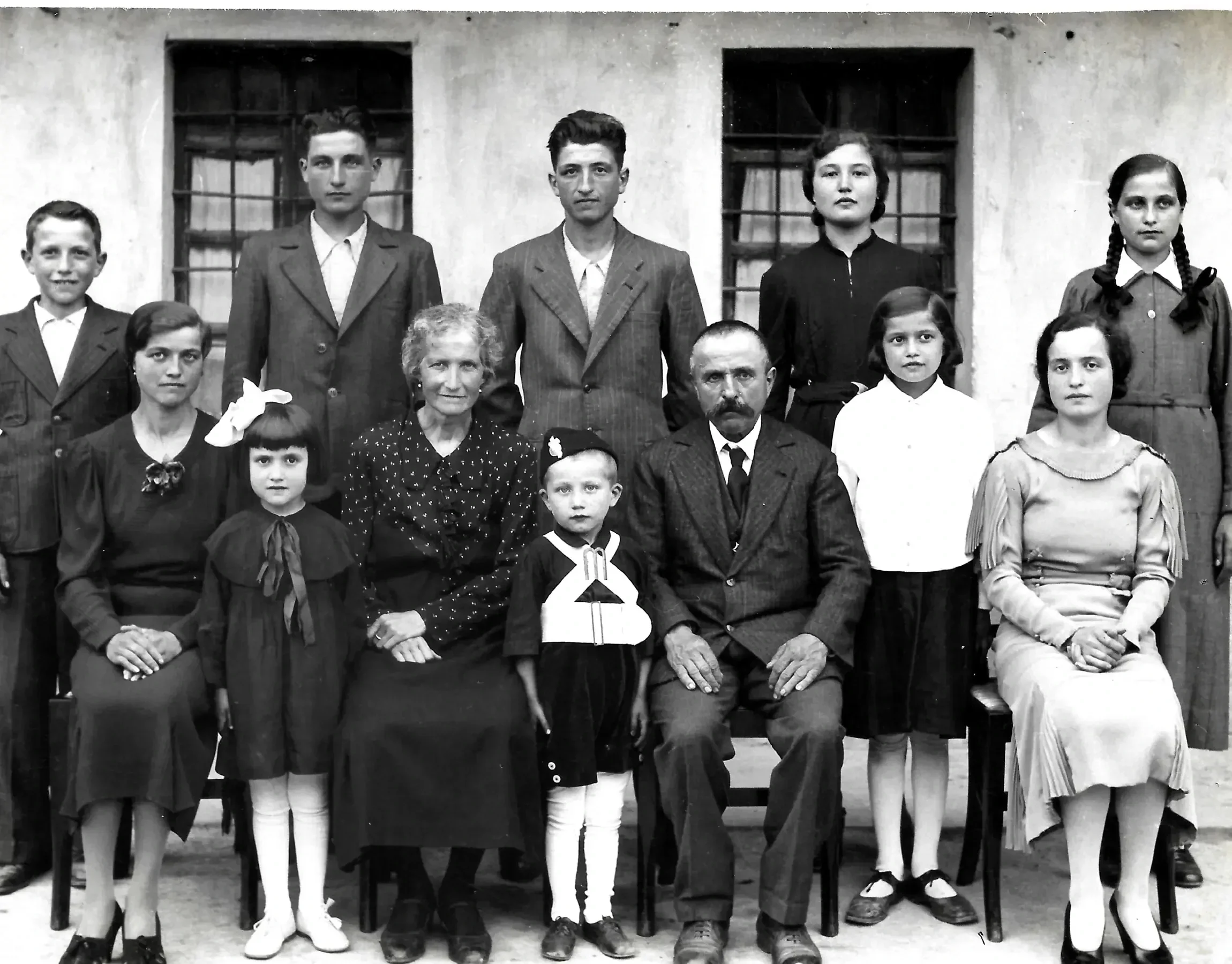
Paolo had a glass of his own Arneis in his hand when he pulled out the photograph last summer. Susan and I were sitting with him years into a relationship with the family that started over wine and stopped being just business a long time ago. The photograph was black and white, eleven people arranged in front of the family house in Roero, taken before anyone in the frame knew what was coming. He pointed to a boy in the front row; his father.
He told the story slowly, the way people do when they've told it before but never gotten used to telling it. Who left. Who nobody knew would come back. Susan and I both watched something move across his face that I can only describe as pride sitting directly on top of grief, the two of them not canceling each other out, just occupying the same space at once. Ten years of knowing Paolo, and I had never seen that particular expression before.
It didn't stay contained to the table. He walked us through the winery afterward, past the tanks and the barrel room, out to where the property opens up behind the facility. There's a soccer goal back there. His son was in it, playing keeper, some ordinary summer afternoon game that had nothing to do with us or the tour. Paolo didn't say anything about it. He didn't have to. Susan and I understood, standing there, that everything he'd just described, the land lost, the land bought back one parcel at a time over decades, wasn't for him. He'd already told us as much without using the words. It was for the kid in the goal, and for whoever comes after him.
Producer and Estate History
The Demarie name in Roero goes back to Bartolomeo, Paolo's grandfather, who worked this land in the early decades of the twentieth century on a bet that wine, not just grapes sold off to others, was where the future sat. His son Giovanni formalized the estate as a company in 1957 and kept building on the foundation his father laid. Paolo and his brother Aldo are the third generation, running the vineyards and cellar today with Monica alongside them.
The war years broke the estate apart. When Paolo's father and uncle came home, the closest vineyard to the property, the oldest one the family had, was what remained intact. They replanted it immediately. It is still there, still producing, a physical marker of what survived. Everything else scattered over the following decades, sold off in pieces the way land does when a family is rebuilding rather than expanding.
Paolo spent the better part of his adult life buying it back, across Roero where the winery sits, and further south into the Langhe, where Barbaresco and Barolo are made. The family now farms 30 hectares across both zones, a footprint that took decades of patient, deliberate repurchasing to rebuild. Italian law does not allow him to make Barbaresco or Barolo in his Roero cellar. Barbaresco has to be vinified in Barbaresco. Barolo has to be vinified in Barolo. The reunification is real on paper, in ownership, but the winemaking itself still has to respect zones the law drew long before Paolo was reassembling what his family lost.
In 2013 the family built a new winery into that same commitment to the land, solar powered, cooled by wall and roof thickness instead of air conditioning, filtering its own water through a constructed wetland in front of the building. The estate's vineyards had already been farmed organically for over a decade before formal certification arrived in 2019. None of it reads as marketing when you've watched Paolo walk the vineyard rows explaining soil composition the way other people talk about their kids, because with Paolo, it turns out, that's exactly what he's doing.
What a Private Visit Is
A visit to Demarie means walking those replanted rows with Paolo, hearing the war story standing in the actual vineyard where it happened rather than reading it on a label, and tasting through Roero, Barbaresco, and Barolo side by side in a family's own cellar rather than a tasting room built for tour buses. This is not the appointment a hotel concierge can arrange. It is a glass of Arneis in hand while Paolo tells you what his family survived, and the rare experience of watching a family's postwar reconstruction sit finished in the glass.
From the Cellar
2023 Roero Arneis DOCG, Demarie, Arneis. This is the wine that was in my hand when Paolo showed me the photograph, and it's the wine I understood the Roero through before I understood anything else about it. Sandy, fossil-rich soil gives it a saline edge under the stone fruit that most Arneis never shows. I bought it in kegs for a restaurant program years ago and poured it all summer against Georgia heat that punishes soft whites. It never buckled. Built for shellfish, built for humidity, built to disappear a case at a time on a hot night.
2021 Barbera d'Alba Superiore, Demarie, Barbera. The wine that shows what this family does with the grape most Piedmontese actually drink at home. Barbera doesn't get the reverence Nebbiolo does, and Demarie doesn't try to force it into that role. What comes through instead is dark fruit, real acid, and a savory edge that makes it as comfortable at a Tuesday dinner as it is at a formal tasting. This is the wine that tells you Paolo hasn't lost the thread between the estate's history and the table it was always meant to serve.
2021 Roero Riserva DOCG, Demarie, Nebbiolo. The wine that makes the case for Roero as more than Barbaresco's quiet neighbor. Same grape, same family hands, the same attention in the cellar that goes into the Barbaresco a few miles south, but Roero has never carried Barbaresco's name recognition, and the wines show it. What that means for the people who actually taste both: a Nebbiolo built to drink years before its Barbaresco counterpart is ready, from a producer who isn't cutting any corners to get there. The sandy soil here gives it a lift and perfume the heavier Langhe clay doesn't produce. It drinks like a wine that knows exactly what it is and has stopped needing to prove it against its more famous neighbors.
2021 Barbaresco DOCG, Demarie, Nebbiolo. The wine at the end of the reunification story. Sourced from two carefully maintained parcels around the town of Neive, made in its own zone because the law requires it, from land Paolo spent decades buying back one piece at a time. Structured, precise, the clearest expression of what patience and stubbornness look like when they're poured into a glass. Delicate rose petals and red cherries with hints of warm spice and layers of red fruits.
If Piedmont is part of your itinerary, contact us.