
Alto Adige
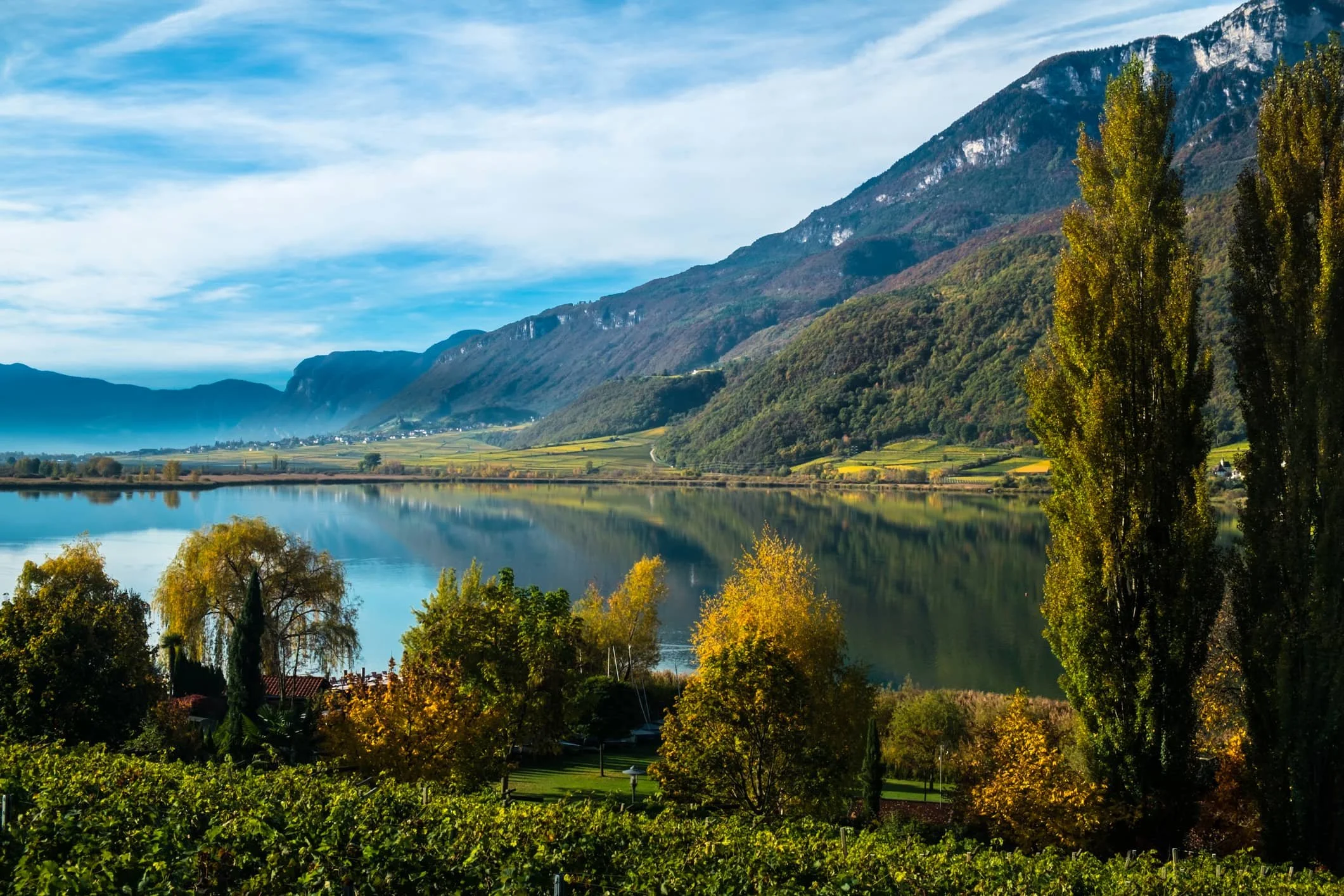
In Alto Adige the water comes off the glaciers. It runs down from the Ortler and the Ötztal Alps into the Adige, and for centuries farmers have led it across the slopes in stone channels called Waale, with a footpath beside each one. The vines climb from the shore of Lake Kaltern to nearly 1,000 meters beneath the Dolomites. This was Austria until 1919, and you still hear it at every table. Cantina Terlano holds its white wines for a decade or more before release. Alois Lageder and Manincor farm biodynamically, and the Augustinian canons at Abbazia di Novacella have made wine since 1142. In Tramin, the village that gave Gewürztraminer its name, Elena Walch, J. Hofstätter, and Cantina Tramin pour it beside Schiava and Lagrein.
CULINARY ARTS
Speck hangs for months in the farmhouse attics, smoked cold and cured with juniper and bay. In October and November the valleys keep Törggelen: you walk up to a farmhouse tavern for the new wine, roasted chestnuts, Schlutzkrapfen, and Knödel in broth. Schüttelbrot, the rye crispbread spiced with fennel and caraway, sits on every table. Apples fill the Vinschgau valley floor, and the kitchens move between Vienna and Venice in a single menu.
CULTURE & LEISURE
In Val Gardena, carvers in Ortisei have shaped wood by hand since the 1600s, and the workshops still sell to churches across Europe. In Vintl, the Oberrauch family has woven loden, the dense boiled wool of the Tyrol, for generations. Copper stills in the farmhouses turn apples, pears, and apricots into schnaps each autumn.
ARTISAN TRADITIONS
Ötzi, the 5,300-year-old man found in the ice of the Ötztal Alps in 1991, lies in the archaeology museum in Bolzano. In Merano, the gardens of Trauttmansdorff Castle climb the hill where Empress Elisabeth of Austria wintered, and the thermal baths sit below them. The Dolomites, a UNESCO World Heritage Site since 2009, rise above the vineyards for hiking in summer and skiing in winter. In Glurns, the smallest walled town in the Vinschgau, Puni distills Italy’s first malt whisky in a brick cube built in 2012. Lake Kaltern, one of the warmest swimming lakes in the Alps, sits below its vineyards.
