
One Extraordinary Day in Barbaresco
During my first weeks at Christie's auction house, a senior colleague pulled me aside and told me something I have repeated to every wine team I have ever run. People acquire objects of desire, he said, for three main reasons.
The first is that they have studied the object completely. They understand its history, its provenance, its place in the larger story of human creativity or craft. They have done the work and the acquisition is the natural conclusion of genuine knowledge and love. These buyers are rare.
the second is that they find the object beautiful. They respond to it directly and personally, without needing the validation of history or reputation. The thing moves them and they trust that feeling. These buyers are underestimated.
The third reason, and the one that drives the overwhelming majority of transactions at every level of the market, is aspiration. Someone you admire, someone you want to be, someone whose life represents what you are working toward, has that object. A red Ferrari. A Picasso. A Birkin bag. The object becomes a proxy for the life you are reaching for. There is nothing shameful about it. It is simply how desire works for most people most of the time.
I have sat across from collectors who tell me they only drink Latour, Sassicaia, Grand Cru Burgundy, or d’Yquem. Only. That tells me everything and none of it is about wine. It is a performance of arrival. The bottle is the costume.
I have thought about that Christie's conversation for twenty five years. I have thought about it every time I watched a table order the most recognizable wine on a list without looking past the first page. I have thought about it in the context of social media, which has industrialized the third category by turning aspiration into an algorithm. I have thought about it standing in cellars across the world with producers who make wine that nobody famous has ever told anyone to buy, watching guests discover something that moved them without being instructed to be moved.
I thought about it again last July, driving through Pidmont with Susan on a day last year that gave me both ends of the argument in the same twelve hours.
The Morning Was Gaja
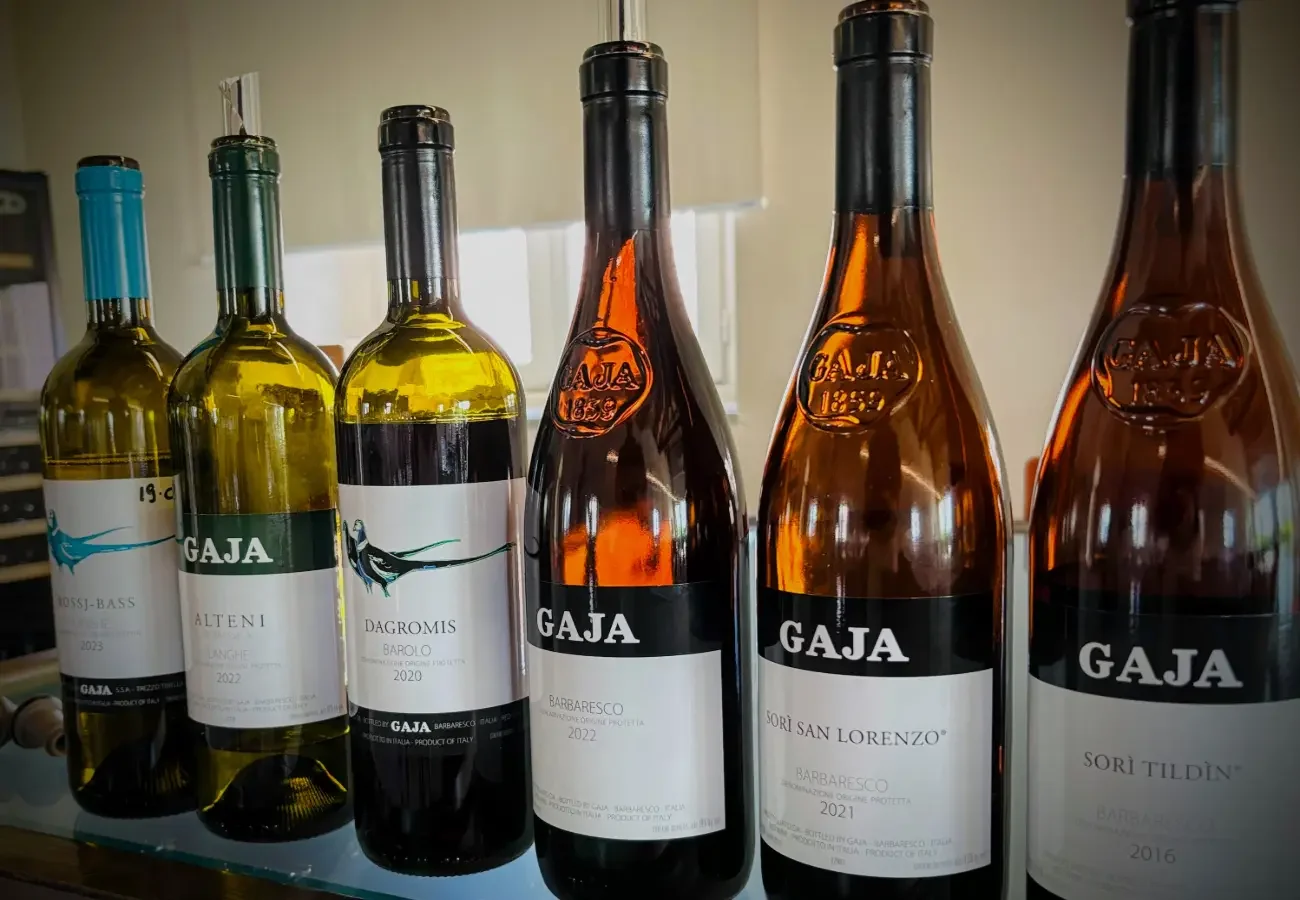
I want to be precise about this because the argument I am making requires it. Angelo Gaja is not famous because people aspire to drink his wine. His wine is worth aspiring to because of what he actually built. He took Barbaresco, a small hamlet that had lived in Barolo's shadow for generations, the other wine, the lesser appellation, and through sheer force of vision and precision and an absolute refusal to accept the ceiling others had placed on the region, he turned it into one of the most respected names in the world. He is the Robert Mondavi of Italian wine. That comparison is not coincidental. Both men changed what was possible in their respective appellations and the wines they left behind prove it; good or bad.
I had the privilege of dining with Angelo twice during his tours in New York. He is exactly who you expect him to be. Commanding, precise, historically aware of every decision he has ever made and why it mattered for him, his team and his family. But he said something at one of those dinners that I did not expect and have never forgotten. He told me that he has never lost sight of the fact that his family started in the restaurant business, and that wine was always meant to be shared with friends and family. That the point of wine was never the bottle, but the people you share it with and the memories you create.
When you arrive at Gaja for a tour, the first door you open is old, worn and unassuming, the original door from the family tavern, osteria del Vapre. It is the first thing you touch and its their way of telling you, before a single word is spoken, what this has always been about.
We toured the extraordinary cellar, the barrel rooms, the architecture and the art. The winery reflected everything Angelo built, immaculate, beautiful and precisely lit. Every surface and every detail communicated exactly what decades of investment and intention are designed to communicate. The wines we tasted that day were remarkable and you can almost sense the dedication and hard work of soo many that went into producing that wine. I had been drinking his wines for over 20 years and Susan and I left impressed in the way you leave any encounter with something that has genuinely achieved what it set out to achieve.
Lunch
We then drove over to Locanda Borgo Vecchio in Neive and found a table on the terrace. This should be on any list of restaurants when you go to Barbaresco. The terrace opens to the hills in a way that makes the whole appellation feel arranged for your lunch. The wine by the glass list stops conversation. We ordered the traditional Vitello Tonnato and their house pasta which came with an extraordinary amount of truffles on it.
There is a version of a day in wine country where the region becomes a backdrop to your appointments. Then there is a lunch like this one, on a terrace in July with a glass of something wonderful, a local delicacy cooked perfectly and truffles dissolving into a perfect mid-day feast.
Grasso Fratelli
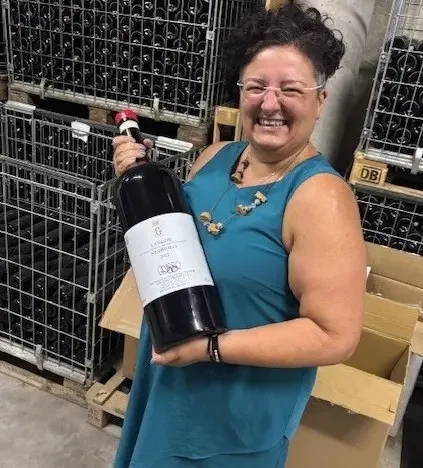
When we drove into Grasso Fratellli were met with open arms by Simona Grasso and brothers Luigi, the 3rd and 4th generation respectively. They took us on a tour of their winery and vineyards in Valgrande; the incredibly steep Valle del Sole and Marcarini crus which have been in their family since 1900. The winery is incredible and there are bottles stacked everywhere, old Slavonian oak casks with vintages from the past sleeping until the brothers think they are ready. The tasting room was half of the office and a living room table covered with bottles everywhere; you can almost smell the history and conversations that have taken place in this room. It was like spending the morning tasting in aristocratic Bordeaux and then driving to Burgundy to taste in someone's kitchen that afternoon. One world announces itself. The other one gives you a warm hug.
We sat down to taste the wines the way families in the Langhe sit down with people they trust, without any visible interest in managing the experience. Wine was already open, but they kept opening bottles asking for our opinions.
Gaja and Grasso are not in competition. They are two families on entirely different paths through the same appellation, and the Piedmont is large enough to hold both without contradiction. One family pioneered a modern era and built an institution. The other makes wine on their own timeline, stores it for a decade or more before releasing it, and moves at the pace they believe the wine requires. A ten year old Grasso Fratelli Barbaresco from the same appellation will cost you a third of the Gaja. The gap in price does not reflect the gap in quality. That is not a criticism of Gaja. It is an argument for knowing both.
We worked through the Barbarescos. They were extraordinary in the way that patient things tend to be. Layered and unhurried, built for a table with food and people you want to spend time with. Then one of the brothers opened Trej.
The Pizza Wine from Valegrande
Once we finished the lineup they opened Trej, or "three" in the local dialect. It is a multi-vintage blend of Nebbiolo, Barbera and Dolcetto from younger Valegrande vines, designated Vino Rosso, the lowest classification available. This kind of blend is a rarity in Barbaresco and Barolo today because it will never command the prices those appellations are known for. I asked the brothers why they made it. They told me it was actually a traditional blend from an earlier era, and that the wine was worth drinking now while the Barbarescos were still sleeping. I could not have agreed more. That is the signature of every producer whose cellar is worth being in. They honor tradition without being imprisoned by it, and they are not afraid to work at lower price points when the wine calls for it.
I had been pouring Trej by the glass for two years before that afternoon. It was one of the most reliable calls I ever made behind a wine list. Something about it worked without requiring explanation. People ordered a second glass and asked what it was. It has been my pizza wine ever since, and I mean that as the highest compliment I know how to give. A wine that makes food better and conversation easier, that belongs at a table without needing to announce itself, is doing exactly what wine is supposed to do. It is also the gem inside a portfolio that most people overlook because they come to Grasso for the Barbaresco. The ones who find Trej understand something more interesting about who this family is.
These are the experiences Vineyard Confidential is built to deliver. Not just access to great wine, but access to the people, the place and the history that make it mean something. If you want to bring clients to both ends of that argument in the same day, that conversation starts here.
Grasso Fratelli is imported by @Adam Richard at UVA Imports and @Joe DiCarlo Selections. A special thank you to @Giovanni Gaja for making the morning possible and to @Francesco Giardino for an extraordinary tour. And to our friends at @Wilson Daniels for their continued support of Vineyard Confidential.